🌍 Tackling Climate Change: A Race We Can Win Together! 🏃♀️🏃♂️
Mitigating climate change is both a sprint and a marathon. The challenge? We need to cut our emissions and local air pollution drastically in the near term while investing in projects that can have sustained impact over time. The good news? The Biden Administration’s Inflation Reduction Act has provided billions of dollars in federal funding to support climate action. If we make a compelling emissions reduction plan, we can apply for implementation funds to execute.
It’s also an important time and opportunity for us to take stock, learn from the experiences we had the previous year, and to continue to improve our programs, services, and operations.
While we engage with Salt Lakers mostly through recycling questions and efforts, we do so much more! Here are some highlights from 2023 and keep a lookout for more details in our Year-in-Review booklet coming soon. (In the meantime, you can take a look at previous annual reports for 2022 and 2021.) Some notable achievements include:
Recycling can be confusing. So, last week we had an informal Waste & Recycling Q&A on Instagram. We got some great questions and wanted to share them here on the blog!
Two weeks ago, I flew from Salt Lake City to Columbus, Ohio, to visit my family. I left during the peak of our first wintertime inversion; smog settled so thickly in the valley that I hadn’t been able to see the Wasatch Range in several days. The inversion was top of mind as I nursed a sore throat, feeling envious of my Midwestern family and friends who can take good air quality for granted.
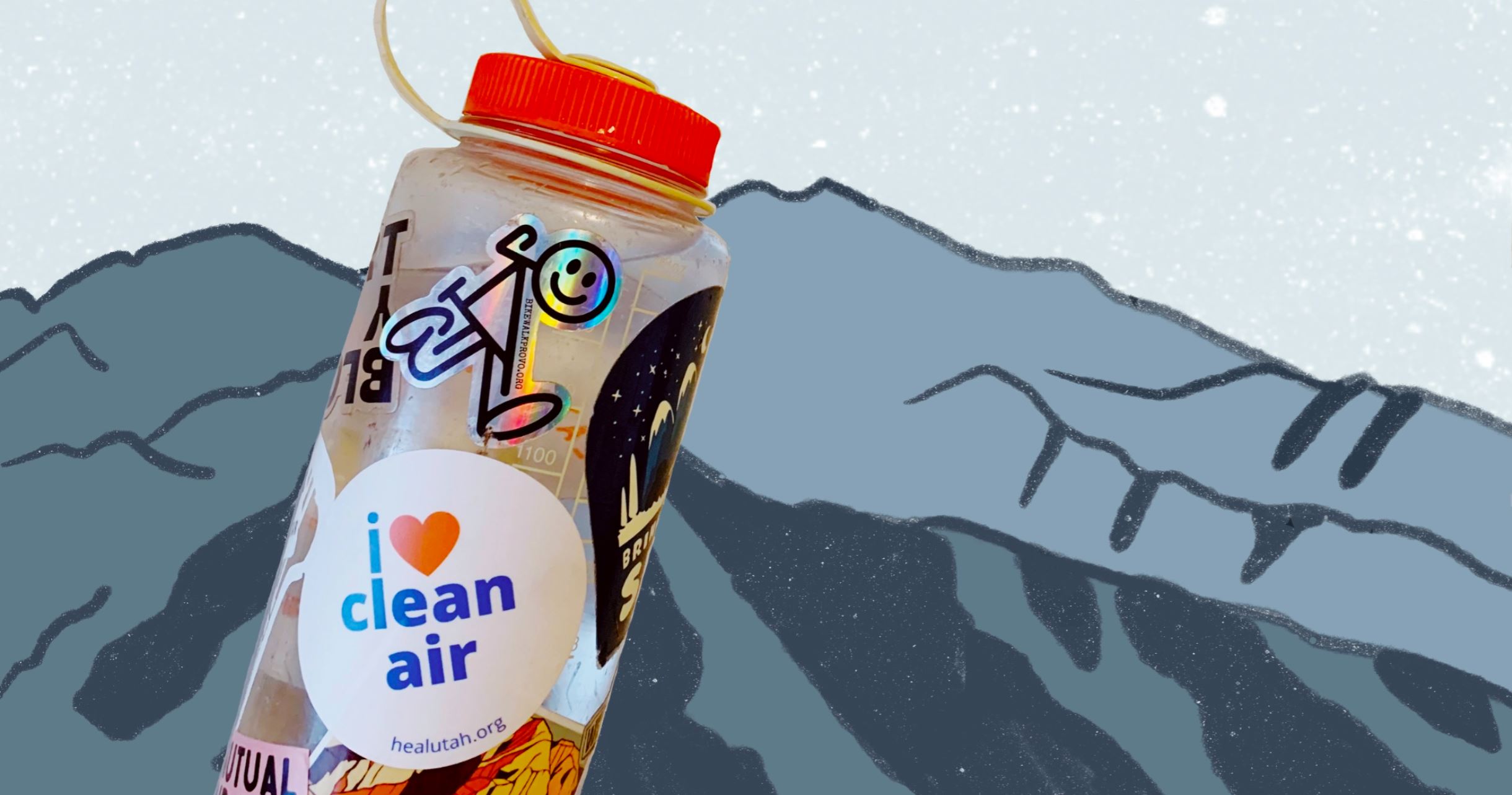
As I sat down for breakfast at my brother’s house on my first morning in Columbus, my 11-year-old nephew focused in on the “I ❤ Clean Air” sticker on my Nalgene.
“Isn’t that kind of obvious?” he asked, eyes squinted with skepticism.
“You would think,” I said, grimacing. I took a moment to think of how to explain to him, and glancing around at our breakfast dishes, I had an idea.
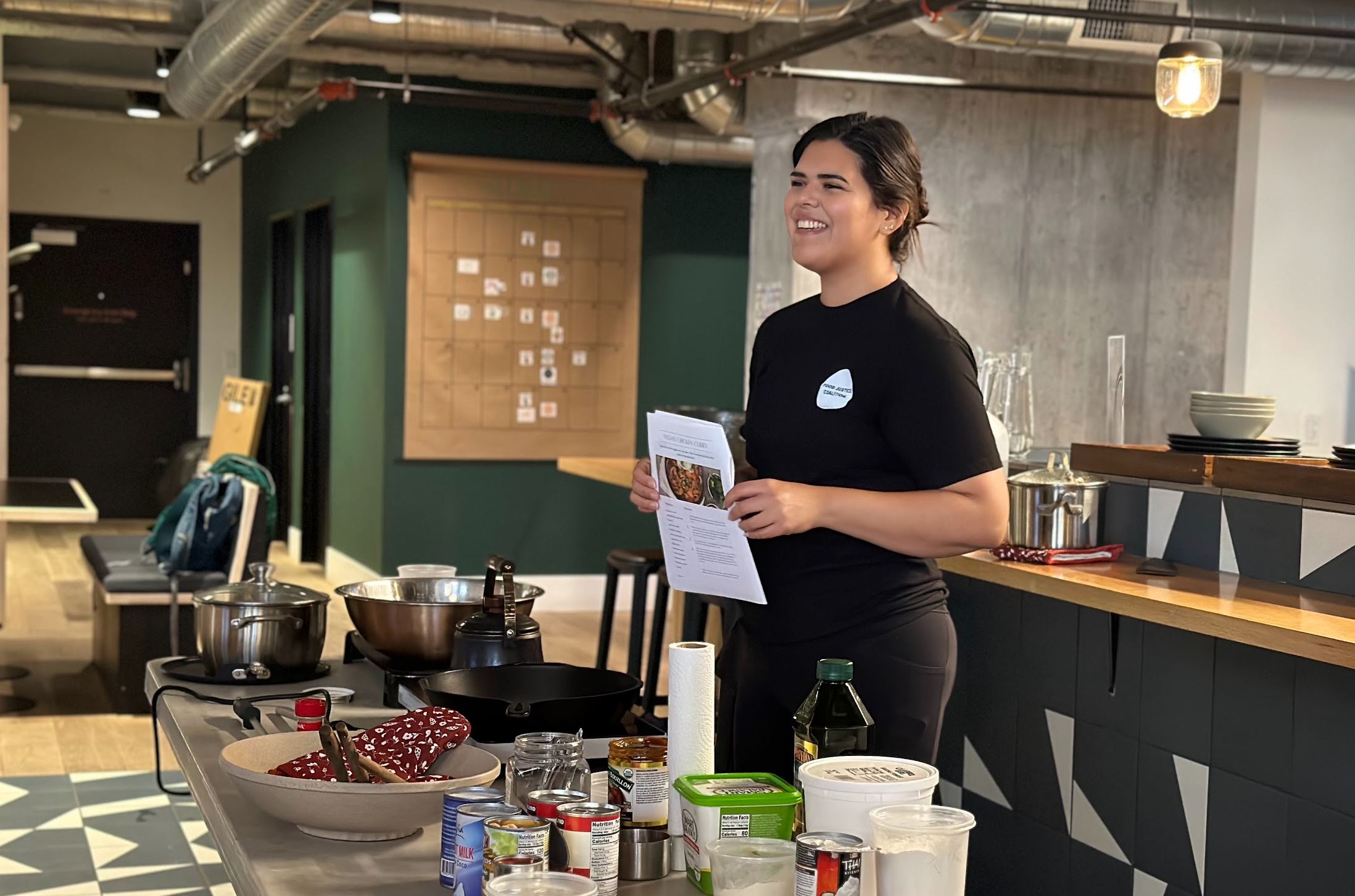
Jeanette Padilla Vega, Food Justice Coalition’s Founder, teaches a cooking class as part of community enrichment programming.
According to Jeanette Padilla Vega, the founder and CEO of the Food Justice Coalition (FJC), humanity’s greatest unifier is food. As she put it, her organization is “trying to change the world one rice bowl at a time.” As I observed her community cooking class and the aromas of her vegan chicken curry filled the air, I believed in her food’s world-changing power.
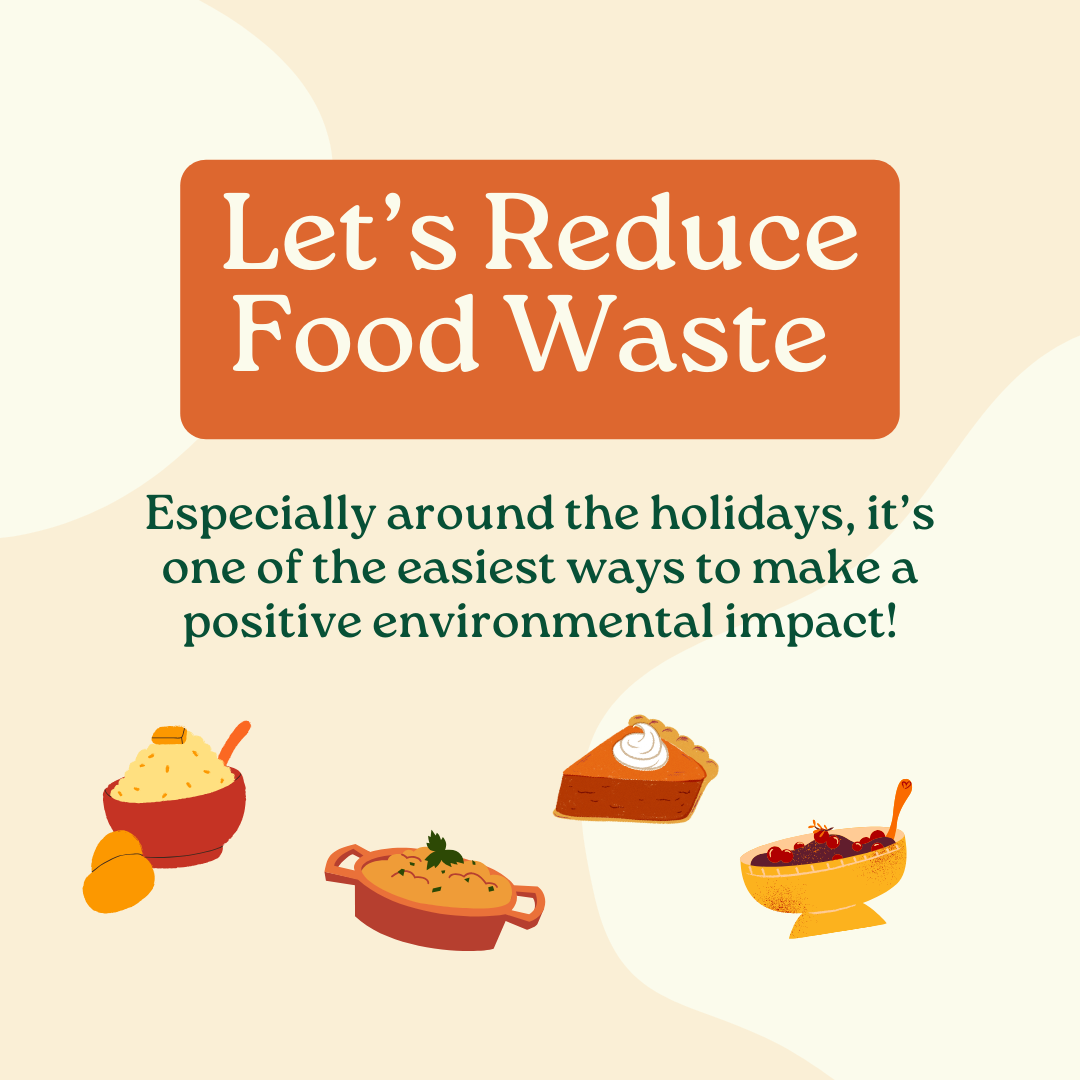
The holiday season is upon us, and Thanksgiving is already around the corner. This can be a time to gather with loved ones and enjoy some great food, often bringing recipes we only enjoy once or twice a year. Annual traditions can also bring them long-held habits that can bring about excess food and plastic waste.
Reducing food waste is an often-overlooked way to reduce the impact of potent methane emissions on the planet and to help others, but our food choices are important. In Utah, food choices contribute about 25% of the household carbon footprint. This is a result of the growing, harvesting, transportation, packaging, and cooking processes involved with getting our food to our tables.
But holidays can be a great place to start when rethinking long-held traditions and habits and how our actions can impact our community. So no matter how you celebrate, we at SLCgreen want to encourage sustainable habits around gathering for the holidays, from food waste to decorations. With Thanksgiving being such a food-focused holiday, here are some tips to make the most of your meals and waste less food.
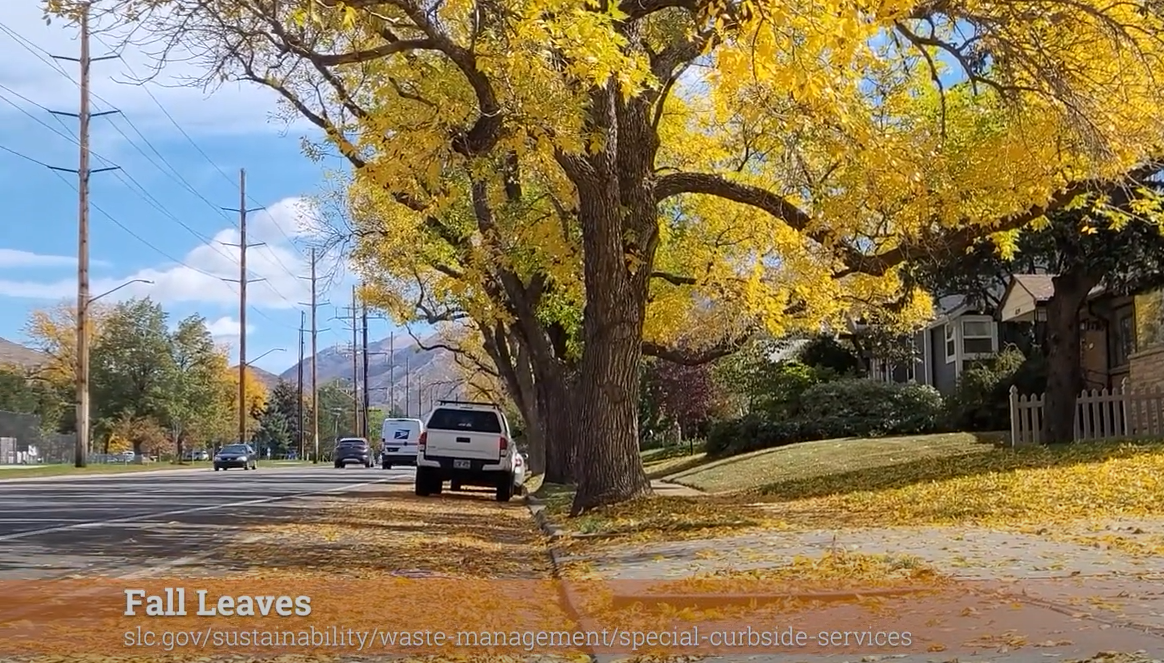
With fall in full swing, we wanted to share some seasonal reminders as we head into November.
Leaves and Other Yard Waste
Did you know a lot of your fall waste can be composted? Leaves, dead branches, clippings, and other green waste are all compostable! Composting where you can is a great way to divert waste from the landfill and lower emissions. Salt Lake City’s brown bins are for compost and their contents are processed at our city’s own compost facility. The facility processes the waste and recycles it into woodchips and compost, which are then available for purchase at the Salt Lake Valley Landfill. If you have questions on whether something is compostable, visit this link.
If you find that your brown bins are filling up, you can request additional temporary bins (at no additional cost) here or by calling 801-535-6999.
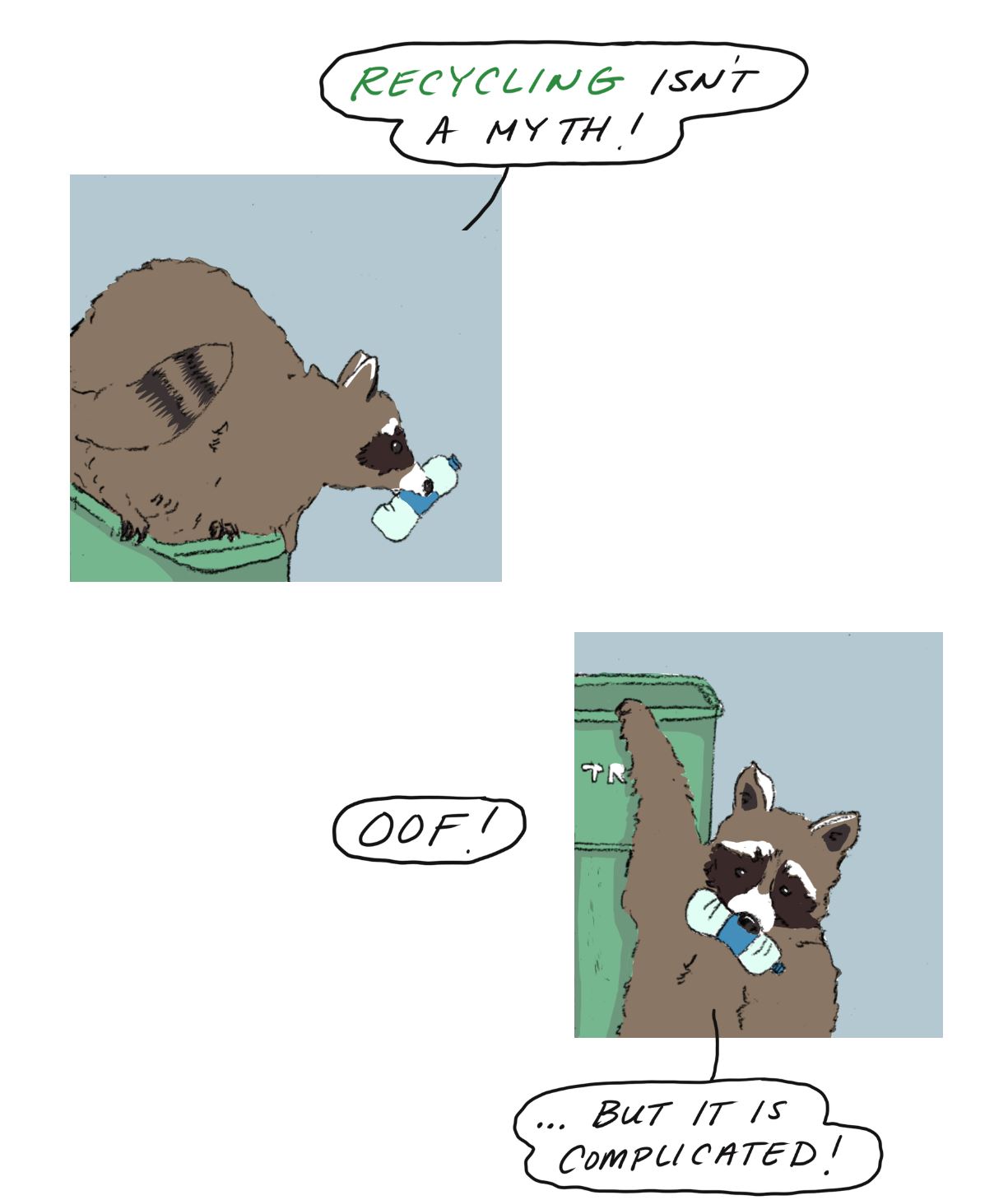
Max Barnewitz worked as SLCgreen’s Community Outreach Coordinator for several years before going on to earn their MFA in Comics at the California College of the Arts in 2023. In a recent project, Max found a through line between those two worlds, creating a comic explaining recycling in a fun, approachable way. (After all, who doesn’t want to hear about trash from a cute cartoon trash-panda?)
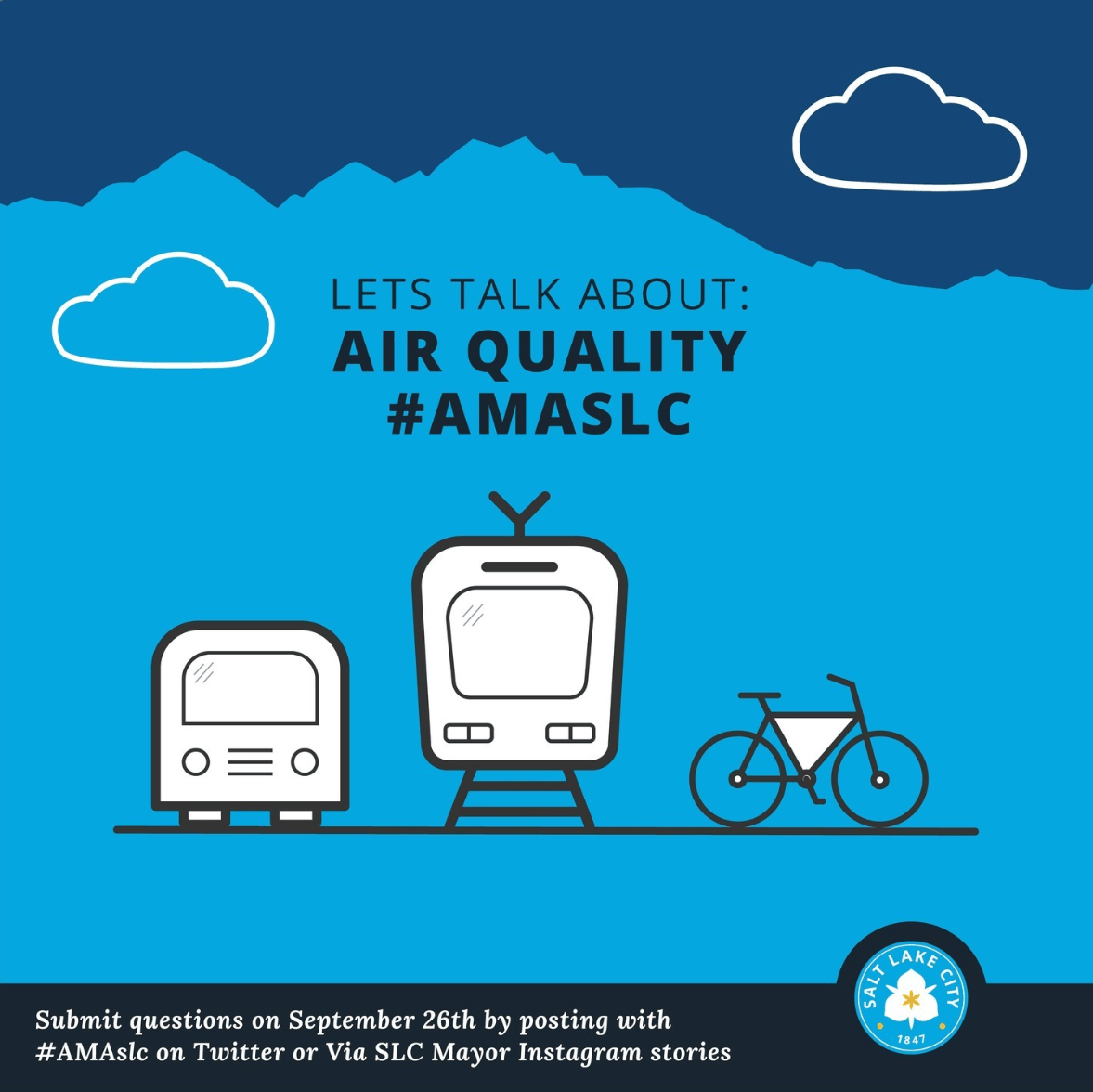
This week, Mayor Mendenhall and SLCgreen hosted an “AMA” or Ask Me Anything on Instagram and Twitter, taking your air quality questions.
Salt Lake City continues to lead communities in the state when it comes to air quality policies and programs – both with our internal operations, as well as community-facing efforts.
Still, we collectively have much work to do. Air pollution will not disappear overnight in a valley growing as ours is and faced with the challenges of our geography and climate. The good news is that, according to the Utah Department of Air Quality, per capita pollution has decreased over the last decade, even as our population along the Wasatch Front boomed. There are also technologies available now that can drastically reduce the manmade emissions in our valley over the coming years, and historic funding opportunities to help us adopt them. Paired with solid urban planning and transportation design, we’re hopeful for the future when it comes to air quality, and that comes from working every day to realize solutions.
So what causes our poor air quality? And what is the City doing?
It’s that time of year again! The temperatures are starting to drop, leaves are showing hints of change, and that crisp scent of incoming autumn is the air. The changing seasons also mean it’s time to think about fall and winter air quality season.
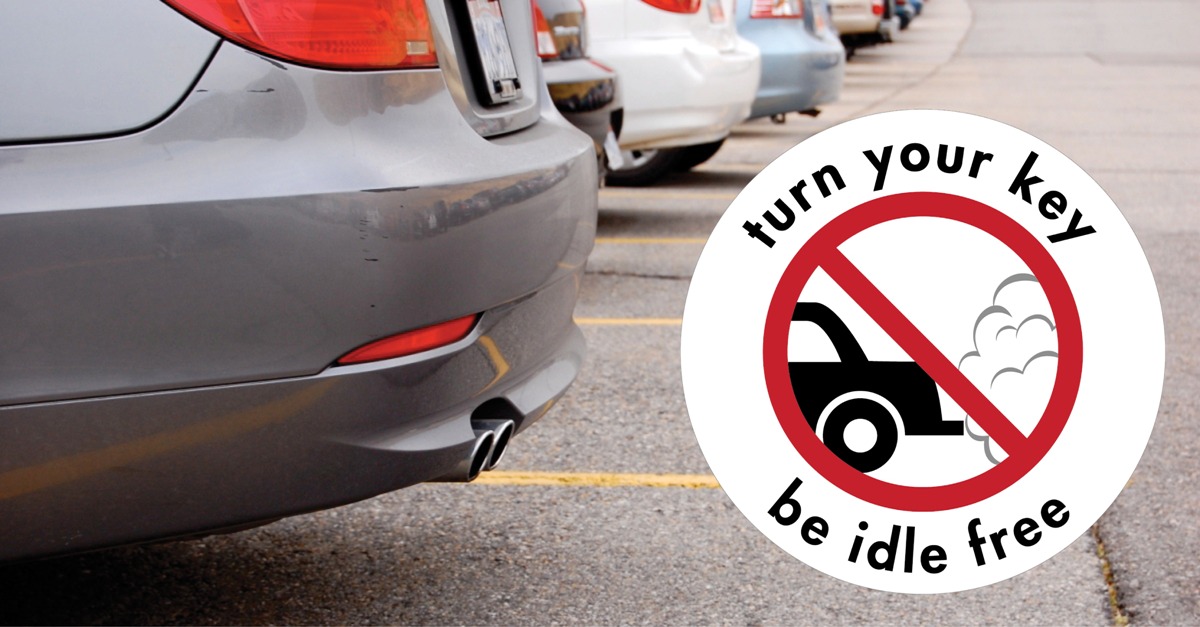
September also marks Idle-free Awareness Month and the annual Governor’s Idle-free Declaration for the month and for Utah’s upcoming winter season. The initiative began in 2006 by Utah Clean Cities and was a statewide effort by 2010 – spurring statewide idle-free policies and action at school districts, cities, towns, counties, and even within Zion National Park.