#RidewithHIVE to Central Ninth

Our journey started at the Courthouse TRAX Station.

Our journey started at the Courthouse TRAX Station.

Today @SLCgreen joined @SLCMayorsOffice for a #ridewithHIVE transit adventure to the Central Ninth neighborhood in Salt Lake City.

The transit field trip is part of a larger effort to educate residents about the benefits of riding transit, and all of the great things that can be easily accessed from your local TRAX or bus line.

Speaking of which, have you been to Central Ninth lately? 

This up-and-coming Salt Lake City neighborhood is accessed at the 900 South TRAX stop, serviced by all three transit lines.

Hop off and you’ll see what we saw – vibrant local businesses and a thriving community garden to boot!

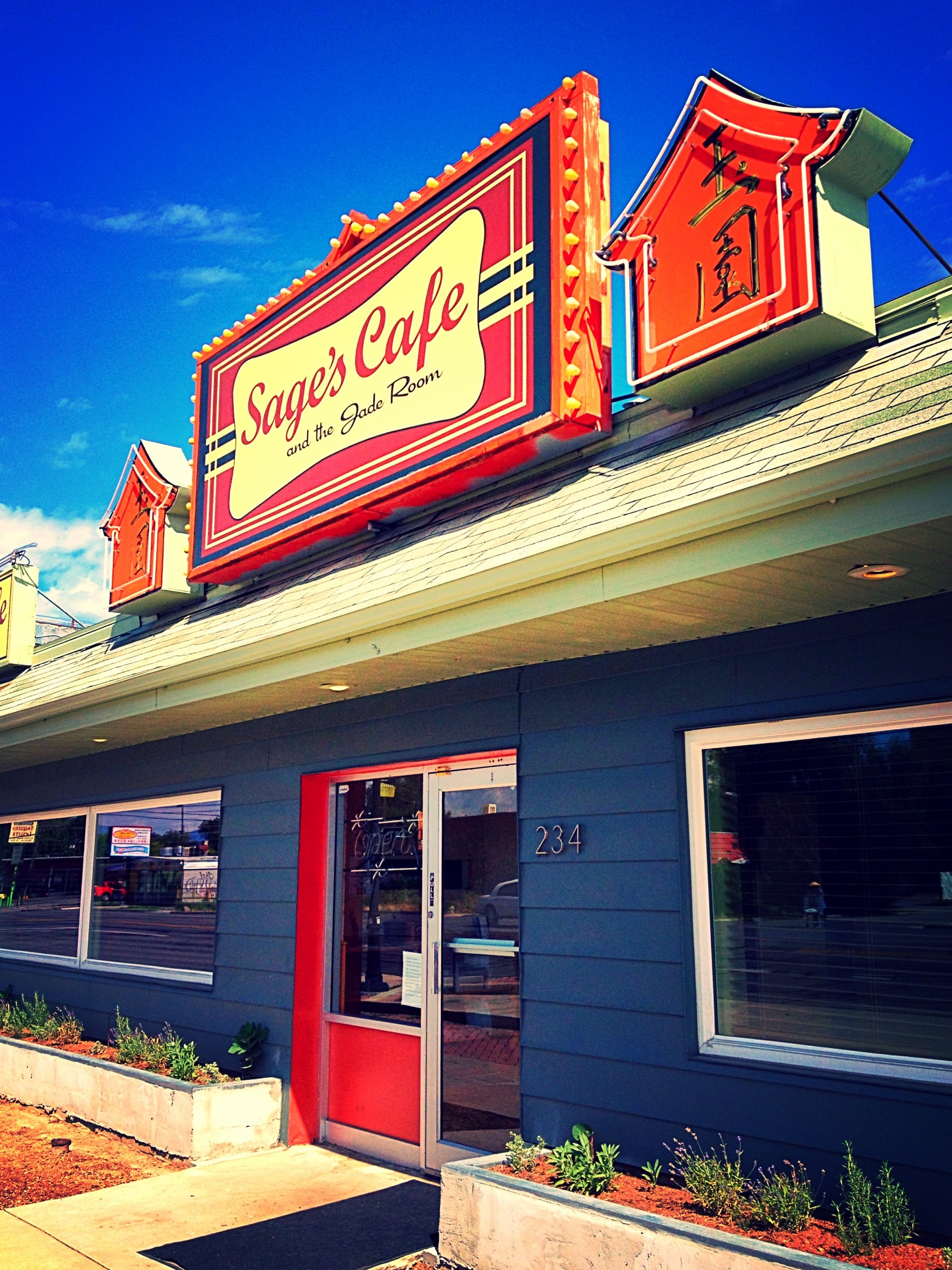
Sage’s Cafe

This Salt Lake City favorite dishes up delicious vegan meals, including brunch on the weekend. Also know that you’re supporting a local e2 business committed to reducing its impact on the environment!
IMG_2125

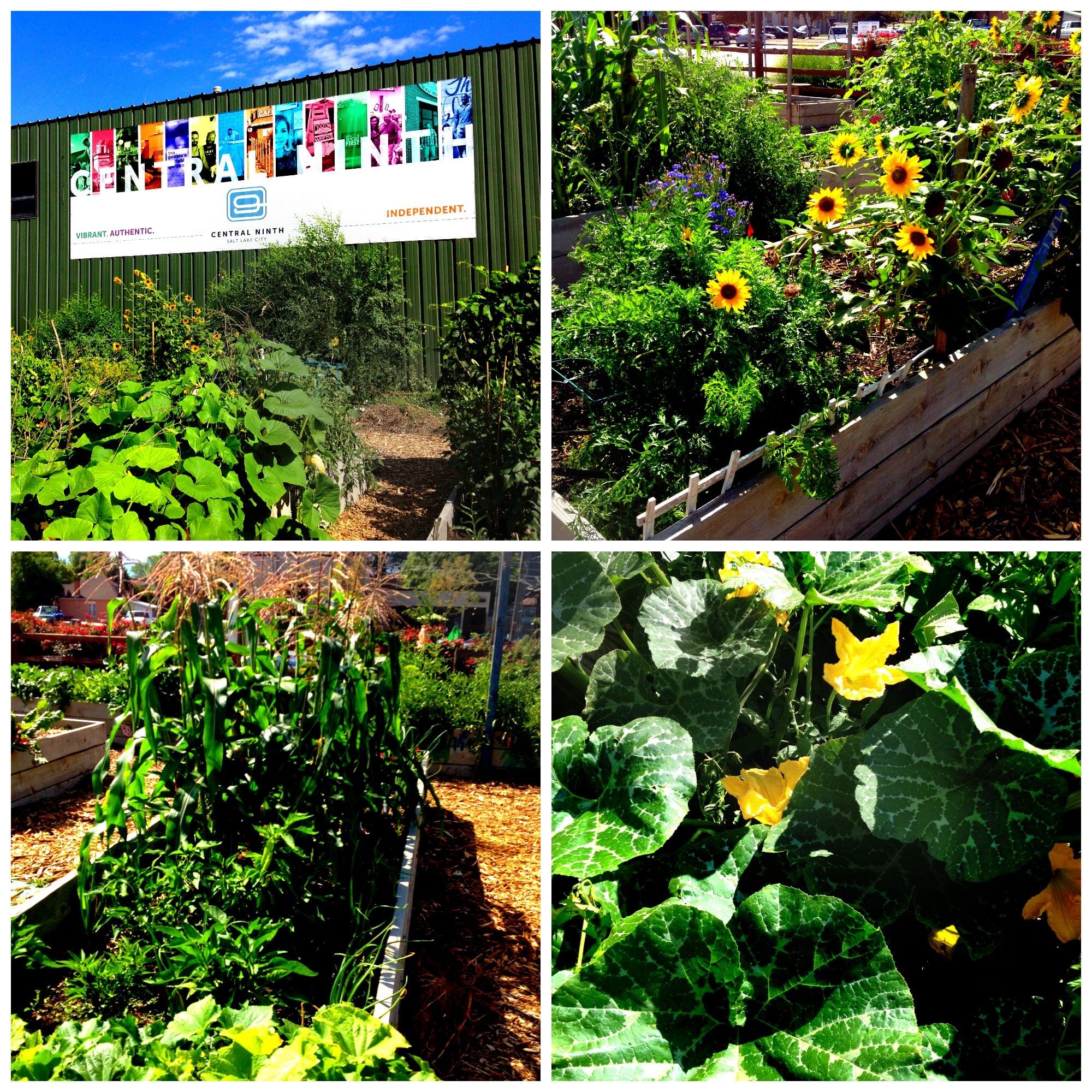
Local First Utah & the People’s Portable Community Garden

When you step onto the platform at the 900 South TRAX stop, you can’t miss the gorgeous People’s Portable Garden. While you are welcome to enter and appreciate the garden, know that the flowers and vegetables are planted and harvested by families in the area (hands off!)

Don’t forgot to stop by Local First Utah, housed in the big green building. Local First can recommend great local businesses that can help you with whatever you need.
CentralNinthGarden


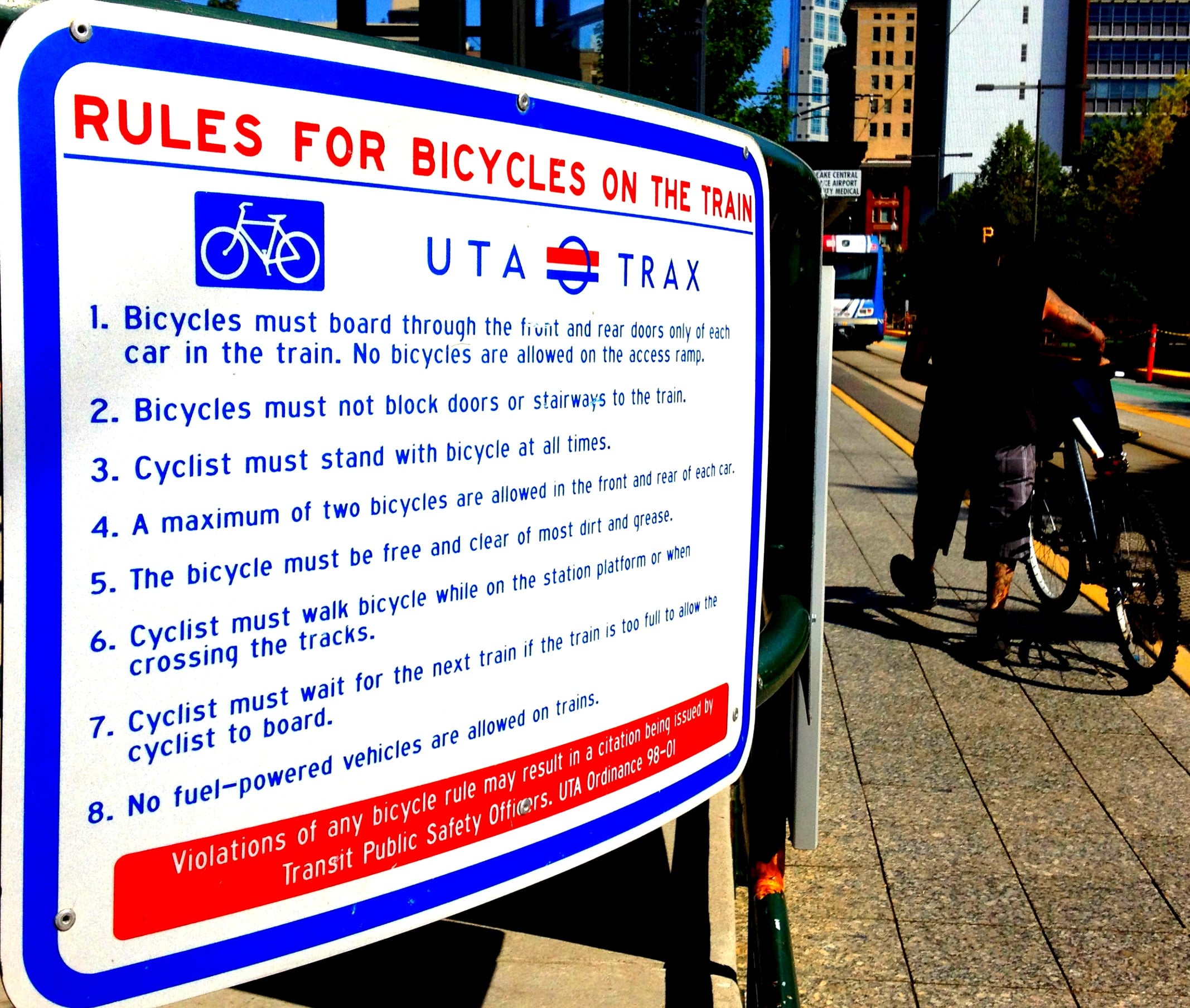
Love to bike? We spotted this sign during our travels. Bikes are welcome on all TRAX trains, just follow these simple rules.
BikeSign

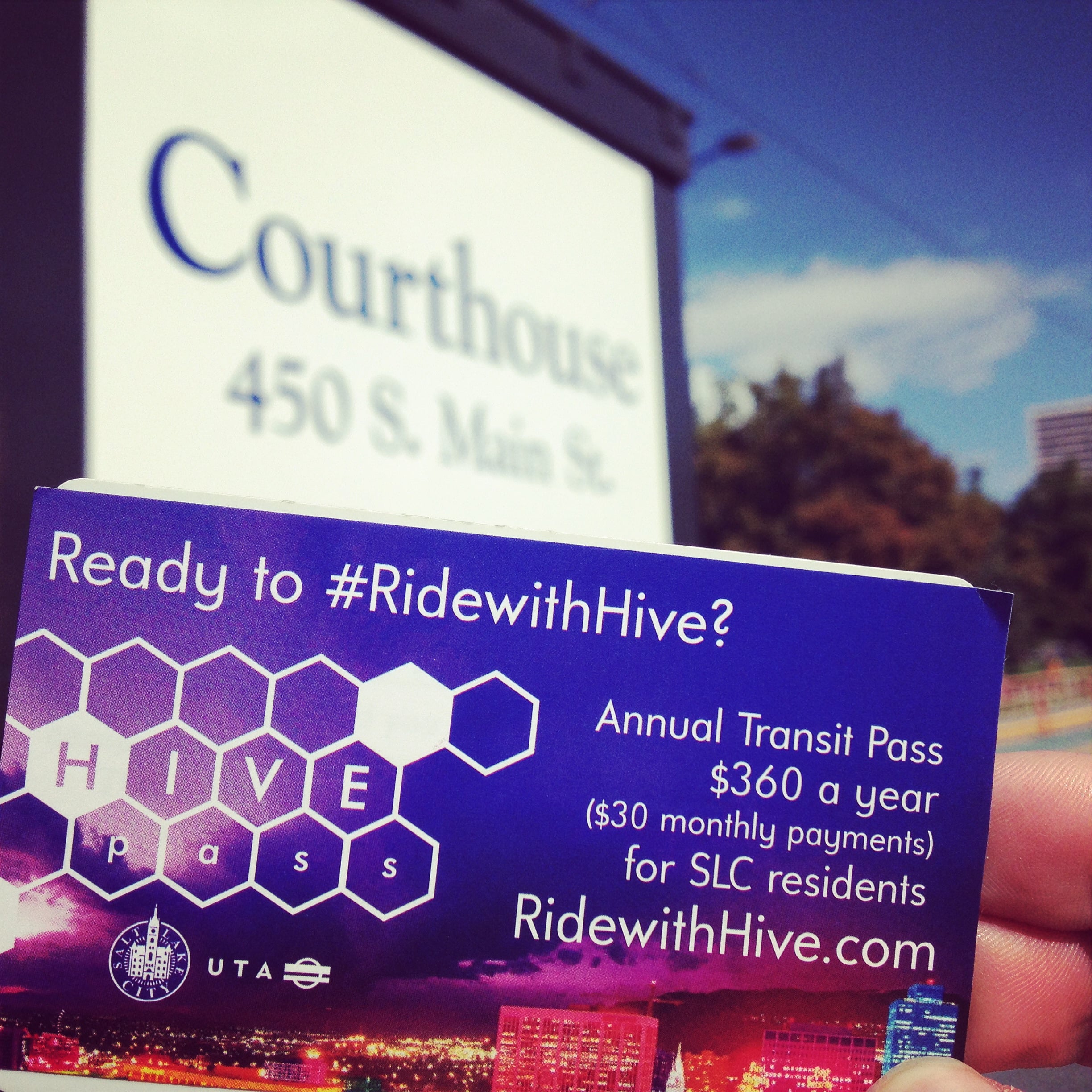
Are you ready to ride with HIVE? For just $360 a year ($30/month) you’ll have unlimited access to UTA TRAX, FrontRunner, S-Line & regular bus service! Now on sale for Salt Lake City residents.

Plan your trip. Explore more of what UTA has to offer through Google Maps or directly through RideUTA.com.

And stay tuned for our next transit adventure to Sugar House. We’re partnering with SmartTrips SLC to explore the new S-Line Streetcar!
#ActOnClimate in Salt Lake City

Over the last nine months, Salt Lake City Mayor Ralph Becker and Salt Lake City Green Director Vicki Bennett have participated in the White House’s State, Local, and Tribal Leaders Task Force on Climate Preparedness and Resilience, which was tasked with advising President Obama on how the Federal government can best respond to the needs of communities nationwide already dealing with the impacts of climate change.

The task force, made up of 26 officials from across the country, is holding its fourth and final meeting today in Washington D.C. Formal recommendations will be delivered to the President in the fall.

Today the President is announcing a series of actions to respond to the Task Force’s early feedback to help state, local, and tribal leaders prepare their communities for the impacts of climate change by developing more resilient infrastructure and rebuilding existing infrastructure stronger and smarter. See below for full details.

We’re proud to #ActOnClimate right here in Salt Lake City! Learn more at SLCgreen.com or dashboard.slcgov.com.

And check out this SLCgreen blog story about how the City is leading the way with solar!


FACT SHEET: Taking Action to Support State, Local, and Tribal Leaders as They Prepare Communities for the Impacts of Climate Change

Providing Federal resources to support climate preparedness:

  • National Disaster Resilience Competition. The nearly $1 billion National Disaster Resilience Competition, announced by the President on June 14, will make resources available to communities that have been struck by natural disasters in recent years.  Building on the success of the Rebuild by Design competition after Hurricane Sandy, this competition will create replicable models of modern disaster recovery that apply science-based and forward-looking risk analysis to address recovery and resilience needs.  The competition will also help communities create and implement disaster recovery plans that will make them better prepared for future extreme weather events and other shocks.

    Today, new details for the competition are being announced by the President. The year-long competition will have two phases: (1) risk assessment and planning; and (2) design and implementation.  Many communities will be eligible for funding and technical assistance during Phase 1 to develop innovative, data-driven, and community-led approaches to recovery that increase preparedness for future disasters.  A subset of these communities will be invited to continue in Phase 2 to design solutions for recovery and future resilience. The best proposals will receive funds for implementation to demonstrate how communities across the country can build a more resilient future.  More information is available at http://portal.hud.gov/hudportal/documents/huddoc?id=FactSheet_071514.pdf.

  • Helping tribes prepare for climate impacts. The Department of the Interior’s (DOI) Bureau of Indian Affairs today launched a new $10 million Federal-Tribal Climate Resilience Partnership and Technical Assistance Program that will help tribes prepare for climate change by developing and delivering adaptation training. Secretary of the Interior Sally Jewell and Environmental Protection Agency (EPA) Administrator Gina McCarthy will establish an interagency group to provide tribes with data and information, improve Federal collaboration, and assist with climate change adaptation and mitigation efforts.
  • Investing in the nation’s rural electric system. The U.S. Department of Agriculture (USDA) today announced awards totaling $236.3 million in funding for eight states to support improved rural electric infrastructure. A modern, reliable electric system is critical to attract and retain residents and businesses in rural communities. Supporting rural electric utilities’ deployment of smart grid technologies will increase efficiency and reliability and bring more jobs to rural America.  President Obama and Agriculture Secretary Vilsack are committed to smarter use of Federal resources to foster sustainable economic prosperity, support the rural way of life, and ensure the Federal Government is a strong partner for businesses, entrepreneurs and working families in rural communities.
  • Developing advanced mapping data and tools. The Department of the Interior’s U.S. Geological Survey and other Federal agencies today launched a $13.1 million 3-D Elevation Program partnership designed to bring Federal agencies, academia, corporate entities, states, tribes, and communities together to develop advanced 3-dimensional mapping data of the United States.  These data and related tools will be used in the areas of flood risk management, water resource planning, mitigation of coastal erosion and storm surge impacts, and identification of landslide hazards as an essential component of supporting action on climate resilience. More information is available at http://nationalmap.gov/3DEP/.
  • Safeguarding access to quality drinking water amid drought. USDA continues to work with producers, communities, affected states and other agencies to help address the current West Coast drought. This week, the Department will announce additional funds to help rural communities struggling with drought. These funds will help rural communities that have experienced or are likely to experience a significant decline in the quantity or quality of drinking water due to severe drought and other emergencies.


Rebuilding stronger and safer after natural disasters:

  • Establishing a Mitigation Integration Task Force.  In order to help communities build back stronger and safer in the face of new risks, FEMA has established a Mitigation Integration Task Force to develop and implement a Mitigation Integration Pilot Program by the end of August.  Working with State, tribal, local, and eligible private non-profit partners, FEMA will identify pilot projects in current and emerging disasters where there are specific opportunities to make investments that result in a more resilient outcome than using a single funding source and program.  This pilot program will work to equip communities to meet their recovery objectives and ensure that all resources are brought to bear through FEMA’s Mitigation and Recovery programs to minimize the impact of future disasters. This is part of FEMA’s goal of breaking the cycle of disasters — saving lives, protecting property, reducing losses, and allowing individuals and communities to recover more quickly after a disaster.
  • Accounting for Climate Change in Hazard Mitigation Planning.  To ensure that States are preparing for the impacts of climate change, FEMA will release new guidance for State Hazard Mitigation Plans that calls upon States to consider climate variability as part of their requirement to address the probability of future events in state planning efforts. Last issued in 2008, FEMA’s guidance for these plans helps States prepare in advance of a disaster to identify and drive actions for more resilient and sustainable recovery, such as elevating or relocating homes and businesses to reduce flood risks associated with sea-level rise and more intense storms or rebuilding to higher standards. More information is available at http://www.fema.gov/multi-hazard-mitigation-planning.

Building more resilient communities:

  • Committing to “Preparedness Pilots.”  The Administration today announced the launch of two “Preparedness Pilots” in cooperation with the City of Houston and the State of Colorado, with NASA (Johnson Space Flight Center) and the Energy Department (National Renewable Energy Laboratory).  The pilots will involve key Federal agencies in each community, including NASA, the Energy Department, the Department of Defense, the Department of the Interior, the U.S. Army Corps of Engineers, and the Department of Agriculture. These pilots will bring together federal agencies and local communities to assess and plan for their region-specific vulnerabilities and interdependencies associated with the impacts of climate change. This effort will advance preparedness planning on the ground and help create models for other communities and agencies to follow.
  • Making our coasts more resilient.  The National Oceanic and Atmospheric Administration (NOAA) today announced new program guidance under Section 309 of the Coastal Zone Management Act to ensure greater consideration of how climate change may exacerbate challenges in the management of coastal areas.  Through this effort, $1.5 million of competitive funding will be available to help states and tribes make improvements to their coastal management programs. The guidance will help state and tribal coastal managers better prepare for the impacts of climate change and improve the safety of their communities.  More information is available at http://oceanservice.noaa.gov/.
  • Improving stormwater management. The Environmental Protection Agency (EPA) today launched a Green Infrastructure Collaborative among government agencies, NGOs, and other private sector entities to advance green stormwater infrastructure.  Green infrastructure, such as urban forests and rooftop gardens, can be used as an important tool for building resilience to climate change impacts such as increased precipitation and heat island effects. Federal agencies will provide funding assistance in at least 25 communities across the country for green infrastructure projects, technical assistance to create integrated green stormwater management and hazard mitigation plans, and recognition and awards programs for innovative green infrastructure projects. Agencies will also add guidance on green infrastructure to existing Department of Transportation (DOT) and Department of Housing and Urban Development (HUD) peer-to-peer exchange and training programs. The partnership will also provide a platform for conducting research on increasing affordability and effectiveness, sharing best practices, and developing actionable planning tools that decision-makers have been seeking.
  • Assessing climate-related health hazards. The U.S. Centers for Disease Control and Prevention today released a new guide, “Assessing Health Vulnerability to Climate Change,” to help public health departments assess local vulnerabilities to health hazards associated with climate change. The assessments will help inform targeted public health actions to reduce the health impacts of climate change. More information is available at: http://www.cdc.gov/climateandhealth/pubs/AssessingHealthVulnerabilitytoClimateChange.pdf


Summer Ozone: Get the Facts

UCAIR_SummerOzoneGraphic

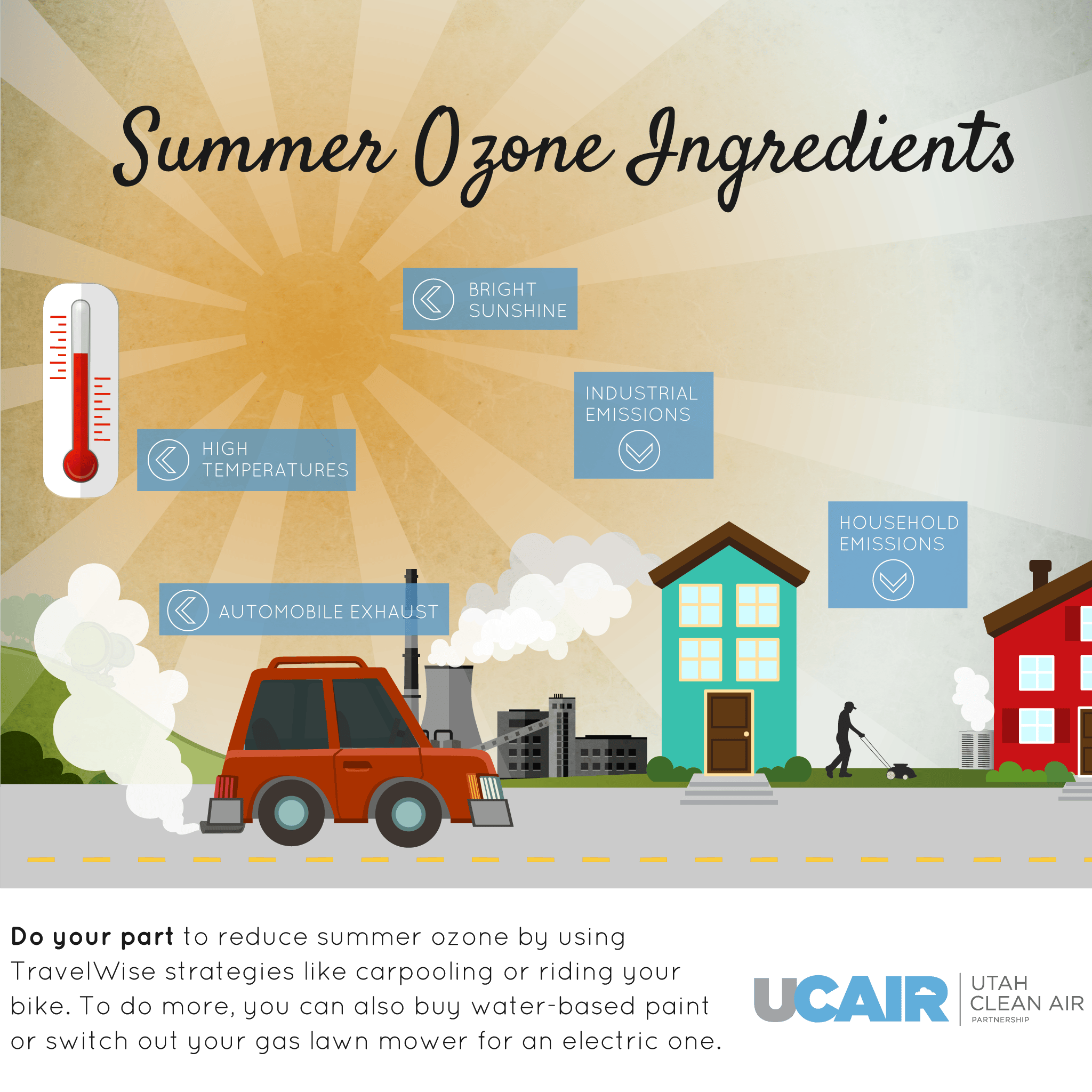
During the warmest summer months, Salt Lake City experiences poor air quality due to ozone pollution.

This helpful graphic from the Utah Clean Air Partnership – UCAIR outlines how ozone is formed, and what we can do to reduce our impact.

Learn more at UCAIR.org.

(Don’t forget to drive less this July with the Clear the Air Challenge. Track your impact and win prizes – it’s fun!)

It’s Apricot Time & We Need Volunteers!

Trees across Salt Lake City are heavy with ripe, delicious apricots and we need your help to harvest them!

We are in great need for volunteers for harvesting events on the following days:

  • Saturday, July 12 (beginning at 8 a.m.)
  • Monday, July 14
  • Tuesday, July 15

Volunteer teams will help harvest local apricot trees in the Salt Lake City. Volunteers will be able to bring a portion of the harvest home with them to enjoy.

No experience is necessary – training will be done with volunteers on site.

To sign up please email SLCgreen@slcgov.com.

SLC FruitShare helps to minimize food waste, promote local food production, and enhance the community’s knowledge of fruit trees by engaging local fruit tree owners.

Throughout the year, fruit trees are pruned, thinned and the fruit is then picked and donated to non-profits working on sustainable food and hunger issues (Utahns Against Hunger and Green Urban Lunchbox).

Your Trash is Beautiful – Why Waste It?

Have you spotted the new truck wraps on Salt Lake City’s Sanitation vehicles?

Yes, your trash is beautiful!

We’re asking Salt Lake City residents to take a second look at the things they are throwing in the trash. Did you know that 60% of your household garbage… isn’t?

Curbside Recycling

Let’s get real, we all know that cardboard and plastic bottles should be recycled. But what about that Styrofoam, plastic bag, plastic utensils and juice carton? Well, they ALL can go in your curbside recycling bin in Salt Lake City!

Once you explore all the items that should be recycled, you’ll realize just how little should be going into your curbside garbage bin.

Here’s a fun little rhyme about the big plastic question…

Plastic number make you wonder? Throw it in the big blue bin!

Seriously, if it is made out of plastic — recycle it.

Explore all the items that can be recycled in your blue bin.

Curbside Compost

Otherwise known as the yard waste bin, or the tan can, the brown bin accepts grass clippings, twigs, branches, raw fruits and vegetables, coffee grounds, eggshells and tea bags.

Think of it as your friendly backyard compost bin, but picked up weekly!

Explore the items that can be composted in your brown bin.

The City is currently exploring our options to expand the materials excepted in the curbside compost bin, so stay tuned…

Bin Guides — Learn What Goes into Each Bin (w/pictures!)

Here are some handy flyers that outline what should go in each curbside bin. Any questions? Just ask us!

Be a part of the pilot — get your HIVE Pass today!

HivePeople

Be a part of the pilot!  Purchase your HIVE Pass today at one of three locations in Salt Lake City.  Ride transit with the convenience of a pass in your pocket – at a great value.

The HIVE Pass is an annual UTA pass available to Salt Lake City residents for $360 a year, which can be paid as $30 a month. The pilot program is the result of a partnership between Salt Lake City and the Utah Transit Authority to encourage Salt Lake City residents to take more trips using transit.

Purchase your HIVE Pass at the following locations Monday – Friday:

Salt Lake City & County Building
451 South State Street
8:30 a.m. to 4:30 p.m.

Salt Lake Public Utilities Office
1530 S. West Temple Street
8 a.m. to 5 p.m.

Sorenson Unity Center
1383 S. 900 West
9 a.m. to 8 p.m.

Feeling generous? We are excited to introduce the HIVE Voucher Program. Individuals, organizations and businesses can give the gift of transit to a Salt Lake City resident in need.

For further questions and information about the HIVE Pass, and the HIVE Voucher Program, please email us at ridewithhive@slcgov.com or visit www.ridewithhive.com.

The Plight of the Honey Bee

I’m sure we’ve all felt the sting of being under appreciated at work. You stayed late, you finished those extra reports, you responded to those emails, you filed those papers; maybe you even cleaned up the office. And the next day, it feels as if no one noticed; the office is, once again, a mess.

Now imagine this scenario: you are less than an inch tall. Your job is to visit and tend to hundreds of clients every day, and report all gains back to your busy and dominating boss. Your extensive efforts provide the means to feed humans around the globe on a daily basis, and numerous other species as well. You work tirelessly in the heat for no pay.

And what do you find in return? Your clients move without warning, your business fades, and you notice a sudden rash of health crises within your company, putting you dangerously close to falling out of business for good.

Have you guessed yet?

I’m talking about the invaluable honey bee.

Although they may not understand the concept of being overlooked, the honey bee is arguably the most under appreciated worker on the planet. In addition to pollinating endless species of flowers to ensure their survival, studies performed by the U.S. Department of Agriculture have revealed that honey bee pollination provides us with 1/3 of all foods we consume.

In a more specific evaluation, the Department showed the extent to which certain foods depend on honey bee pollination for survival: peaches rely 80%, cotton relies 80%, apples depend 90%, and almonds depend 100% on pollination for production. What’s more, these four treasured products only scratch the surface.

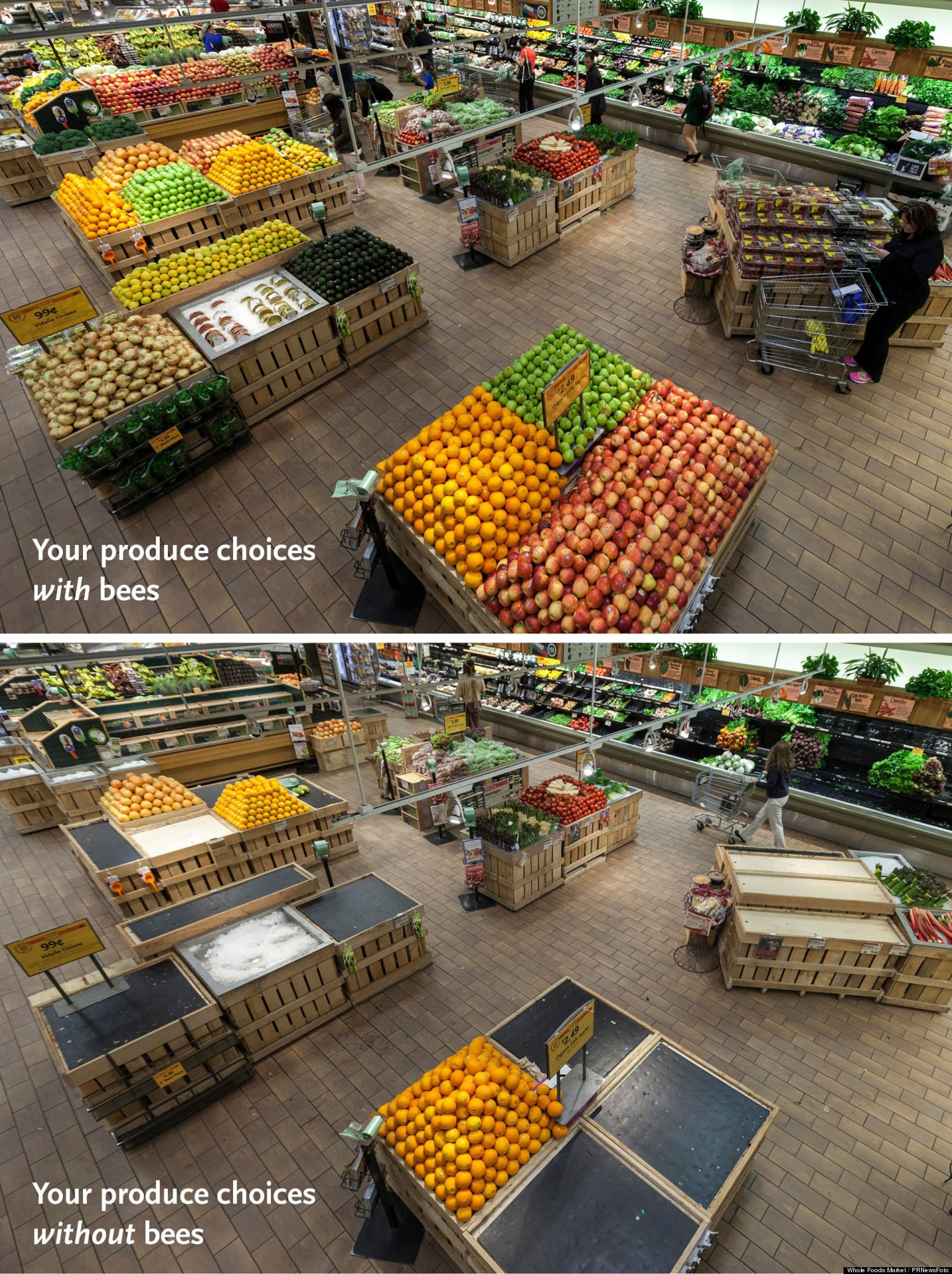
Based on this information, it’s safe to say that our grocery stores would look entirely different without the beneficial work that honey bees provide. The image below demonstrates the impact bees have on the foods we eat every day (learn more about this project).

WHOLE FOODS MARKET PRODUCE DEPARTMENT

The recent fuss over the honey bee is stemming from a previously unexplained rash of colony disappearances. Detailed studies from Harvard University and more have revealed that the growing rate of deaths is directly linked to the use of insecticides in agricultural and farming practices.

In particular, neonicotinoids (the most common and widely used insecticide) proved in a study by Harvard University to have fatal results in half of the honey bee colonies tested. Combined with our frequent destruction of flowering plants on account of urban expansion, the bees have been presented with nothing short of a recipe for disaster.

Put more simply, we have been unknowingly biting the hand that feeds us.

Fortunately, despite the grim outlook for our small but mighty friends, there are several steps you can take to help protect the honey bee from an endangered future.

If you have a backyard, put a bee box in your garden or a secluded area (so it’s safe for you too) to provide a protected space for a colony to thrive. Switch to planting bee-friendly plants (such as individual flowering plants and vegetables) and avoid using harmful insecticides. You can also purchase local honey to support safe-practicing beekeepers. And, of course, learning and awareness is always a good place to start.

It’s hard to be under appreciated. Especially when you’re barely an inch tall. Maybe it would do us all some good to help pay a well-earned bonus to one of Earth’s best employees.

This blog was written by SLCgreen intern Lauren Mills.

City Celebrates a Trio of Landmark Solar Projects

Mayor Ralph Becker, Sustainability Director Vicki Bennett, Rocky Mountain Power’s Alene Bentley and Salt Lake City Police Officer Bill Silvers gathered today to mark the completion of three landmark solar projects at the City’s solar farm.

“Salt Lake City made a commitment to reduce our impact on air quality by embracing sustainable energy and transportation initiatives,” said Mayor Ralph Becker. “Today we celebrate three projects that represent a huge leap forward for the City and our community. Not only are we flipping the switch on our new solar farm – which will generate over 1.2 million kilowatt-hours of sustainable energy per year – we are marking two new rooftop installations on Plaza 349 and the Public Safety Building.”

Over 4,000 solar panels were installed on the three project sites, which will generate 1.7 million kilowatt-hours annually. Generating an equivalent amount of electricity would require over 1.8 million pounds of coal each year. All solar panels installed have a 25-year power output warranty and expected life of up to 40 years, protecting the City’s investment for many years to come.

In total, the three projects will reduce CO2 emissions from City operations by three million pounds per year, while also creating a positive air quality impact.

Public Safety Building: Rooftop

The roof of the Public Safety Building is covered by over 1,000 solar panels with a total capacity of 350 kilowatts. These panels complement the 30 kilowatt solar canopy that shades visitors entering the building and help the project achieve a net zero energy status. In addition to providing power for daily operations, 30 percent of the rooftop solar panels have been wired to provide emergency electricity directly to the building in the event of a power blackout.

Public Safety Building: Solar Farm

This 3,000 panel ground-mounted solar array was developed to help offset the energy and carbon emissions associated with the new Public Safety Building. Located west of downtown Salt Lake City, this solar installation is the largest ever completed by Salt Lake City Corporation. The 1.2 million kilowatt-hours generated annually is enough to power 130 average Utah homes from now through at least 2040.

Plaza 349: Rooftop

Plaza 349 in downtown Salt Lake City is home to a variety of City operations, including Engineering, Transportation and Technology. The work of these employees will now be powered in part by clean, renewable energy thanks to a funding award from the Rocky Mountain Power Blue Sky program, made possible by more than 38,000 Blue Sky customers in Utah. The City used Blue Sky Community Project Funds to place 136 solar panels atop the roof of this recently renovated building. The public is invited to track production of this solar array in real-time online.

And the City isn’t stopping here! We’re exploring a wide range of sustainable energy sources, from solar to small-scale hydroelectric and everything in between. Stay tuned…

Get Inspired with Urban Garden & Farm Week

Wasatch Community Gardens is excited to host the 2014 Urban Garden and Farm Week — taking place all this week!

Urban Chicken Keeping WorkshopJoin the fun on Wednesday, June 25 at 6:00 p.m. at the Grateful Tomato Garden for a workshop that will help you understand how to be a successful chicken keeper in the city.

Don’t miss out on the famous Urban Garden and Farm TourThis self-guided tour takes place on Saturday, June 28 from 10 a.m. – 2 p.m. and features chickens, sustainable lifestyles, small space gardening, rainwater catchment, and more.

Wasatch Community Gardens hosts the Urban Garden and Farm Tour in order to gather energy, raise awareness, and share ideas about urban gardening in the Salt Lake Valley.

The tour will inspire you to create a growing space of your own in order to provide healthy, real food and an educational experience for the entire family.

So whether you are a budding gardener, a seasoned grower, a backyard poultry keeper, or an urban dweller with herbs in a window, Urban Garden and Farm Week will have an event for you.

Learn what is happening in Salt Lake and with our local food movement, and how you can become a part of it!