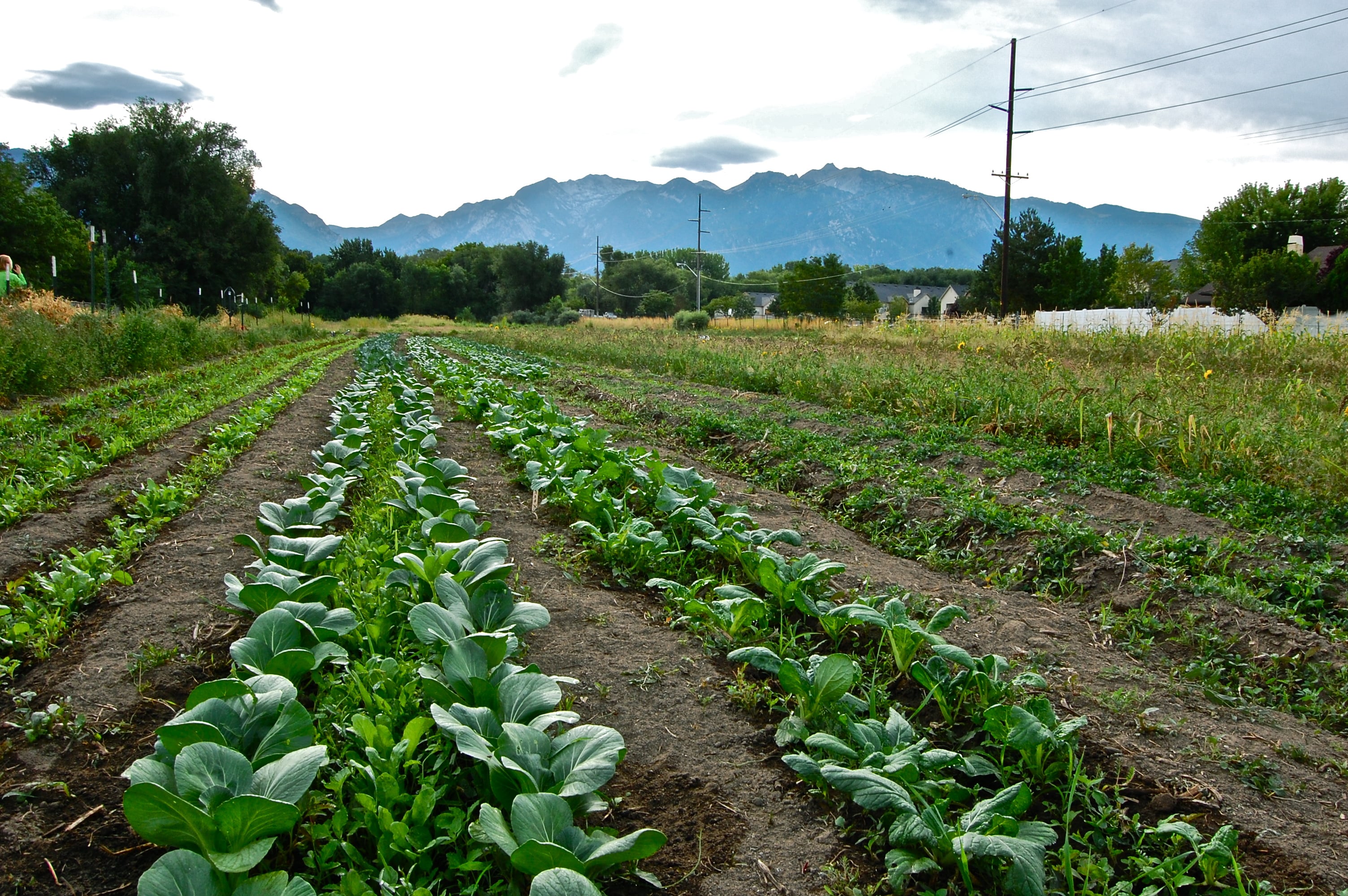
Are you a farmer looking for land? Salt Lake County plans to contract with a qualified individual or organization to use County-owned parcels of land less than an acre each along 1100 West and north of 3300 South for small plot urban farming to provide agricultural-based economic development opportunities to a local farmer. The bid, available here, is open until July 14th, 2015.
The Climate 25–Diverse Voices on Climate Change
By Jessica Oglesby, SLCgreen Intern
In “The Climate 25” The Weather Channel brings together 25 diverse voices and perspectives on climate change. Interviews range from a CEO of a Fortune 100 company to a US Army General to a Syrian refugee. Through these interviews the series explores the interconnections between climate change, security, energy, and peace.
Some may be surprised to encounter so many conservative voices in this series, like Christine Todd Whitman (former New Jersey Governor and EPA administrator), former congressmen Bob Inglis, and President George H.W Bush’s EPA chief, William Reilly, all of whom acknowledge climate change and talk about their own perspectives. Inglis believes that the republican orthodoxy is changing, and that they have got to start looking at market solutions like a carbon tax. Former New Jersey governor Whitman gripes that “the way the republican party is addressing the issue of climate change is both frustrating and puzzling.” She explains that the republican party has a long history of environmental action — like Nixon establishing the EPA — and that conservation is conservative.
National and global security are big topics that many of the 25 speakers touch on, including the four military members that were interviewed. Retired General Charles Jacoby explains that while climate change has become politicized, his years as a soldier have trained him to evaluate situations based on harsh realities, thus he recognizes the threat that climate change poses. He explains the military’s grave concern over the growing impacts of extreme weather, and competition over natural resources, including energy and clean water. For this 4-star general, and distinguished combat veteran, “the issue of climate change is always foremost in our minds.”
Henry Paulson, the former Secretary of Treasury (under Pres.Bush), believes that “climate change poses a massive threat to the world”, and that to do nothing about climate change would be “radical risk taking.” He believes that this is the greatest economic risk the US has ever faced. George Luber of the CDC sees other great risks of climate change when it comes to human health. He says that heat waves kill more people every year than all other extreme weather combined, and climate change has already resulted in more intense and frequent heat waves. Moreover, changes in climate will result in increased spread of diseases like Malaria and Lyme’s disease.
Other prominent voices in the series include: New York Times columnist Thomas Friedman, former CIA director James Woolsey, former deputy Undersecretary of Defense Sherri Goodman, Bangladeshi General Major Muniruzzaman, and special advisor to President Obama, Dr.John Holdren. Less prominent, but equally important voices include: community leaders in Uganda and Papua New Guinea, a Global Crop Diversity Trust special advisor, a WWF climate change policy expert, and the CEOs of Energy Innovation and Care USA.
Together the 25 voices form a refreshingly diverse picture of how urgent the issue of climate change is and how wide-reaching its impacts are. What do all 25 of the smartest voices on climate, security, energy and peace have to say about climate change? Watch the rest of this fresh video series to find out!
Top 3 Favorite Interviews:
General Jacoby <<http://weather.climate25.com/project/general-charles-h-jacoby-ret/>>
Heidi Cullen <<http://weather.climate25.com/project/heidi-cullen/>>
Henry Paulson <<http://weather.climate25.com/project/henry-paulson/>>
Watch all of the interviews here!

Mayor Becker Joins Mayors’ National Climate Action Agenda
By SLCgreen Intern Jenny Spaulding
Mayor Becker has joined the Mayors’ National Climate Action Agenda, showing his support for national climate change action. The MNCAA is an organization of mayors that are asking President Obama to “fight for the strongest possible climate agreement” at the UN Climate Conference in Paris in December.
Many initiatives in Salt Lake City reduce local environmental impact, however the Mayor recognizes the importance of federal action. The MNCAA released a letter to the president stating that “The United States can and should be the leader in the transition to a clean energy economy.”
Salt Lake City is now among the twenty-six cities represented by the coalition. Mayor Becker announced that “Salt Lake City is proud to be joining the MNCAA in this important call for action.”
Downtown Farmers Market Opens this Saturday!
By SLCgreen Intern Nicole Muehle
The Downtown Salt Lake City Farmers Market begins this Saturday, June 13th at Pioneer Park and will continue through the end of the summer. This year the market will be offering everything from canning classes to musical performances from local artists. See the full list of market events happening this summer!
Attending the Downtown Farmers Market is a great way to eat sustainably and get to know the local vendors. Spring and early summer crops include greens, strawberries, herbs, and spinach. There will also be baked goods, jams, and spreads.
Downtown Salt Lake City Farmers Market
Saturdays: 8:00 a.m.-2:00 p.m. (June 13th-October 24th)
Tuesdays: 4:00 p.m.-Dusk (August 4th-October 20th)
Located at Pioneer Park, 300 S. 300 W.
How Updated Energy Codes Will Benefit Utah
On Sunday, the Desert News printed an Op-Ed by David Brems with GSBS Architects and Kevin Emerson with Utah Clean Energy outlining how Utah needs new new energy codes that make buildings and homes more efficient. Here is an excerpt, you can read the entire piece online.
Air pollution is a top concern for Utah citizens. So is financial stability. Improving our air quality while saving money for Utahns is a win-win opportunity. This summer, decision-makers will be voting whether or not to adopt up-to-date building energy codes that will help new homes and buildings constructed in Utah cut energy waste, lower air pollution and reduce Utahns’ energy bills.
The average Utah home wastes far too much energy because it was not designed and constructed with energy efficiency as a priority. This is where the energy conservation codes come in. While lacking the flashy glamour of solar panels or electric vehicles, the “2015 International Energy Conservation Code” can dramatically reduce energy waste and related air pollution by incorporating common sense, readily available, yet often invisible efficiency solutions to new homes and buildings.
Industry leaders like GSBS Architects and public interest organizations like Utah Clean Energy see tremendous value in adopting the new energy code. But despite the benefits it brings to Utah families, businesses and consumers, getting the new code adopted has become a political undertaking. It shouldn’t be. Just consider the benefits from updating the energy codes.
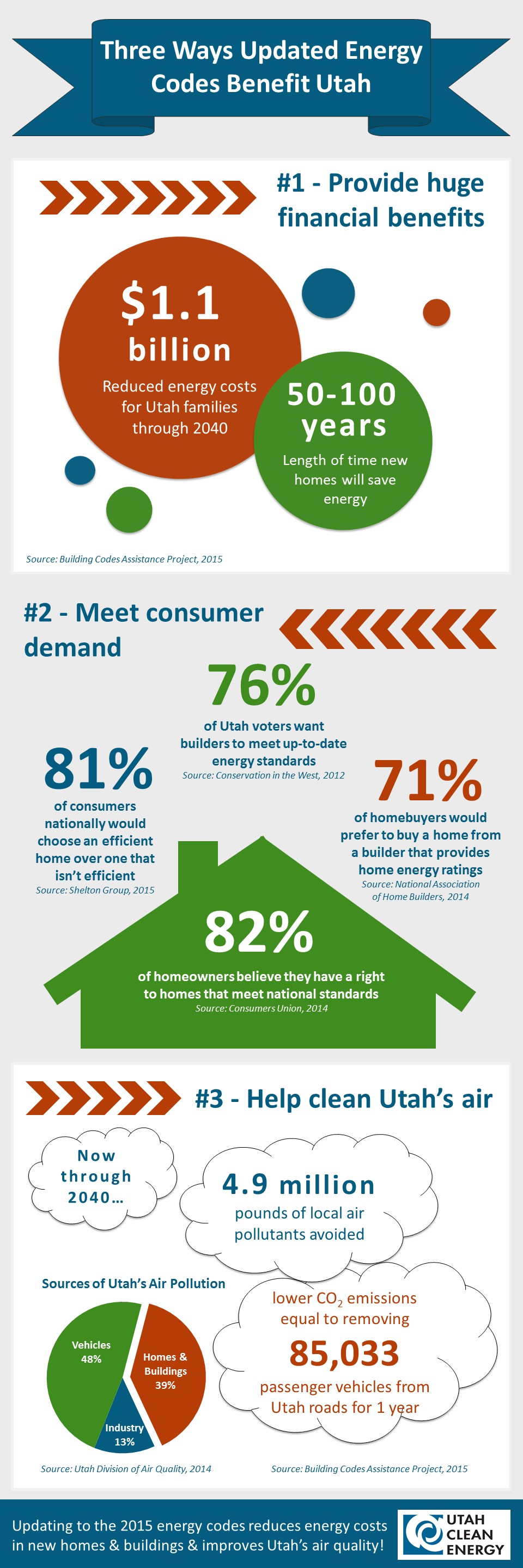
Utah Clean Energy has also released the following infographic — Three Ways Updated Energy Codes Benefit Utah. Take a look!
Salt Lake County Launches Farmlink Pilot Program
Salt Lake County Urban Farming is piloting a Farmlink program that aims to link available land in Salt Lake County with interested growers.
If you or someone you know is interested in finding land to farm, or if you have questions about our program, please contact Aaron Barlow by email at abarlow@slco.org, or by phone at 385-468-1824. You can download the Farmlink application online.
Some land may be owned by public entities such as Salt Lake County or a municipality, while some may be privately owned. Private landowners are motivated to lease land for commercial farming because the Utah Legislature has provided an opportunity for property tax reduction, given certain circumstances.
Meet the Master Recyclers!
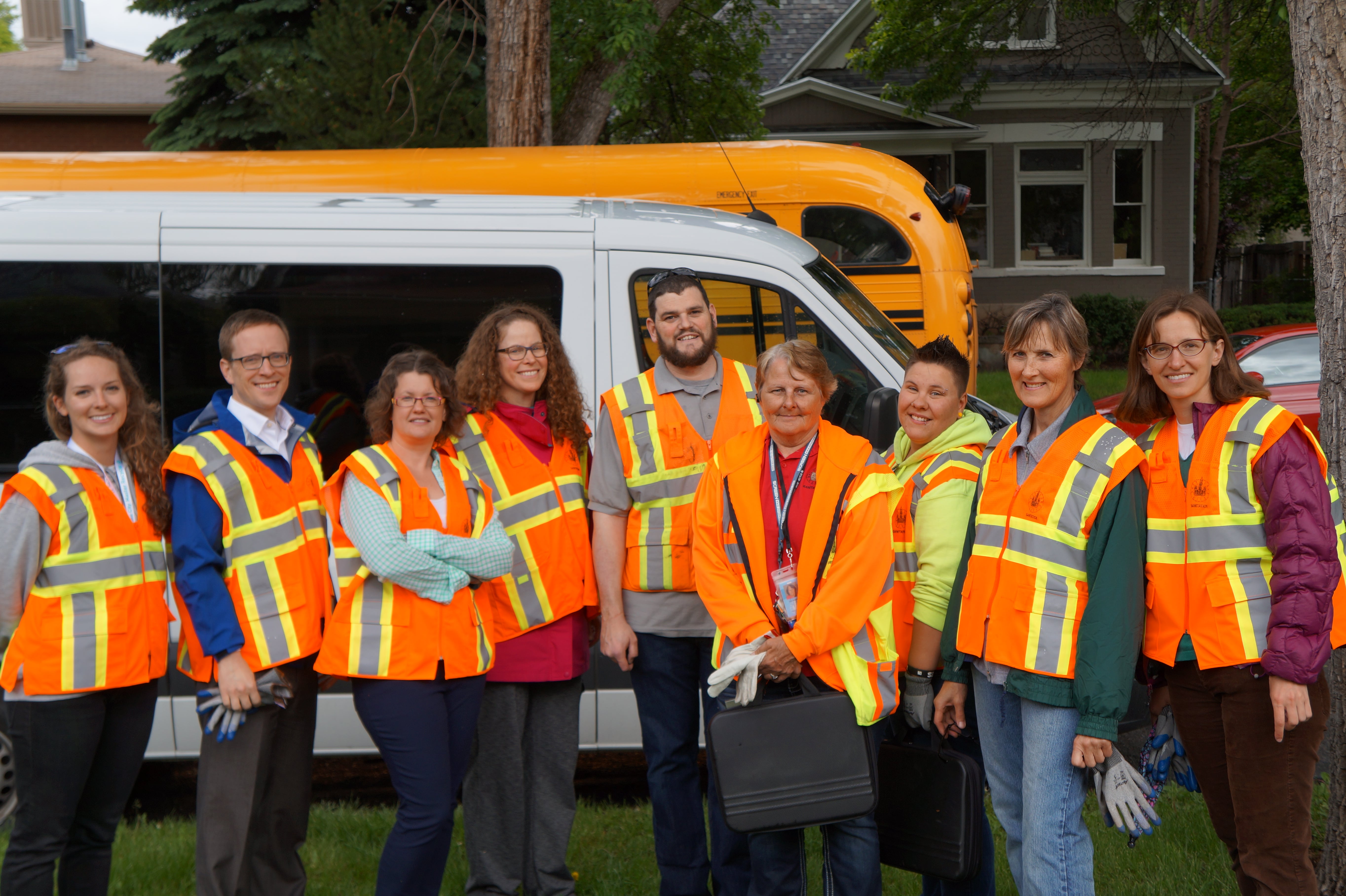
The inaugural class of Salt Lake City Master Recyclers are more than halfway through the program, and they are loving it!
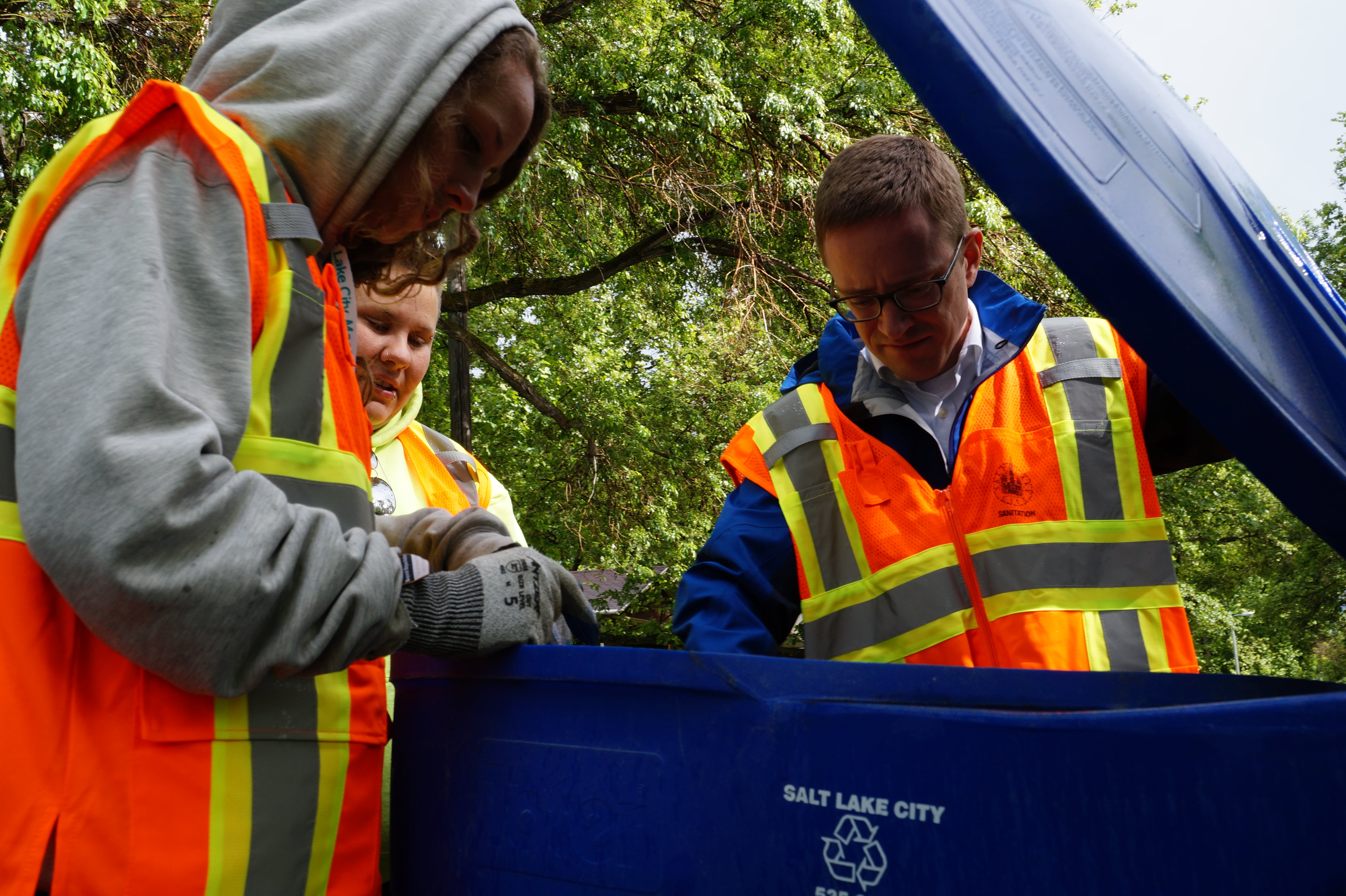
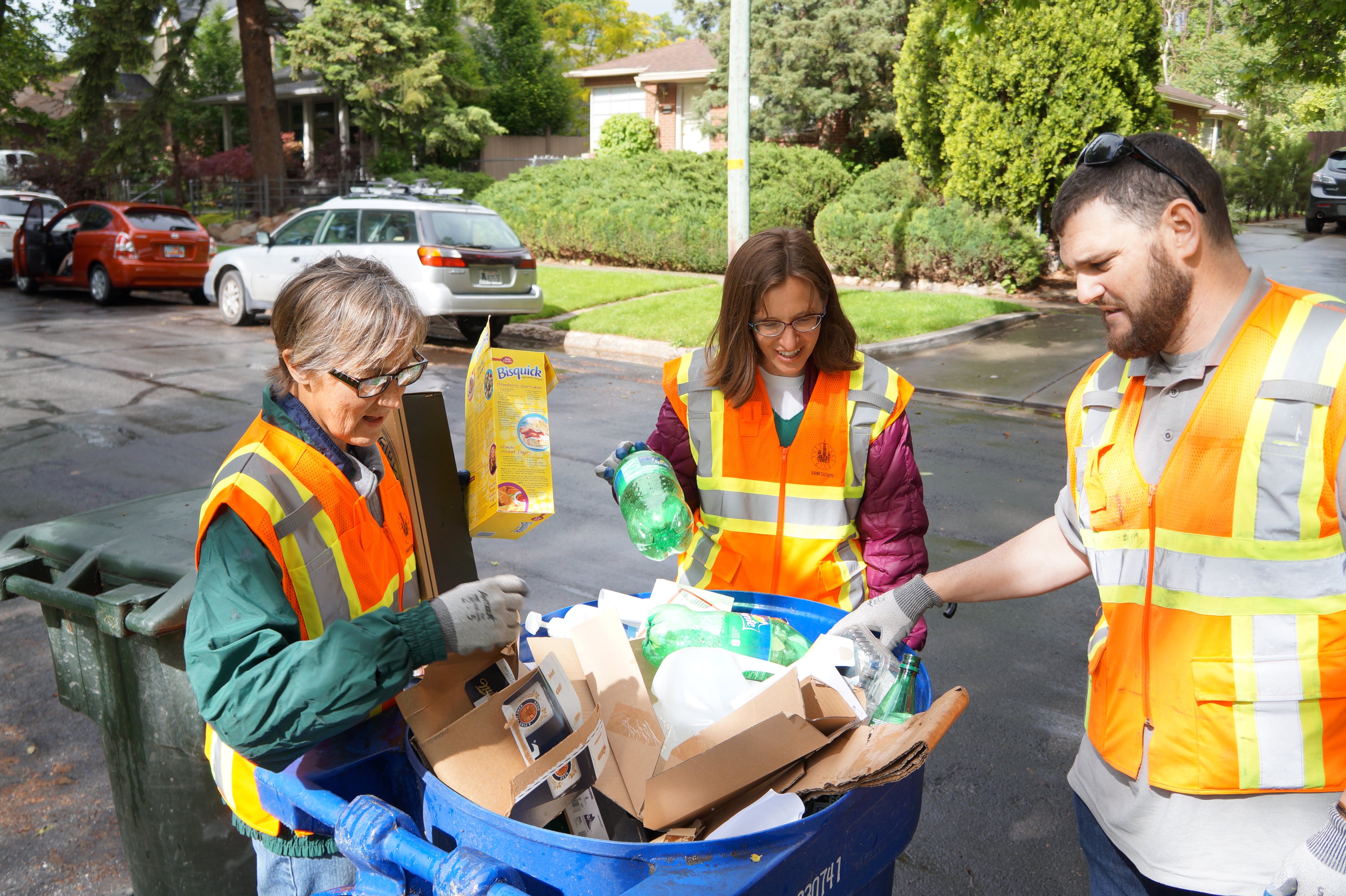
So far, the class has explored the Salt Lake County Landfill operation, learned about Salt Lake City’s curbside sanitation services (your friendly weekday garbage, recycling and compost collection), taken a behind-the-scenes tour of Rocky Mountain Recycling’s facility, explored the ins and outs of the City’s composting operation and, most recently, “tagged” along with Salt Lake City’s can inspection team.
What’s up next? A waste audit with Momentum Recycling and a tour of their local clean glass recycling facility, the climate impacts of waste and a class on effective community engagement strategies. Upon completion of the program later this month, each participate will dedicate 10 hours of volunteer time helping to educate the community about what they learned. At that point, they’ll become certified Master Recyclers!
Are you interested in participating in the future? Check out the newly launched SLCMasterRecycler.com!
Idle Free Signs
New #IdleFree signs are going up around the city. Do you know of a location that could use a sign? To suggest sign locations or to learn more, click here.
Help to make your workplace or child’s after school/summer program idle free! Contact Olivia Juarez at 801-535-7761 or Olivia.Juarez@slcgov.com for more information or to request a FREE sign.
Check out these great photos from businesses around town that have put up new signs:
Thanks to UCAIR for your generous support of an Idle Free City.
Salt Lake City’s Popular ‘Hive Pass’ Again Available to Residents
Following a highly successful pilot program last year, deeply discounted transit passes are again available exclusively to Salt Lake City residents.
Dubbed Hive Pass 2.0, this Salt Lake City program, in partnership with the Utah Transit Authority (UTA), continues to offer residents easier access to mass transit by reducing the cost of a UTA monthly adult pass by 50 percent.
“Our Hive Pass program has created a great new, and very affordable, way for residents to make public transit a regular part of getting around,” said Mayor Ralph Becker. “Not only does it create new mobility options, but using the Hive Pass makes a great contribution to addressing our air quality challenges, reduces traffic and helps make our community an even better place to live, work and play.”
Residents can purchase the Hive Pass for only $42 a month. Pass holders have access to unlimited rides on UTA buses, TRAX light rail, and the S-Line streetcar. The program also provides a $2.50 discount on one-way FrontRunner and Express bus trips. Hive Passes can be purchased for any amount of consecutive months up to a full year and will be activated on the first day of the month for which it is purchased. A 12-month purchase comes with an additional 10 percent discount.
Passes are sold Monday through Friday at the following locations and times. Customers must live inside Salt Lake City boundaries and bring a photo ID and two additional forms of eligibility documentation (proof of residence) to purchase a Hive Pass.
Salt Lake City & County Building
451 S. State Street
Treasurer’s Office, Second Floor
8:30 a.m. – 4:30 p.m.
Salt Lake Public Utilities Office
1530 S. West Temple St.
8:00 a.m. – 5:00 p.m.
Sorenson Unity Center
1383 S. 900 West
4:00 p.m. – 8:00 p.m.
To learn more about the Hive Pass, determine your eligibility and learn how to get your pass, visit www.ridewithhive.com, e-mail ridewithhive@slcgov.com or call 801-596-RIDE (7433).
SLC Debuts on National City Scorecard for Energy Efficiency
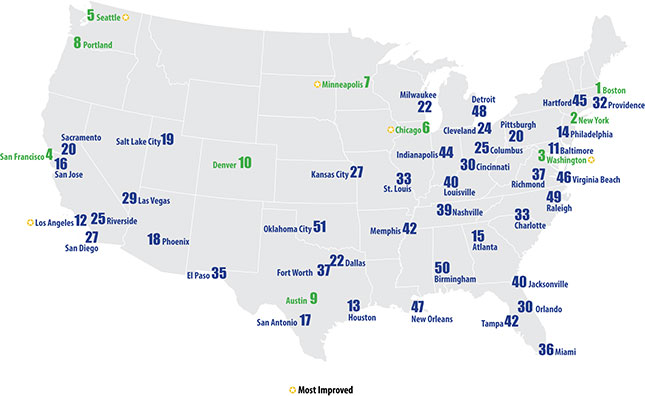
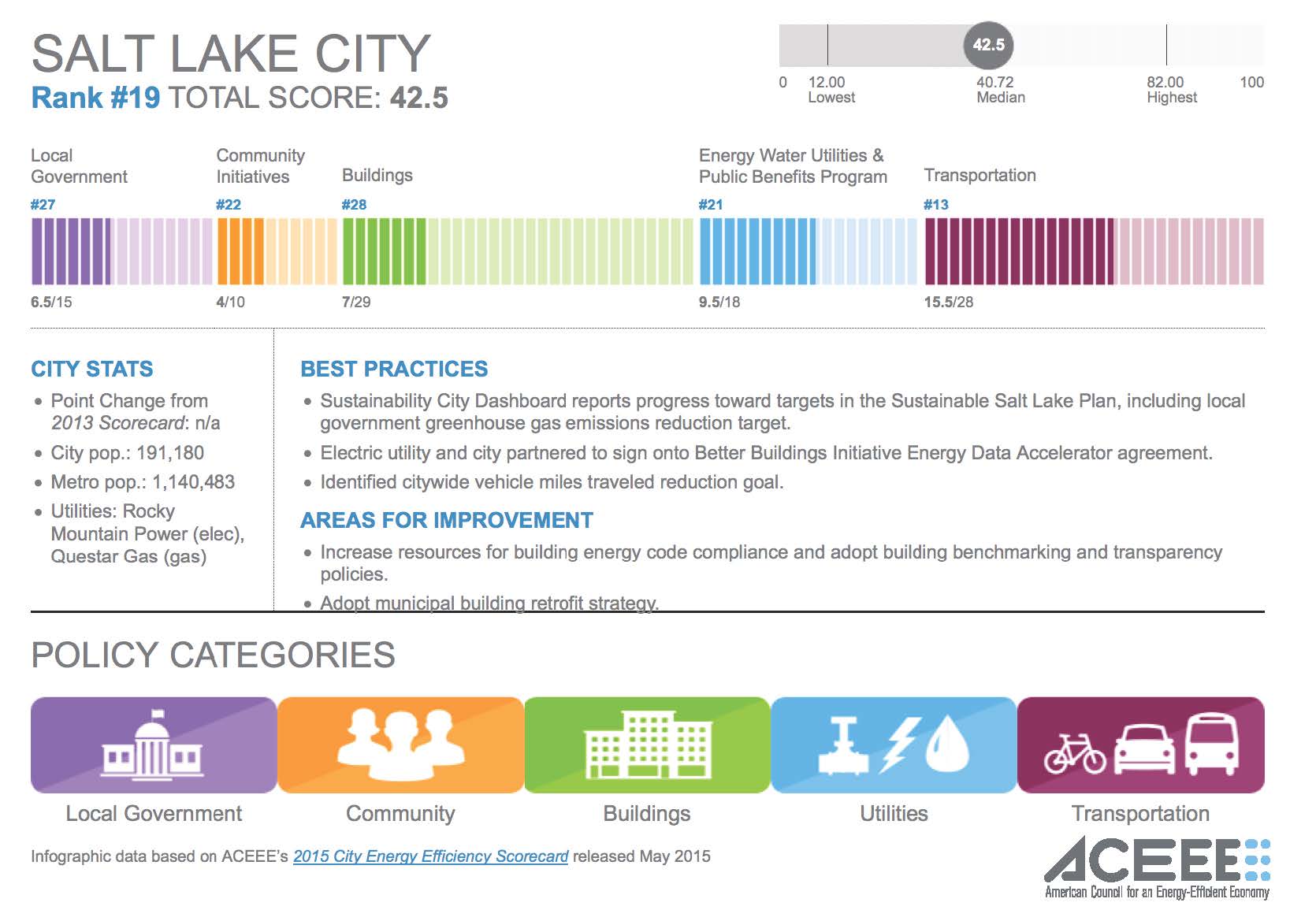
Mayors and local lawmakers in America’s largest cities continue to take innovative steps to lower energy costs for consumers and businesses, increase their resilience, and reduce pollution through increased energy efficiency, according to the 2nd edition of the City Energy Efficiency Scorecard, released today by the American Council for an Energy-Efficient Economy (ACEEE).
Salt Lake City makes its debut on the list this year, coming in #19 on the city scorecard. Check out the summary below for all the details! You can also explore the entire ACEE City Scorecard.