Mayor Becker Signals Support for Stronger Clean Air Protections


airquality

SALT LAKE CITY – Today, Salt Lake City Mayor Ralph Becker released a letter signed by more than 50 U.S. mayors from around the country signaling support for President Obama setting the strongest possible clean air protections against smog pollution, also known as ground-level ozone.

“Poor air quality is one of the most significant threats to our quality of life here in Salt Lake City,” said Mayor Becker. “Stronger smog protections will help our families breathe easier and spend more time outdoors, without having to worry about the quality of the air we breathe.”

According to the American Lung Association, inhaling smog pollution is like getting a sunburn on your lungs and often results in immediate breathing trouble. Long term exposure to smog pollution is linked to chronic respiratory diseases like asthma, reproductive and developmental harm, and even premature death. Children, seniors, and people with asthma are especially vulnerable to smog’s health impacts.

Salt Lake City is taking action to reduce its impact on air quality by increasing electric vehicle infrastructure, reducing fleet tailpipe emissions and replacing two-stroke maintenance equipment with more efficient models. Explore all of the actions Salt Lake City is taking to reduce air pollution at www.SLCgreen.com.

The letter was signed by a diverse coalition of local leaders and supports efforts by President Obama and the U.S. Environmental Protection Agency to stay true to the science and issue protections consistent with the recommendations from leading public health organizations like the American Lung Association, the American Academy of Pediatrics, and American Health Association.

Media Contact:

Kate Lilja Lohnes
Communications Manager
Salt Lake City, Division of Sustainability
(801) 535-7755


Mayor Becker Launches SLC Kids Explore Challenge to Salt Lake City Families

Go, Seek, Discover: 30 Minutes in Nature for 30 Days

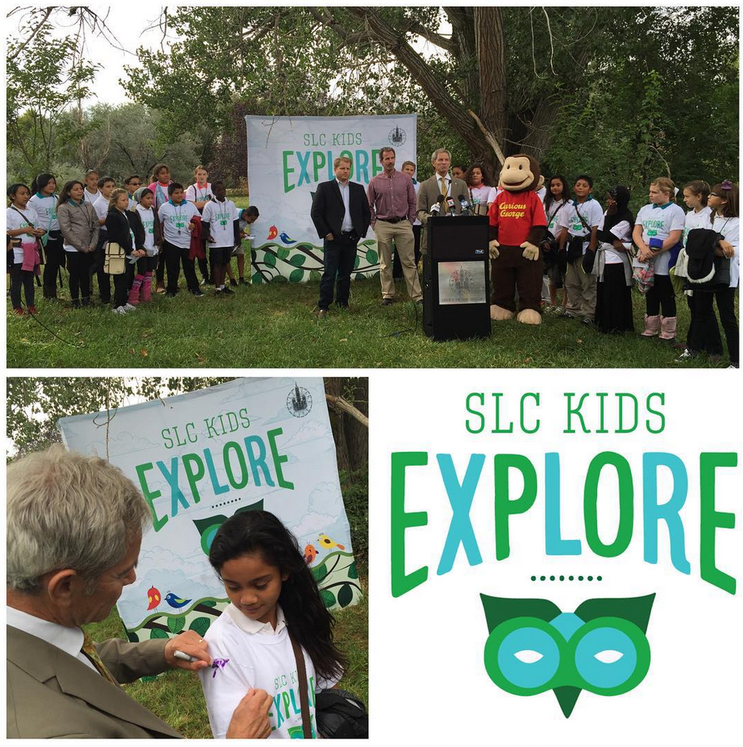
SALT LAKE CITY – Mayor Ralph Becker launched the SLC Kids Explore program on Thursday and issued a challenge to local youth (and their parents) to spend at least 30 minutes a day outdoors connecting with nature for a 30-day period. SLC Kids Explore was designed to create exciting new outdoor opportunities for students and to raise public awareness about the enormous health and societal benefits of spending time in nature.

“Our children benefit enormously from spending more time in the outdoors,” said Mayor Becker. “Our goal for the SLC Kids Explore project is to create and instill a passion and appreciation for nature in our kids through outdoor play and educational experiences. Salt Lake City is home to one of the most beautiful natural settings in the country and it’s important we pass on our enjoyment and benefits of getting outdoors, and a sense of stewardship, to our children.”

A directory of free nature activities is available on the new public calendar at www.goseekdiscover.com with suggestions on different ways families can get active while having fun and exploring new dimensions of Salt Lake City. Participants can post their activities, share stories and earn activity pass rewards for themselves and their families.

An important element of SLC Kids Explore is to lay the groundwork, through education and outdoor experiences, to cultivate the next generation of local environmental stewards. These young people will certainly be tasked with addressing the increasingly devastating effects of climate change and the mounting pressures on ecological balance. For many Salt Lake City children, more contact with nearby nature, surrounding mountains and parks will literally open up new vistas with lifelong impacts.

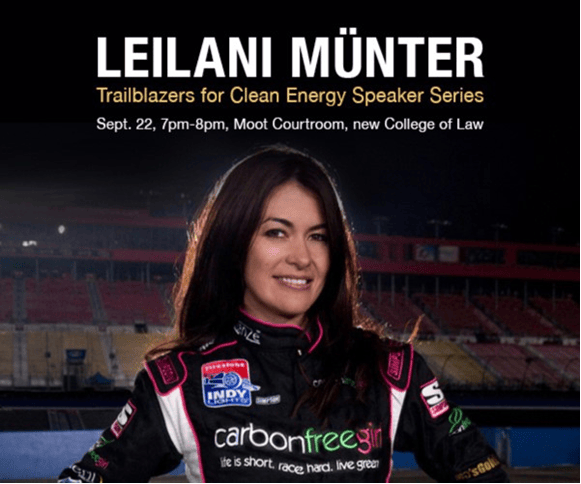
Trailblazer of Clean Energy: Leilani Münter Speaks on September 22

“Life is short. Race hard. Live Green”

September 22, 7pm-8pm.  S.J. Quinney College of Law
Get Your Tickets Today – $5

Munter

The unlikely combination of race car driver and environmental activist! Don’t miss your chance to hear from this extraordinary champion of climate change solutions!

When you think of race car driving, you usually don’t think of environmental activism – unless you know Leilani Münter. A star of the Sundance Film, Racing Extinction, and outspoken race car driver fighting for climate change solutions, Münter is also the first speaker in our Trailblazers of Clean Energy series!

WHEN: September 22, 2015. 7:00 pm

WHERE: S.J. Quinney College of Law, Moot Courtroom.  Parking for this event is available at the Rice Eccles stadium lot.


Drink Local: Reduce Your Water Footprint

By drinking local water, you can reduce your water footprint and your carbon footprint.  Bottled water has several negative impacts on the environment.  Bottle production, distribution, packaging, and transportation contribute to unnecessary water and carbon footprints.  Additionally, most plastic water bottles are not recycled, contributing to the waste stream and often ending up as litter and ocean pollution.  Drinking water in the US is well tested and safe to drink.  Drink local and avoid bottled water!

Check out this Bottled Water Footprint infographic by Wheels for Wishes to learn more:

Reduce Your Water Footprint by Wheels For Wishes

Eat Local Week

Eat Local Week is quickly approaching!  The week of September 12th-19th will be filled with local food events where your participation is strongly encouraged!  A significant part of Eat Local week is the Eat Local Challenge, a fun and exciting way to get a better understanding of where your food comes from. The Challenge is simple, eat as local as you can.

What is local? Try for food within 250 miles from your home. Why?  There are a myriad of reasons.  Eating locally enhances the local economy. Every dollar spent at a locally generates $2.80 of economic activity for our community.  Supporting local farmers has a multiplier effect throughout the local economy as a whole. Local farms generate jobs for the community, farmers’ markets bring customers to surrounding businesses, and they support farmers who are likely to spend money locally on agricultural supplies. (1)  In our conventional food system, farmers receive an average of 20 cents of each dollar spent on food. In a direct-to-consumer market like a farmers’ market or CSA (community supported agriculture share), the farmer receives the direct profit. (2)

Smaller family farms are often more sustainably run than large industrial or factory farms.  “Industrial farming negatively impacts the environment in myriad ways (e.g., by polluting the air, surface water, and groundwater, over-consuming fossil fuel and water resources, degrading soil quality, inducing erosion, and accelerating the loss of biodiversity).  Many small-scale, local farms attempt to ameliorate the environmental damage done via industrial farming by focusing on sustainable practices, such as minimized pesticide use, no-till agriculture and composting, minimized transport to consumers, and minimal to no packaging for their farm products.” (1) Small farms typically grow a variety of crops, adding variation to protect biodiversity and preserve a larger agricultural gene pool. (2)  Local growers can tell you how the food was grown. There is an accountability piece with buying locally produced food, where you can talk directly to farmers and ask about sustainable practices used to grow and harvest the crops.

Fresh food and food that is in season tastes better!  Local food is often more fresh and harvested closer to peak ripeness, with packing, shipping, and shelf-life stages removed.  This contributes to quality and flavor.  On average, in the United States, food travels about 1500 miles from farm to plate.  “Fresh food tends to have more nutrients than food that was picked days or weeks ago,” says Michael Pollan, author of “Food Rules: An Eater’s Manual.” (1) Enjoy Utah’s local food this Eat Local Week!

To learn more about eating locally, visit Eat Local Week Utah’s website.

(1) Grace Communications Foundation.  Local and Regional Food Systems. http://www.sustainabletable.org/254/local-regional-food-systems Accessed Sept. 2, 2015.

(2) Project Open Hand. The Benefits of Eating Locally Grown Foods. http://www.openhand.org/2011/07/20/the-benefits-of-eating-locally-grown-foods/ July 20, 2011.

City Saves Energy with Electronic Building Plans

Salt Lake City’s Building Services Division has moved to completely electronic building plans in favor of energy savings.  Based on 2,500 building plans reviewed per year, Salt Lake City and its customers will save approximately 360,000 miles driven, 512,000 pounds of paper and prevent 2,300 pounds of hydrocarbons from being released into the atmosphere annually.  Additionally, with all plans now available online for viewing by staff, there have been substantial savings in time and resources tracking down archived files, which were previously located in an offsite storage facility.

Although electronic plan review submissions were only made mandatory a few months ago, the City has been using the electronic plan program for four full years.  It’s estimated that on a voluntary basis, about 35% of reviews have been paperless over the past four years.  This has saved 504,000 miles driven, 716,000 pounds of paper and prevented 3,220 pounds of hydrocarbons from being released into the atmosphere.  Way to go, Building Services!

Credit: Orion Goff, CBO, Building Official, Director, Building Services and Civil Enforcement, Salt Lake City Corporation

Off Broadway Community Garden Celebration

Today we celebrated the opening of Salt Lake City’s newest community garden, Off Broadway Community Garden.  Media representatives and residents joined Mayor Ralph Becker, Alex Eaton of the Community Foundation of Utah, Ashley Patterson of Wasatch Community Gardens, and Abby Bluth of Off Broadway Community Garden for the celebration.

“Salt Lake City recognizes the high demand for community gardens in our downtown core, which highlights their importance in building a strong local food system,” said Mayor Becker. “The Off Broadway Community Garden project, located in a neighborhood with a two-year waiting list for garden plots, now provides 30 more city residents the opportunity to grow and enjoy fresh organic produce.”  Here’s a link to a great video of Mayor Becker’s speech!

Last year, Salt Lake City’s Green City Growers program was awarded $50,000 in grant funds to support the development of two new community gardens, including the Off Broadway Community Garden. The award included $25,000 from the Local Sustainability Matching Fund, a Partners for Places project of the Funders’ Network for Smart Growth and Livable Communities. The Community Foundation of Utah provided the $25,000 grant match and will manage permanent endowments.

“We are committed to sustainable nonprofits and sustainable communities, and this project is a demonstration of both,” said Alex Eaton, Executive Director of the Community Foundation of Utah. “We are proud to support this project, which increases access to healthy food and strengthens our local community.”

Salt Lake City works directly with Wasatch Community Gardens and community members to develop gardens within City limits. Wasatch Community Gardens is a community-based nonprofit that has served Salt Lake County for over 25 years.

For more information on the Green City Growers Program, which provides City owned/managed land for the development of community gardens, please visit www.SLCgreen.com.

News links:

KUER News: http://kuer.org/post/slc-community-gardeners-struggle-meet-demand#stream/0

SLC Mayor’s Office: http://www.slcmayor.com/read/2015/8/24/mayor-becker-community-partners-to-announce-new-downtown-community-garden

Solar Farm Tour

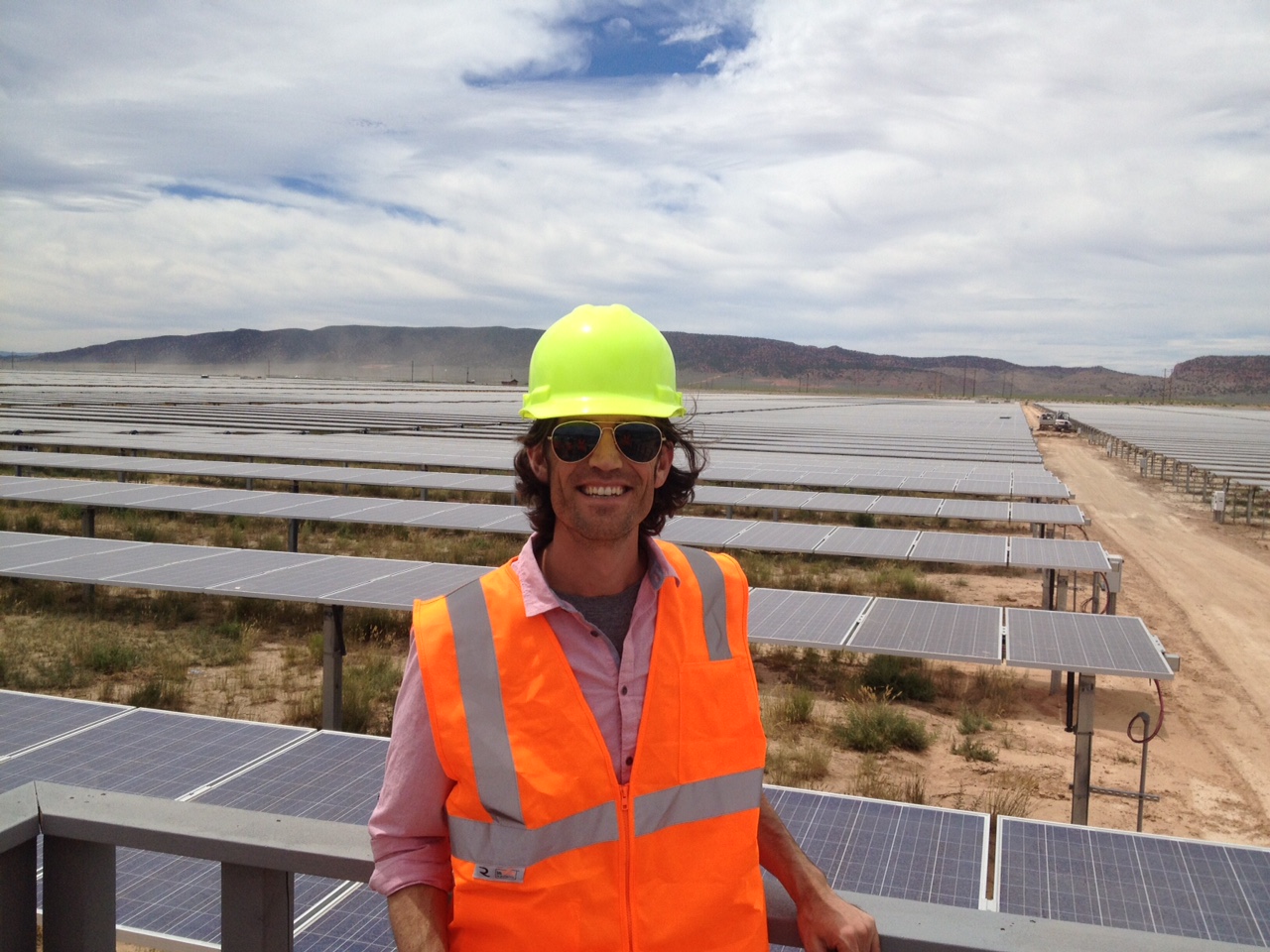
Parawon Solar Tour (Scatec) - Aug 5, 2015Tyler Poulson (pictured) from SLCgreen traveled to Parowan, UT with a busload of other solar enthusiasts to tour Utah’s first utility scale solar project. The tour was hosted by Utah Clean Energy, EDCUtah, and the Utah Governor’s Office of Energy Development.

This project is the first of many large-scale solar installations that will occur in Utah by the end of 2016.  Additional details are included below:

• This 340,000 solar panel project is being developed by a Norwegian company (Scatec Solar), but over 80% of the onsite labor to-date and sub-contracted work is from Utah. Part of the land is being leased from an alfalfa farmer who eagerly moved his operations, and water rights, elsewhere in spacious Iron County.

• Scatec Solar has signed a 20-year Power Purchase Agreement (PPA) with Rocky Mountain Power (RMP). The contract locks in an electricity price for RMP and its customers.

• This specific solar power plant covers 630 acres. Each row of panels will track the sun east-to-west daily to produce enough electricity for about 60,000 energy-efficient residential customers (assuming use of 3,400 kWh / year). See a panoramic view of the plant.  Generating the same amount of electricity with coal over a 25-year time frame (equal to the warranty of the panels), would require about 13,000 pounds of coal per individual panel installed.

• This 104 megawatt (DC) solar project will be fully operational in December 2015, but represents just 10% of the total new utility-scale solar development that will occur in Utah over the next 17 months. An additional 900 MW, over roughly 3,000,000 new solar panels, will be added by third-party companies. All of these arrangements are contracted through PPAs with RMP at Avoided Cost pricing, locking in a fixed rate for energy for decades.

Here is a link to a video about the tour, and more photos are available on Utah Clean Energy’s Facebook page.

Inspiring Outdoor Stewards

Salt Lake City was selected as one of the first 50 cities to participate in a nationwide movement to inspire and encourage young people to experience the outdoors.  U.S. Department of the Interior Secretary Sally Jewell joined Mayor Ralph Becker, Vice President and General Manager of American Express Salt Lake City Victor Ingalls, and President and CEO of the YMCA of Northern Utah Rich West to announce grants totaling $258,653 to organizations throughout Utah, including the Utah Conservation Corps, Grand Staircase Escalante Partners, River Restoration Adventures for Tomorrow, and American Conservation Experience.

“For the health of our economy and our nation’s public lands, it’s critical that we work now to establish deep, meaningful connections between young people – from every background and every community – and America’s great outdoors.” -Interior Secretary Sally Jewell.

The initiative, funded as part of a $5 million national commitment by the American Express Foundation, will provide two years of funding for the YMCA of Northern Utah to create a community coordinator position to facilitate collaboration, grow resources, and increase participation in outdoor programs on all public lands in Salt Lake City, from local parks to federal lands and waters. The funding will also support efforts to engage young adults and veterans to serve on the 21st Century Conservation Service Corps and engage new volunteers during next year’s National Park Service Centennial.

“When young people are given an opportunity to care for public lands, their experiences often inspire lifetime connections to their backyard parks and beyond,” said Secretary Jewell. “Volunteering opens doors to new and exciting career opportunities that can transform the personal lives of youth while benefiting the communities and special places they work to improve.”

“Salt Lake City is home to one of the most beautiful natural settings in the country and we couldn’t be more thrilled by this news. Our children benefit enormously from spending more time in nature, and this new funding will help us expand our work in Salt Lake City to help increase the amount of time our kids spend outdoors.” – Mayor Ralph Becker.

Victor Ingalls, American Express Vice President and General Manager in Salt Lake City said, “Since our founding more than 160 years ago, American Express has seen how America’s parks and public lands contribute to our sense of national and local identity, and we are proud to lead an effort to mobilize a new generation of volunteers to protect, conserve and revitalize America’s public lands and treasured national parks.”

“Many people in our urban neighborhoods don’t always have the chance to experience all that our public lands in and around the city have to offer,” said Rich West, President and CEO of the YMCA of Northern Utah. “This initiative will help us bring together leaders in conservation, education, recreation and service to provide opportunities to deepen connections to these natural and historic sites, develop important skills, and engage in activities where they can give back and strengthen our community.”

The movement is part of First Lady Michelle Obama’s Let’s Move! Outside initiative and part an overall strategy by the Obama Administration to connect young people to the outdoors. Other efforts include the President’s recently announced Every Kid in A Park initiative to provide all fourth grade students and their families with free admission to national parks and other public lands and waters for a full year, and the National Park Service’s Find Your Park campaign preparing for next year’s centennial of the National Park System.

For more information about the initiative, visit: www.doi.gov/youth

Source: U.S. Department of the Interior, Press Release, “Interior Department Selects Salt Lake City as Priority City to Connect Youth to the Great Outdoors,” August 6, 2015. http://goo.gl/uxued5


SLCgreen is Hiring


Title
: Electric Vehicle Charging & Clean Transportation Project Coordinator
Duration: 15 – 20 hours per week for roughly nine (9) months
Compensation: $15-18 per hour, depending on qualifications

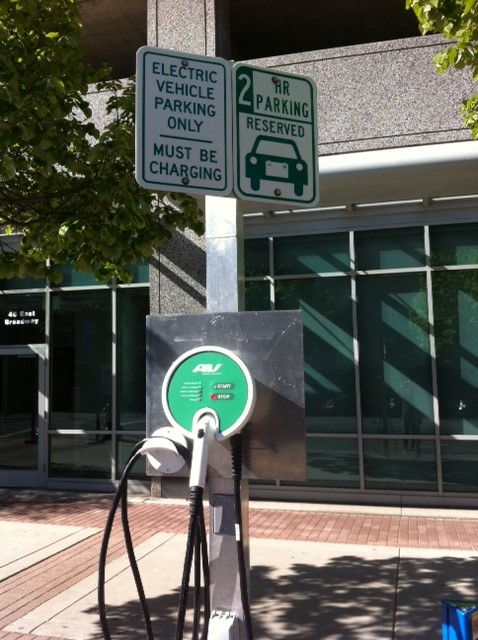
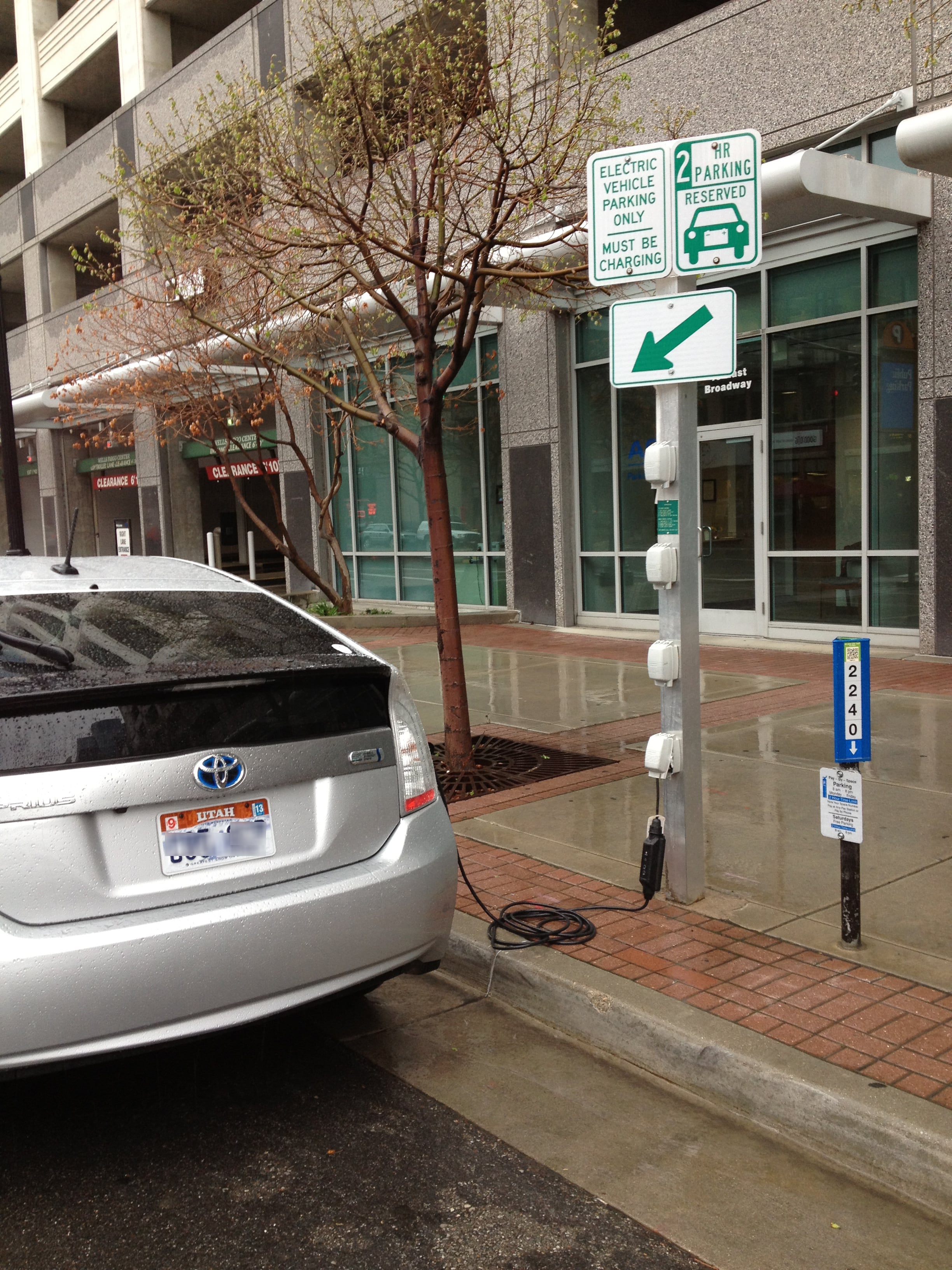
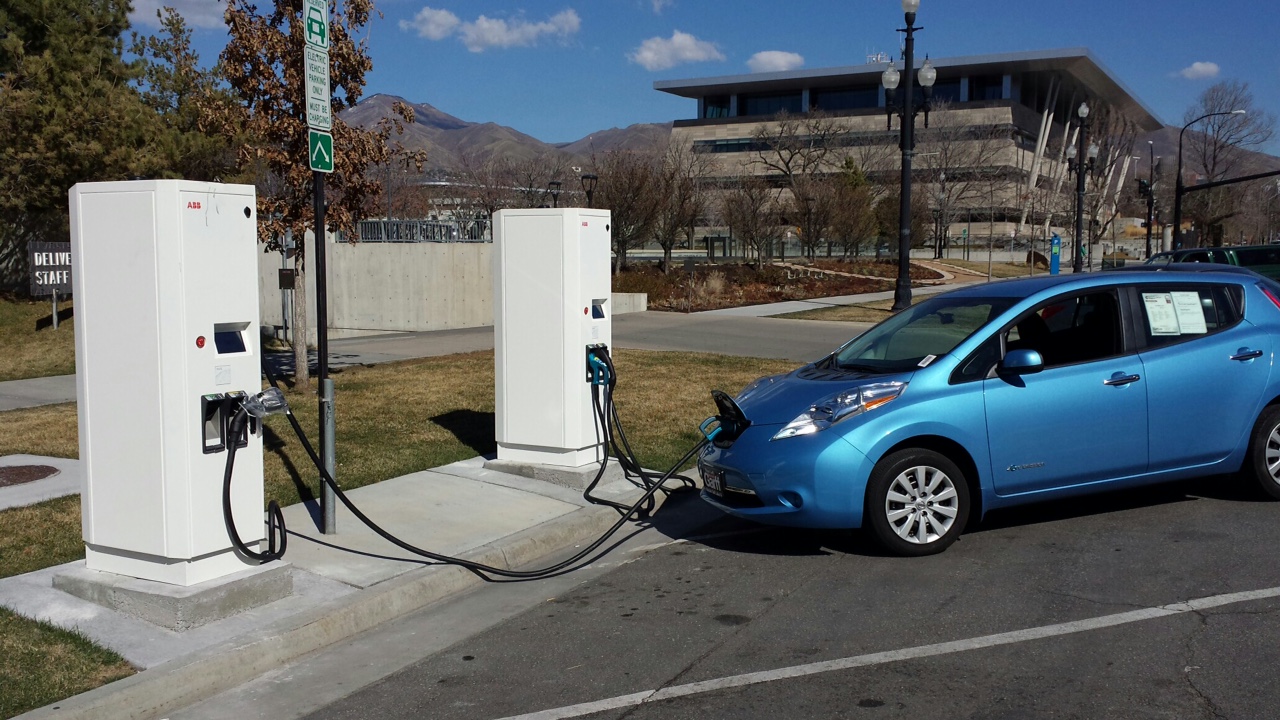
EV Charging.Level 2 (2)The Division of Sustainability is looking for an Electric Vehicle Charging and Clean Transportation Project Coordinator to assist with the deployment of public electric vehicle (EV) charging infrastructure and support ongoing emissions reductions in the City’s vehicle fleet. The City recently received a grant to fund new EV charging infrastructure throughout the community. The City currently operates publicly accessible EV charging infrastructure at six separate locations and the outcomes from this project will complement and significantly build upon this charging network. The Project Coordinator will be responsible for coordinating the analysis, planning, procurement and initial deployment of infrastructure for this project.

IMG_0465 SLC EV Fast-Charge Station - Mar 2015

The City has a number of department-specific plans to reduce air quality and climate change pollutants from the municipal fleet. The Project Coordinator will be responsible for reaching out to staff to drive ongoing implementation and understanding of clean fleet procurement, vehicle use coordination, and behavioral changes in order to ensure ongoing emissions reductions. The Project Coordinator may also be assigned additional duties related to energy and/or emissions reductions, or other portions of the City’s sustainability program, as needed.

This Project Coordinator role is a part-time, temporary position. The position will require 15-20 hours per week for approximately nine (9) months, depending on status and needs of assigned projects. There will be flexibility to work remotely, in addition to a need to coordinate and attend ongoing meetings with City staff from various departments along with community partners. Selected candidate will need to largely work autonomously and should possess solid technical and communications skills in order to deliver on necessary tasks.

Qualifications

  1. Bachelor’s degree in environmental science, environmental policy, engineering, business or related field from an accredited college or university.
  2. Demonstrated success coordinating past projects, including strong organization skills, analytical capabilities and verbal and written communications. Experience with evaluating energy and/or emissions impacts is preferred.
  3. Possession of Driver’s License or Utah Driving Privilege Card and the ability and means to travel between office and other City locations.

To apply for this position:

Email resume and brief cover letter to: Debbie Lyons, Sustainability Program Director at debbie.lyons@slcgov.com.

Deadline to apply is Thursday, September 10, 2015.