Category Archives: Smart Energy

Buildings are Key to Salt Lake City’s Clean Air Future

Untitled

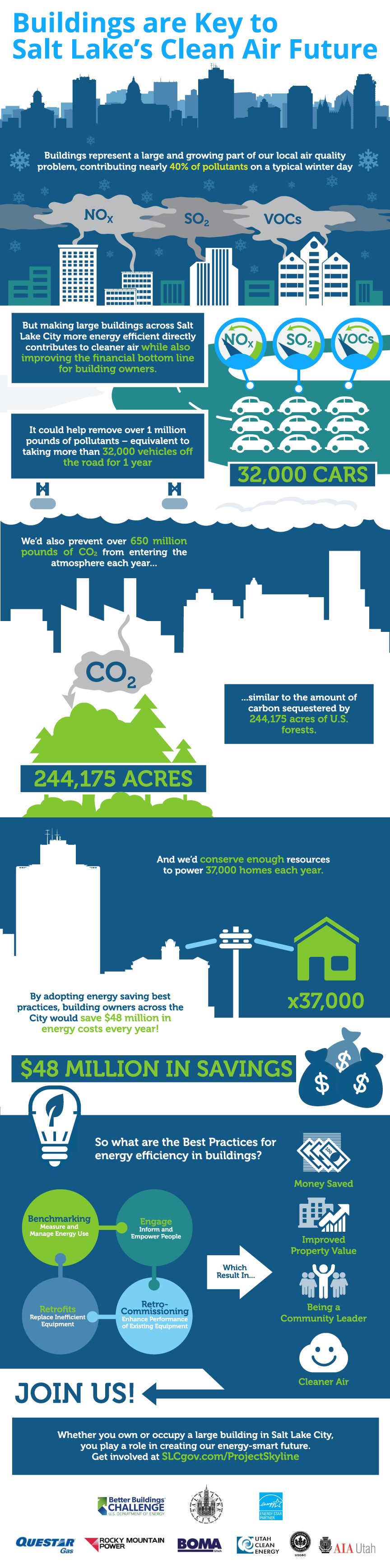
Buildings represent a large and growing part of our local air quality problem.  A new infographic, released at the Mayor’s Project Skyline Awards Ceremony, presents statistics on building energy efficiency and economic benefits. For example, buildings contribute nearly 40% of pollutants on a typical winter day. By making buildings more energy efficient, we can conserve enough resources to power up to 37,000 homes every year. If Salt Lake City were to adopt energy savings best practices, building owners across the city could save up to $48 million dollars annually.

As many know, Salt Lake City has significantly poor air quality, especially during the winter months; however, fewer know how dramatically we can improve our air quality by improving the energy efficiency of our buildings.  By making large buildings in Salt Lake City more energy efficient, we could remove one million pounds of pollutants, which equates to taking 32,000 vehicles off the road for one year. Additionally, we would prevent 650 million pounds of CO2 from entering the atmosphere each year! View the complete infographic for additional facts.

Join us and become a part of Project Skyline to save money, improve property values, and clean our air.

Salt Lake City Announces Project Skyline Challenge Award Winners

ProjectSkyline 400

Today, Salt Lake City Mayor Ralph Becker, Kathleen Hogan, Deputy Assistant Secretary for Energy Efficiency for the U.S. Department of Energy, and Matthew Dalbey, Director of the Office of Sustainable Communities for the U.S. Environmental Protection Agency, joined City leaders and building owners in honoring the winners of the Project Skyline Mayor’s Challenge 2015 Awards. Project Skyline, a multi-year challenge to reduce building energy use in buildings across the city, was launched in May 2014. The goal is to challenge building owners across Salt Lake City to proactively meet – and exceed – the air quality and energy-saving targets of the Sustainable Salt Lake – Plan 2015 by 15 percent by 2020. Throughout its first year, Project Skyline has been overwhelmingly successful, hosting educational and networking workshops, providing resources for evaluating the building’s energy use, and helping establish energy-saving goals for each business involved.

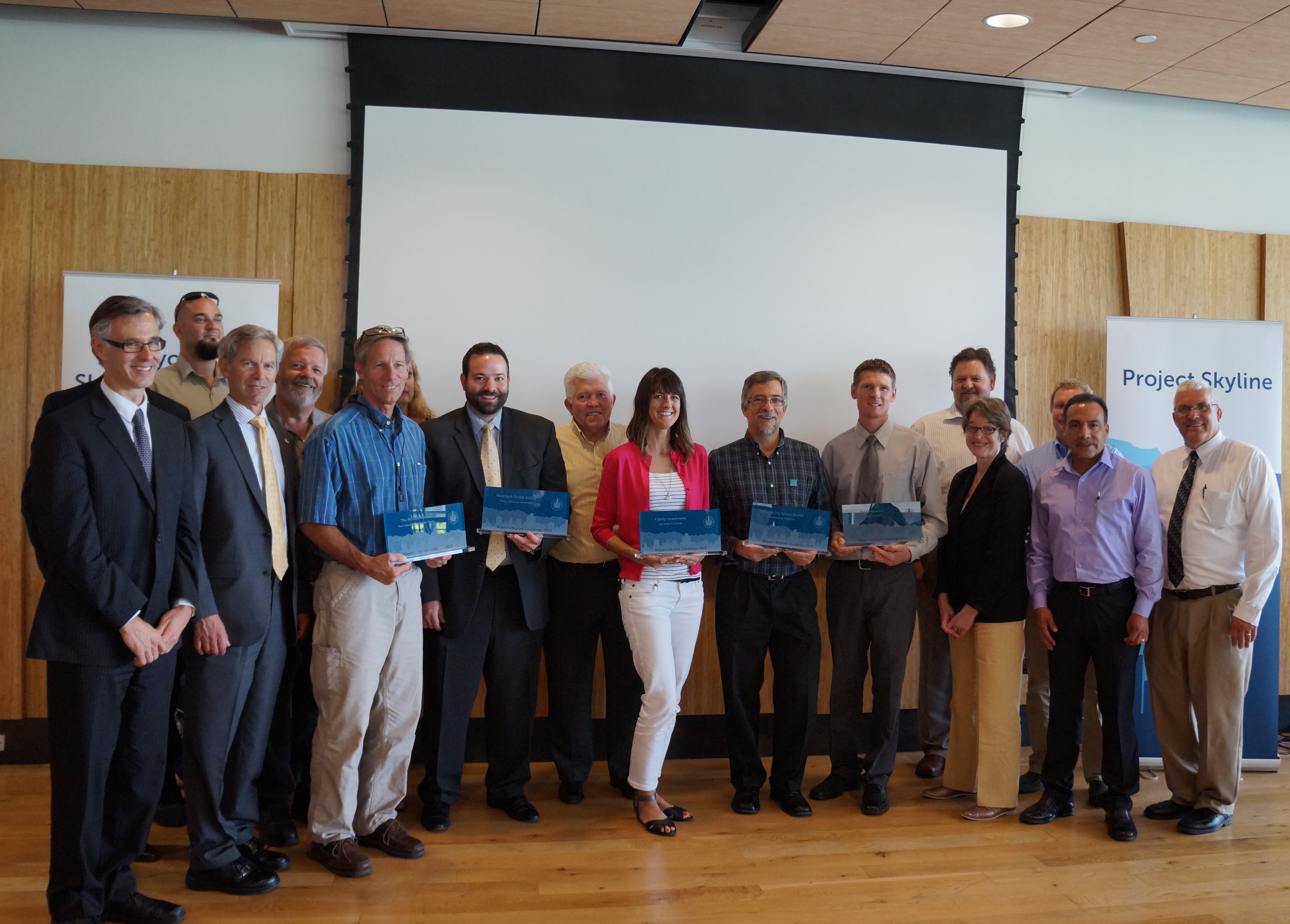
At the 2015 Project Skyline Awards Luncheon, five winners were recognized for their leadership in Challenge efforts over the past year.

This year, the Energy Innovator Award goes to Basic Research. Basic Research has improved the efficiency of their 230,000-square-foot facility by improving the lighting, HVAC systems, and installing the largest privately owned solar photovoltaic project in the state of Utah. By making these improvements, Basic Research has improved their ENERGY STAR score from 10 to 99.

The Sustained Excellence Award goes to Fidelity Investments. Across the country, Fidelity Investments is working to obtain LEED certification in 65 percent of their buildings and their location on 49 N 400 W is no exception. The building falls under LEED Silver certification, and recently, they added LED lighting and lighting controls and photovoltaic panels to improve the building’s ENERGYSTAR score to 96.

The McGillis School, a private co-ed school located on the Northeast bench of the Salt Lake Valley, has earned the Most-Improved EnergyStar Score Award. In 2014, the school reported an ENERYSTAR score of 97, which marks a 17 point improvement from 2013.

The Energy Efficiency Leadership Award goes to Newmark Grubb ACRES. Throughout the past year, Newmark Grubb ACRES has helped tremendously attending and presenting at multiple workshops. Company leadership also participates on BOMA Utah’s Energy and Sustainability committee and helped launch the BOMA Utah Kilowatt Crackdown. Additionally, the company is working on energy efficiency in several of its properties and are continuing to improve their ENERGYSTAR scores.

Lastly, the Benchmarking Champion Award goes to the Salt Lake City School District. Since 2009, the Salt Lake City School District has begun benchmarking to monitor energy consumption in over 40 buildings. Not only are 72 percent of the district’s schools benchmarked, but they are also certified ENERGY STAR buildings. They have seen an an 18 percent improvement in ENERGY STAR scores in all of their buildings.

Congratulations to these businesses.  For more information on Project Skyline and the Mayor’s Challenge, visit our website.

 

How Updated Energy Codes Will Benefit Utah

On Sunday, the Desert News printed an Op-Ed by David Brems with GSBS Architects and Kevin Emerson with Utah Clean Energy outlining how Utah needs new new energy codes that make buildings and homes more efficient. Here is an excerpt, you can read the entire piece online.

Air pollution is a top concern for Utah citizens. So is financial stability. Improving our air quality while saving money for Utahns is a win-win opportunity. This summer, decision-makers will be voting whether or not to adopt up-to-date building energy codes that will help new homes and buildings constructed in Utah cut energy waste, lower air pollution and reduce Utahns’ energy bills.

The average Utah home wastes far too much energy because it was not designed and constructed with energy efficiency as a priority. This is where the energy conservation codes come in. While lacking the flashy glamour of solar panels or electric vehicles, the “2015 International Energy Conservation Code” can dramatically reduce energy waste and related air pollution by incorporating common sense, readily available, yet often invisible efficiency solutions to new homes and buildings.

Industry leaders like GSBS Architects and public interest organizations like Utah Clean Energy see tremendous value in adopting the new energy code. But despite the benefits it brings to Utah families, businesses and consumers, getting the new code adopted has become a political undertaking. It shouldn’t be. Just consider the benefits from updating the energy codes.

Read more.

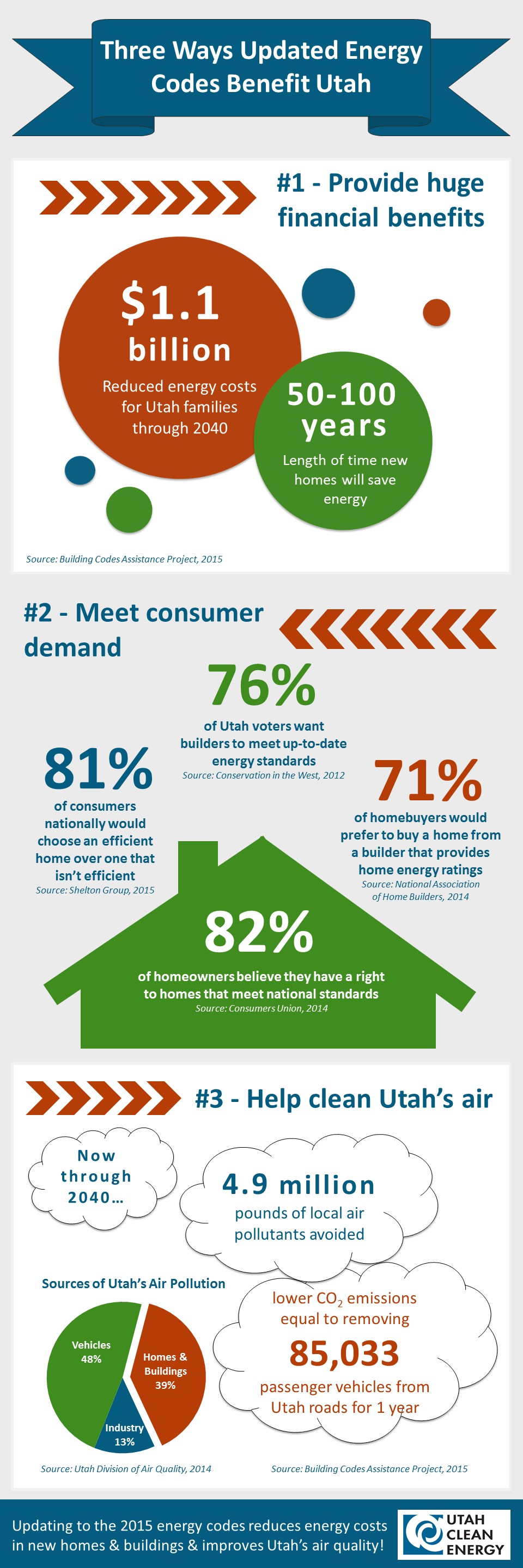
Utah Clean Energy has also released the following infographic — Three Ways Updated Energy Codes Benefit Utah. Take a look!

Updated Energy Codes in Utah

SLC Debuts on National City Scorecard for Energy Efficiency

2015-city-scorecard-web

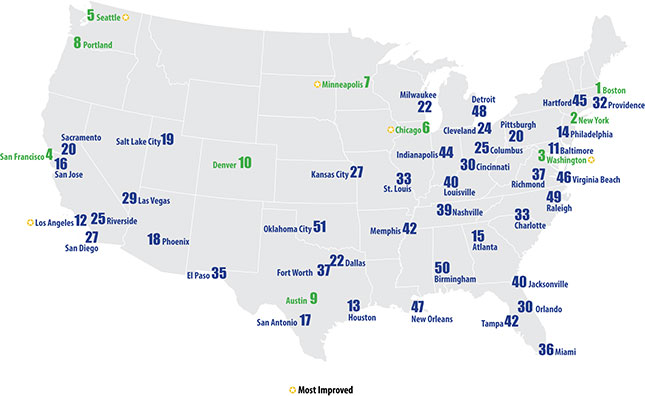
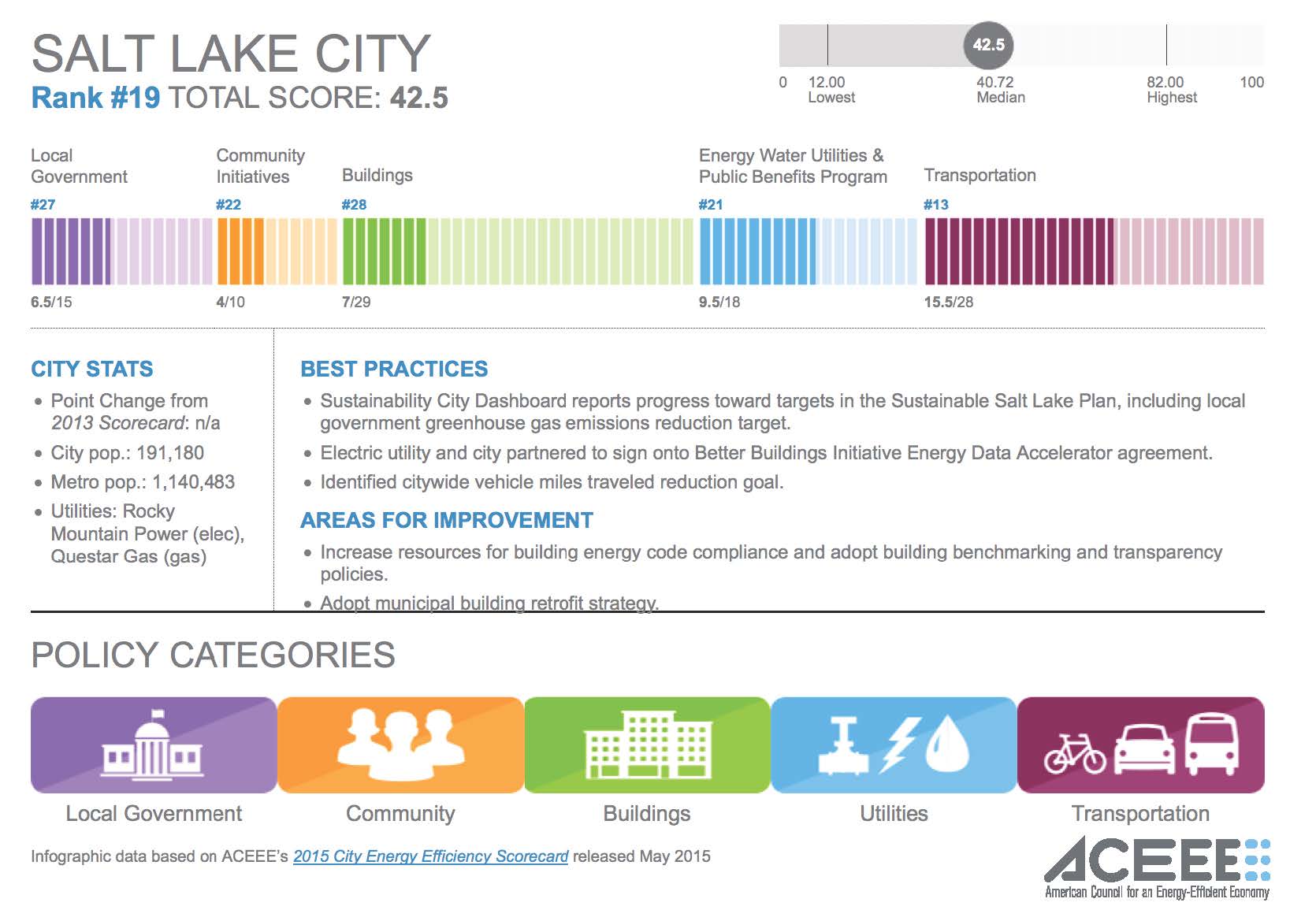
Mayors and local lawmakers in America’s largest cities continue to take innovative steps to lower energy costs for consumers and businesses, increase their resilience, and reduce pollution through increased energy efficiency, according to the 2nd edition of the City Energy Efficiency Scorecard, released today by the American Council for an Energy-Efficient Economy (ACEEE).

Salt Lake City makes its debut on the list this year, coming in #19 on the city scorecard. Check out the summary below for all the details! You can also explore the entire ACEE City Scorecard.

salt-lake-city

“Your Utah, Your Future” Survey

envision

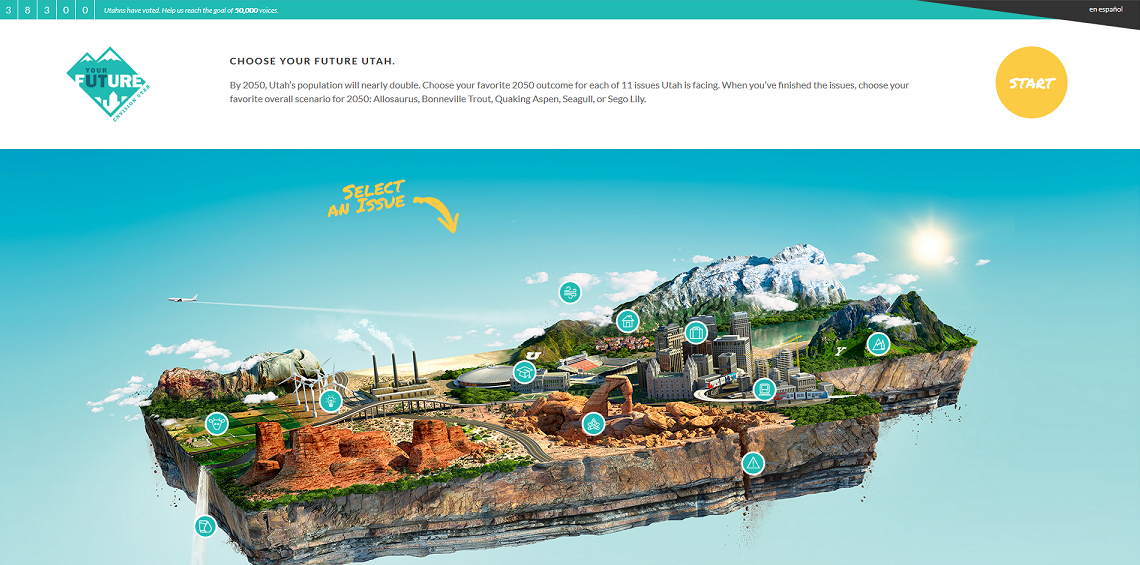
How do you envision the future of Utah?  By 2050, our population will nearly double, and Utah will add an estimated 2.5 million residents. Will we have enough water to drink? Will our air be clean? How will we educate twice as many students? Will our economy remain strong? What kind of future will we leave for our children and grandchildren?

Envision Utah has created a survey called “Your Utah, Your Future” commissioned by Governor Herbert.  The survey gives five scenarios for the future of Utah.  Each scenario includes 11 topics affected by our population growth.  In the survey you select the choices you want to make in each topic area and then choose an overall scenario for Utah in 2050.

The survey will close on May 31, and at over 31,000 recorded responses, it is already the single largest community visioning effort ever undertaken in the US.  The goal is 50,000 participants.  Take the survey!

Please consider sharing it with your employees and coworkers, family and friends, and encourage them to take it, also.

Additionally, over 300 schools have registered across the state.  You can earn money for your local schools- $1 for every response collected!YourUtah

e2 Business Best Practice: Future of Food Waste

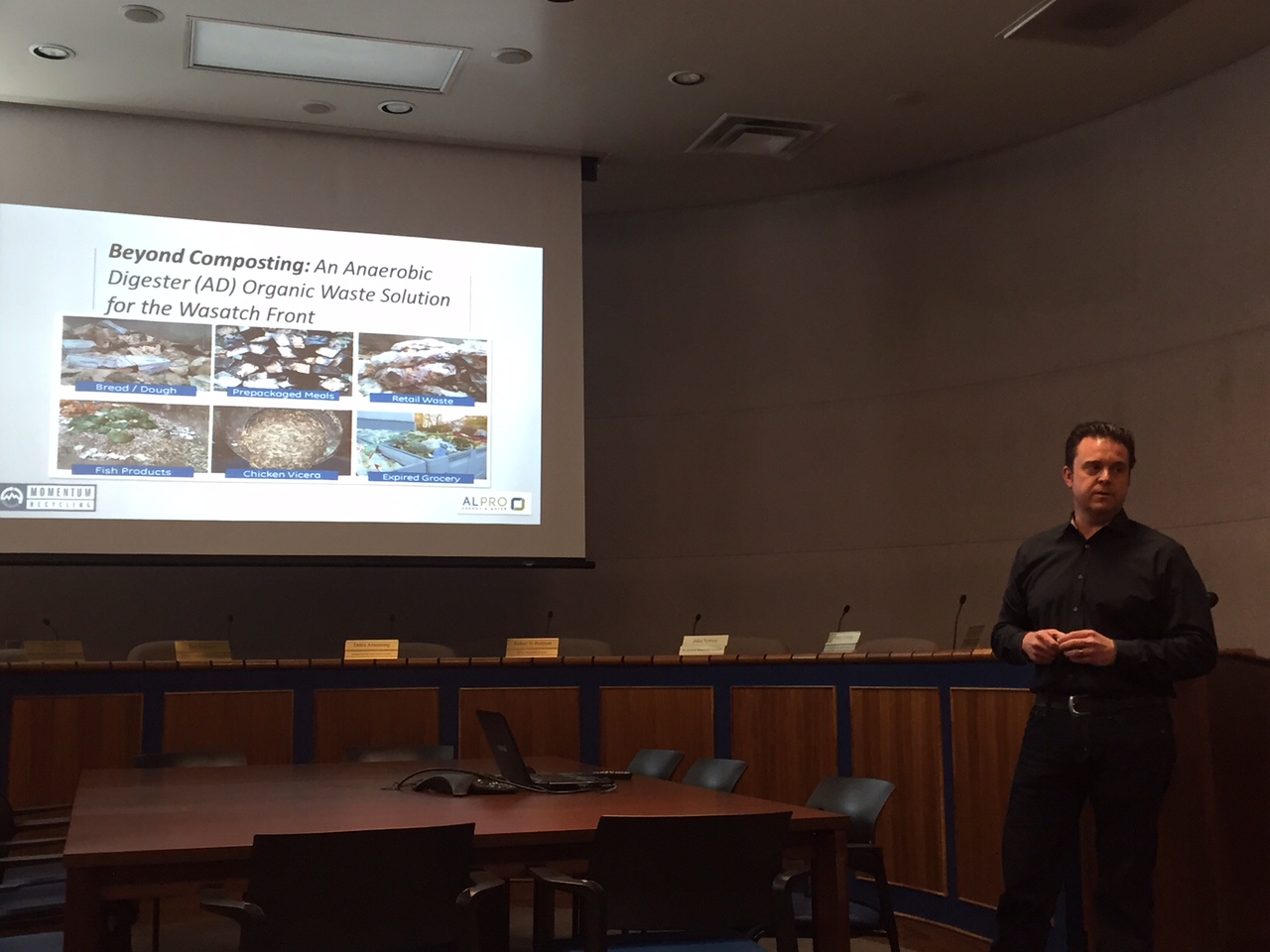
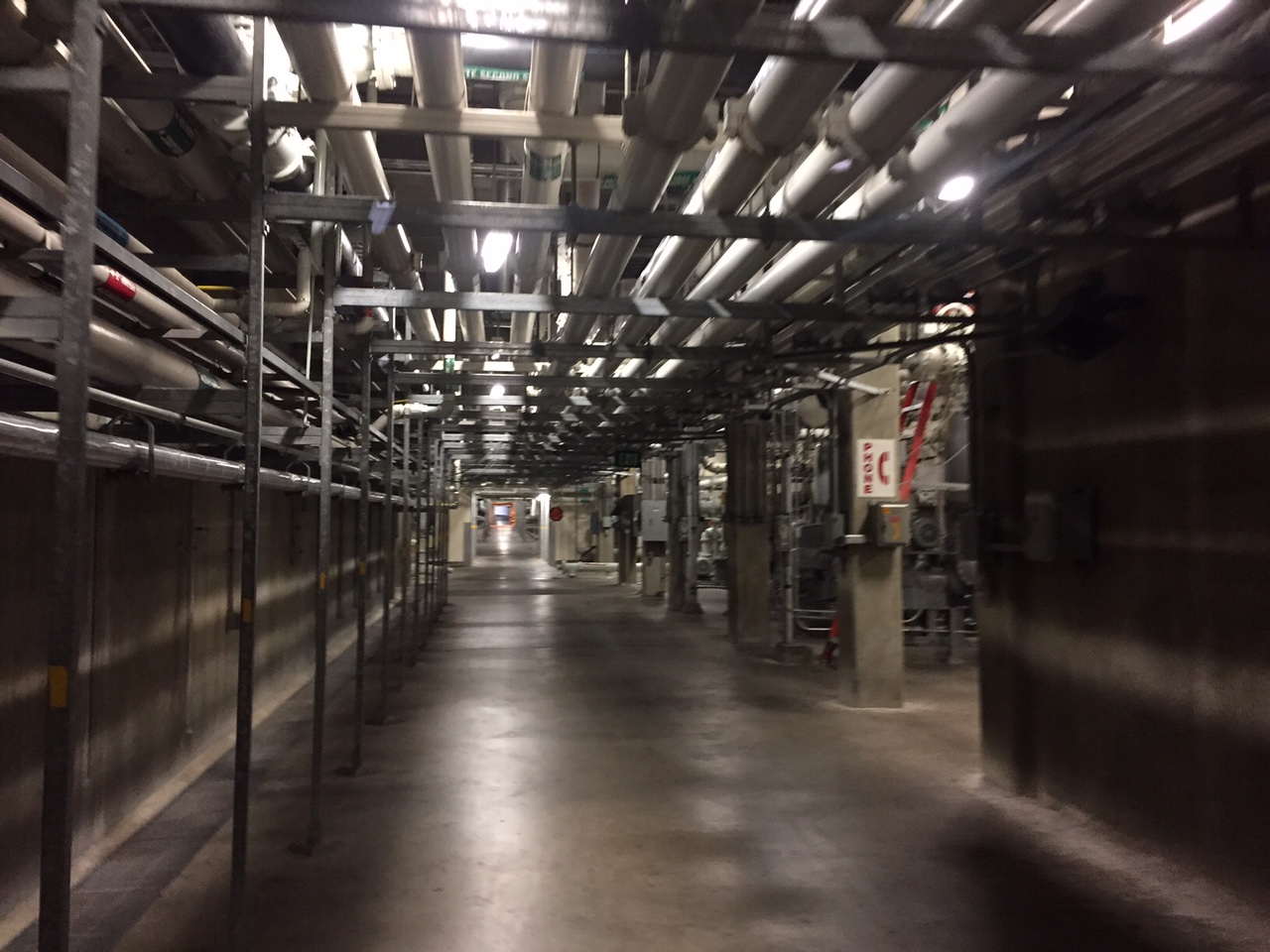
On Tuesday, e2 Business members gathered at the Central Valley Water Reclamation facility to learn about anaerobic digestion and how it can help solve the long standing issue of what to do to “recycle” food waste and prevent it from ending up in our valley’s landfills. And by food waste they mean just about anything — from bread, to fish, to expired milk and everything in between!
IMG_0951

Glen Perry is Vice President of ALPRO Energy & Water, the project development firm that has partnered with Momentum Recycling and Central Valley Water Reclamation facility to develop the proposed food waste anaerobic digester.

May_e2 036May_e2 109

The group noshed on delicious vegan sandwiches, salads and burritos from Bud’s Sandwich Company as they learned the ins and outs of anaerobic digestion (and its similarities to human digestion — interesting lunch talk!)

May_e2 089

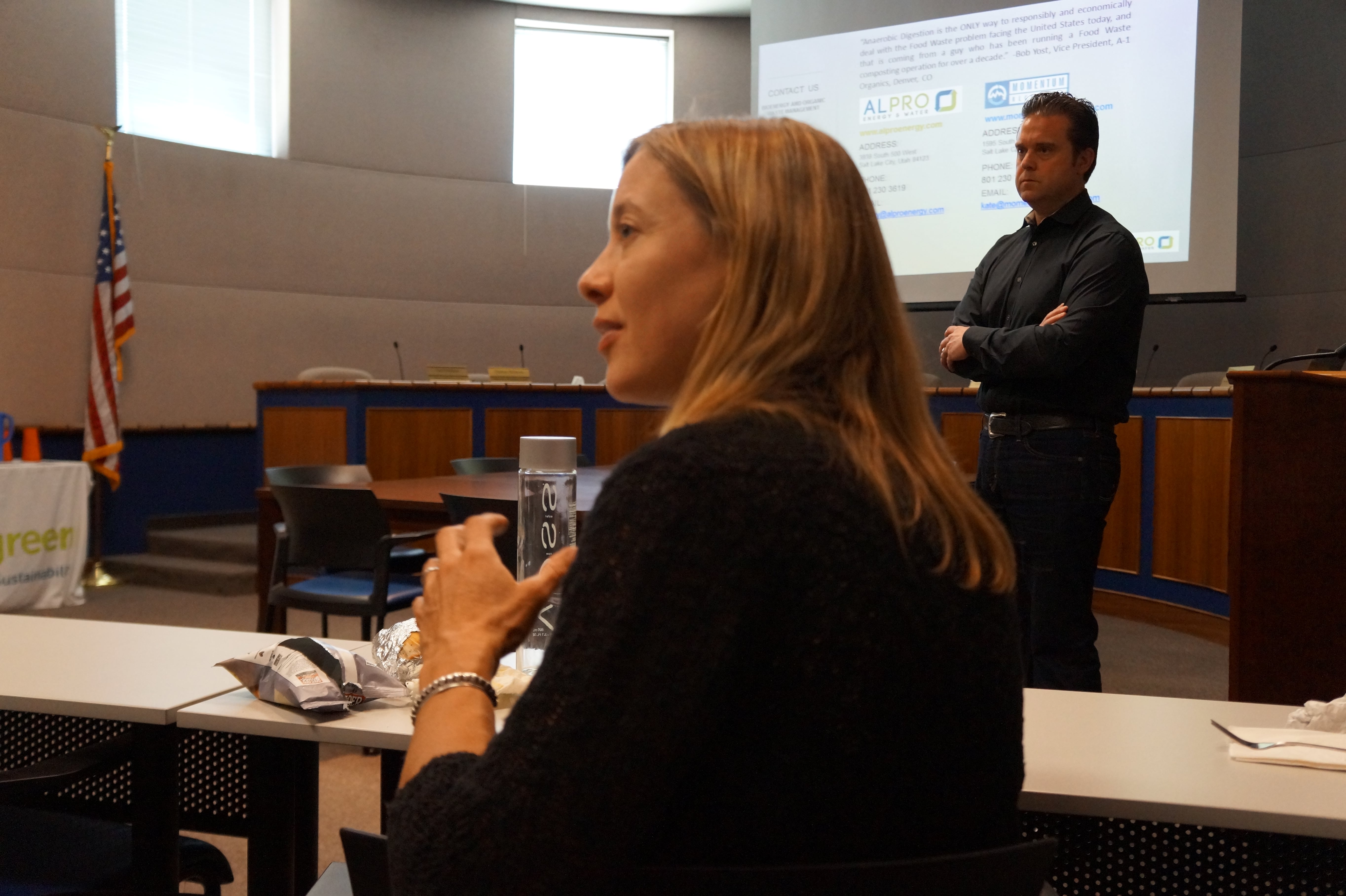
Kate Whitbeck with Momentum Recycling shared how their organization plans to play a roll in providing the “feedstock” for the anaerobic digester in the form of post-consumer food waste, primarily from restaurants.

IMG_0957 IMG_0973IMG_0971

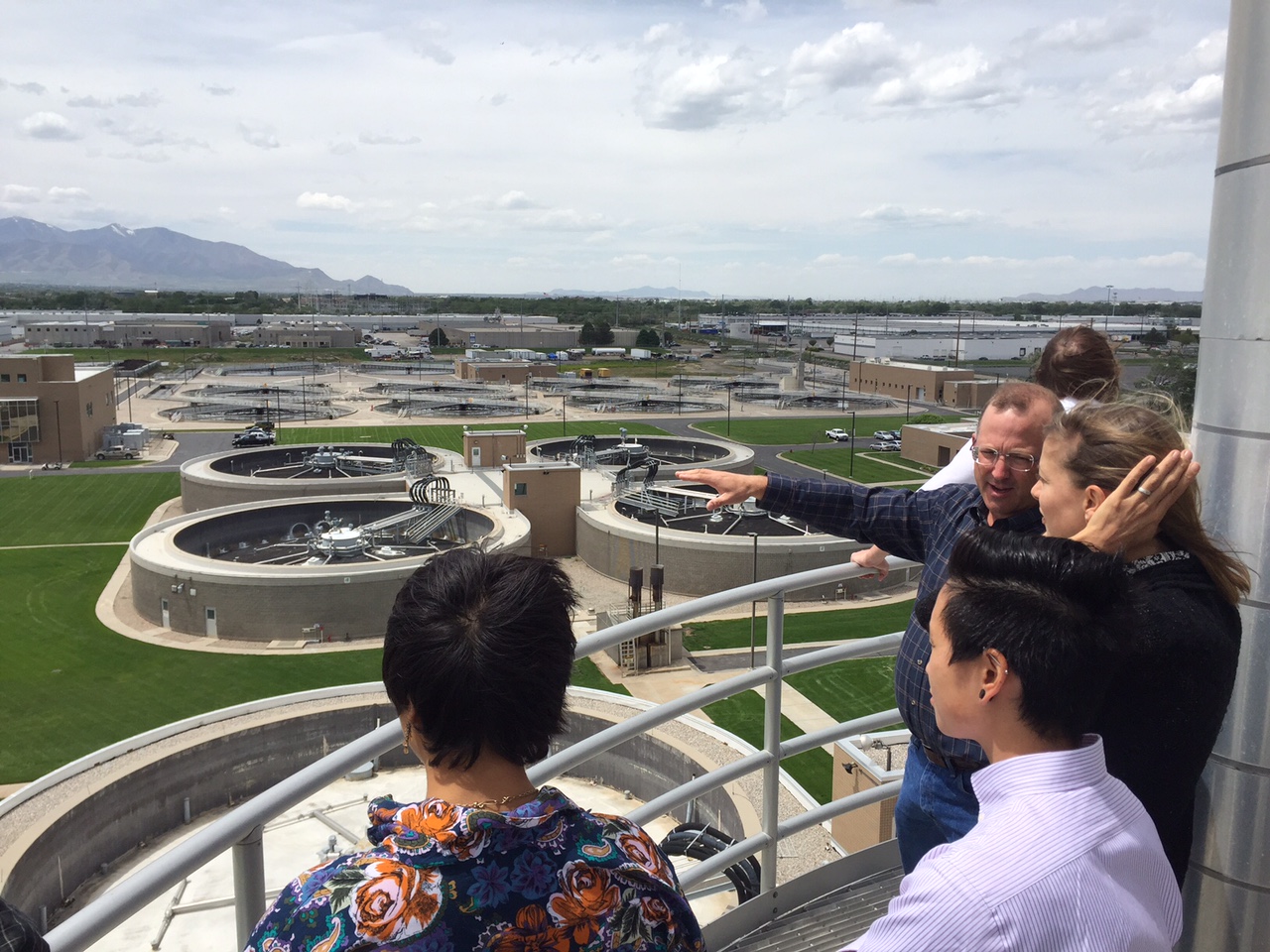
Following the discussion, the group took a tour of the Central Valley Water Reclamation facility, highlights including a rooftop view of the reactors and waste digesters. Learn more about the waste operations at the facility.

Green your business with the help of Salt Lake City’s e2 business program!

Mayor Becker Issues Executive Order to Increase Energy Efficiency at City Facilities

cc3

Today Salt Lake City Mayor Ralph Becker issued an Executive Order designed to maximize superior energy management at all Salt Lake City facilities.

“We must lead by example,” said Mayor Becker. “By taking steps to actively monitor our energy use and improve the efficiency of city facilities, we will cut energy waste, improve air quality, protect our natural resources and ultimately save taxpayer dollars.”

The order, which establishes Salt Lake City among leading cities nationwide, creates a multi-department Energy Management Steering Committee and requires City facilities to develop annual Energy Management Plans and track results.

“Through this Executive Order, Mayor Becker again demonstrates his commitment to air quality and smart energy use,” said Sarah Wright, Executive Director of Utah Clean Energy. “Improving the efficiency of Salt Lake City municipal facilities is a fantastic way to showcase how local governments can save taxpayer dollars while simultaneously reducing pollution.”

Energy Management Plans will report on facilities’ progress utilizing best practices in energy management, including energy benchmarking, identification of energy-saving opportunities, requiring building energy efficiency training for facilities managers and operators, empowering employees to play an active role in cutting energy waste and improved transparency of facility energy performance.

The new Executive Order is a cornerstone of Project Skyline, an initiative designed to dramatically cut energy waste in Salt Lake City’s commercial buildings by accelerating investment in energy efficiency and raising public awareness of building performance. In 2014, Project Skyline kicked off with the Mayor’s Skyline Challenge, enlisting 20 businesses in a proactive effort to reduce building energy use. Learn more at SLCgov.com/ProjectSkyline.

A previous Executive Order issued by Mayor Becker in 2013 required all new City facilities achieve net-zero energy status (i.e. producing as much energy as they consume).

What’s the true cost of solar? Public Service Commission taking comments through Friday

Johnson.Reed.solar2

Residential solar installation (Utah Clean Energy)

In August 2014, Rocky Mountain Power’s proposed $4.65 solar fee was denied by the Public Service Commission pending a cost-benefit analysis of solar. The Public Service Commission agreed with Utah Clean Energy that Utah’s net metering law requires an evidentiary finding that the costs of Utah’s net metering outweigh its benefits, or vice versa, before the Commission can approve a rate change specifically for net metering customers. The Commission opened an investigation into the costs and benefits of Rocky Mountain Power’s net metering program, which is now underway. (source: Utah Clean Energy)

The Utah Public Service Commission is requesting comments by Friday, February 6th on the cost-benefit criteria that should be used. The Commission is specifically asking for input on four points, details are available on the Commission’s website.

Solar is a clean, renewable source of energy that has many benefits to the community, including social, environmental and economic benefits. Salt Lake City will be submitting comments encouraging a holistic assessment that includes these benefits.

Docket information, including previously submitted Public Comment, are available online.

Rules for submitting formal Public Comment (e.g., Original plus 10 copies provided to Commission) are also available online. Hard copies should be sent to:

Utah Public Service Commission
Heber M. Wells Building
160 East 300 South
Salt Lake City, UT 84114

Project Skyline: BOMA Utah Launches Kilowatt Crackdown

SLCgreen applauds Project Skyline partner BOMA Utah on bringing building efficiency awareness to their members statewide.

BOMA Utah, which represents over 50 million square feet of commercial buildings in the state, wants to do its part to support ambitious carbon reduction goals from both the State of Utah and Salt Lake City. BOMA Utah members with portfolios in Salt Lake City are also encouraged to join the Salt Lake City Mayor’s Skyline Challenge.

Read on to learn more about the Kilowatt Crackdown!

Kilowatt_Crackdown

BOMA Utah launches 2015 “Kilowatt Crackdown”

The Building Owners and Managers Association (BOMA) of Utah is launching its 2015 Kilowatt Crackdown competition as part of Gov. Gary R. Herbert’s Utah Energy Efficiency & Conservation Plan, as well as Salt Lake City Mayor Ralph Becker’s Project Skyline.

BOMA Utah, which represents over 50 million square feet of commercial buildings in Utah, wants to do its part to support ambitious carbon reduction goals from both the State of Utah and Salt Lake City.

“Utah’s large commercial buildings consume considerable amounts of energy and many could use energy-efficiency upgrades”, said BOMA Utah President Lorrie Ostlind, Senior Portfolio Manager at Commerce Real Estate Solutions. “We’ve assembled a great partnership to create valuable opportunity for Utah’s building owners to save energy, save money and improve their buildings.”

According to the National Institute of Standards and Technology, buildings in the United States account for more than 40 percent of total energy consumption and about 72 percent of electricity consumption.  If current trends continue, it is estimated that buildings will be the largest global energy consumers by 2025.

“The Kilowatt Crackdown” competition supports voluntary benchmarking of energy use that is evaluated based on real data and allows us to maintain a leadership position in energy reduction”, said BOMA Utah Vice President Justin Farnsworth, Vice President of Asset Services at Newmark Grubb ACRES.

Participating buildings will benchmark energy performance through ENERGY STAR’s Portfolio Manager Tool and seek to improve their performance over time.

“Prospective tenants demand efficient, environmental-friendly buildings and are willing to pay for it”, said Ostlind.  “Benchmarking for improved performance keeps us competitive in the marketplace, and will help us deliver on our economic development goals to foster the next wave of innovation in sustainable buildings”.

About the Kilowatt Crackdown Competition

Kilowatt Crackdown is the energy-saving competition where “every building wins” and offers participants the following:

  • A promotional package from our valued partners offering various discounts on energy related products and services, including engineering certification for properties that qualify for the ENERGY STAR label – a score of 75 or more.
  • Advertising and recognition of your participation in the contest.
  • Assistance with identifying ECMs through ENERGY STAR’s Portfolio Manager.
  • Technical support and data review of your ENERGY STAR benchmarking profile.
  • Satisfaction from being a leader in the Utah market.

Participants wishing to enter their buildings into the TOBY Awards program can utilize their Energy Star ratings and reports for the International requirements.

Kilowatt_Crackdown_3

Community Incentives for Energy Efficiency

Our friends at the USGBC Utah are hosting a Community Incentives for Energy Efficiency event on Thursday, January 15, 2015 from 6:00 – 8:00 p.m. And you’re invited!

Register now.

The one and a half hour presentation will include presentations on energy efficiency incentives, solar programs, cost saving activities home owners and renters can implement, and updates on Utah laws. The presentation will also include a highlight of Salt Lake City’s Project Skyline.

Community Incentives for Energy Efficiency is an education program from the LIVE Team of the US Green Building Council – Utah Chapter.

Community Incentives for Energy Efficiency
Thursday, January 15, 2015
6:00 – 8:00 p.m.
Wasatch Retreat and Conference Center
Register.

ComIncfEE