Category Archives: salt lake city

Plant Based Utah to Host Symposium Oct. 13

By Jack Hurty, SLCgreen intern

Welcome to SLCgreen Connections, an occasional series highlighting SLCgreen’s fantastic local partners—the people and organizations with whom we work closely to make Salt Lake City a greener, more vibrant, and sustainable city!

This week we sat down with Chandler Rosenberg, Managing Director of Plant Based Utah, to talk about meat, the environment, and their upcoming events. Plant Based Utah is a local plant-based nutrition advocacy group.

Chandler PBU

Chandler Rosenberg, Managing Director of the non-profit Plant Based Utah.

What if you could improve your health, save money, and lower your carbon footprint, all with one simple lifestyle change? It’s possible – by eating less meat and transitioning to a plant-based diet. That’s the message Plant Based Utah is working to spread.

In March 2017, Thomas Rosenberg and Patrick Olson who are surgeons in Park City, decided to create an organization dedicated to encouraging people to eat healthier.

They had been studying preventative nutrition for years and found that a plant-based diet could prevent and even reverse some of the various chronic diseases and conditions they came across every day. Continue reading

Salt Lake City Represents at the Global Climate Action Summit

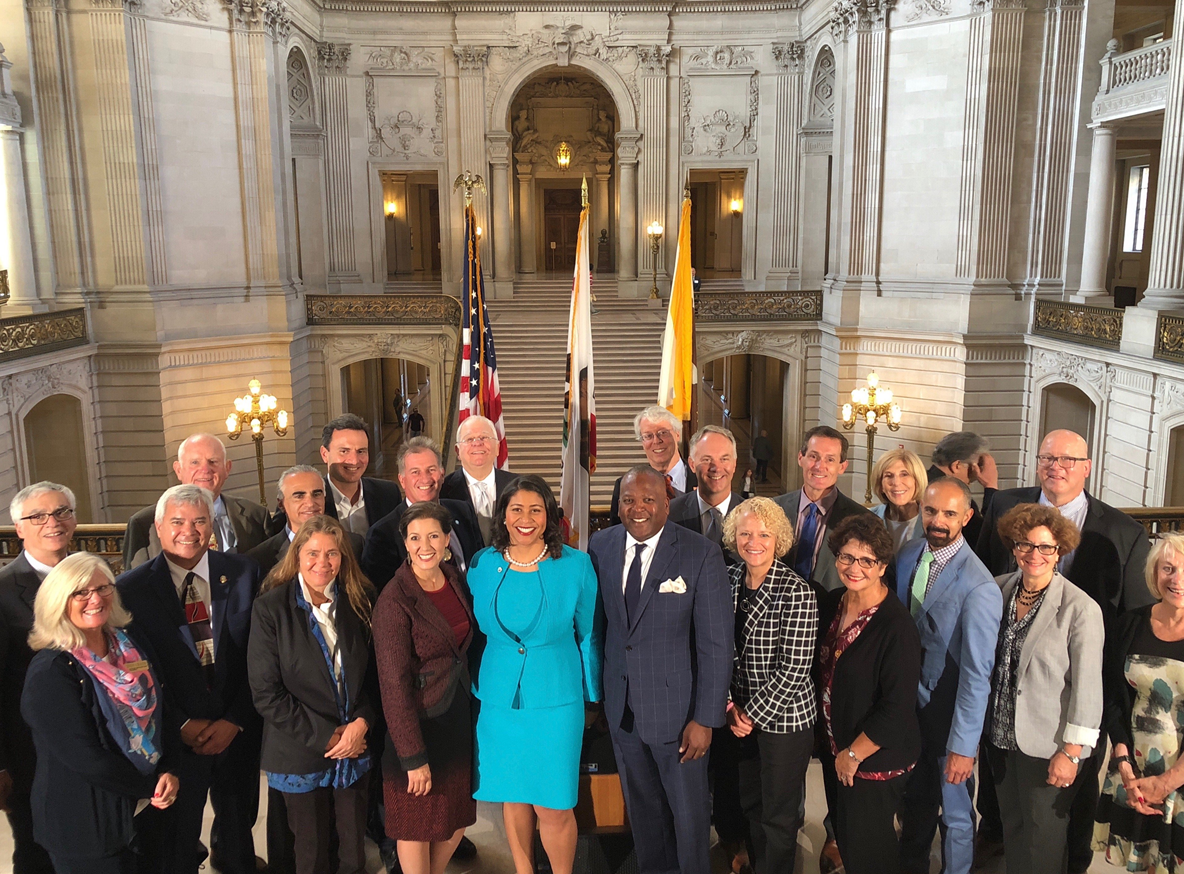
US Conference of Mayors GCAS

The U.S. Conference of Mayors meeting in San Francisco on Sept. 11, 2018. Photo: U.S. Conference of Mayors

PRESS RELEASE: September 10, 2018

– – – – –

Mayor Jackie Biskupski and SLCgreen Director Vicki Bennett join hundreds of leaders and attendees from across the world this week in San Francisco for the Global Climate Action Summit (GCAS) on Thursday and Friday, with partner events kicking off Tuesday and Wednesday.

At a time when the federal government is backtracking on its climate commitments, cities, states, businesses, non-profits, and other stakeholders are stepping in to fill the void.

The Summit is focused on amplifying the commitments made under the Paris Climate Agreement, which 195 countries signed in 2015. The goal of the Paris Agreement is to limit global average temperature rise to 1.5 degrees Celsius above pre-industrial levels.  The Summit, as described on their website, “is timed to provide the confidence to governments to ‘step up’ and trigger this next level of ambition sooner rather than later.” Continue reading

Sixteen Local Governments in Utah Call for Climate Cooperation

One of SLCgreen’s goals is to inspire action locally and nationally around climate change. Mayor Biskupski is a leader of several national coalitions to do exactly this– including the Sierra Club’s Mayors for 100% Clean Energy and the U.S. Conference of Mayors’ Alliance for a Sustainable Future committee– and we’re privileged to support her work at that level.

It’s also critical to organize locally and we’ve put together workshops and meetings with fellow local governments to discuss how Utah can be a leader on climate and air quality.

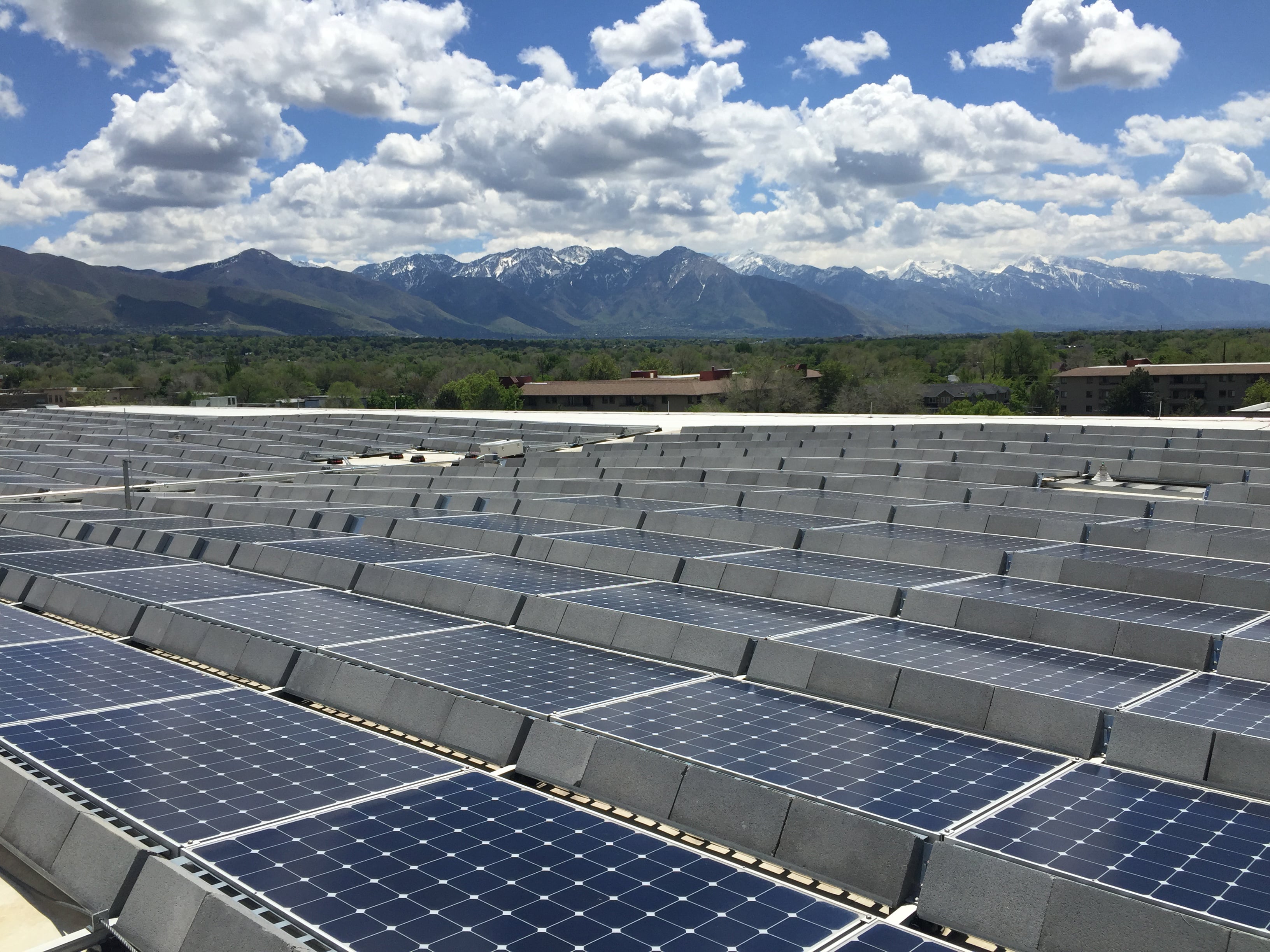
PSB solar

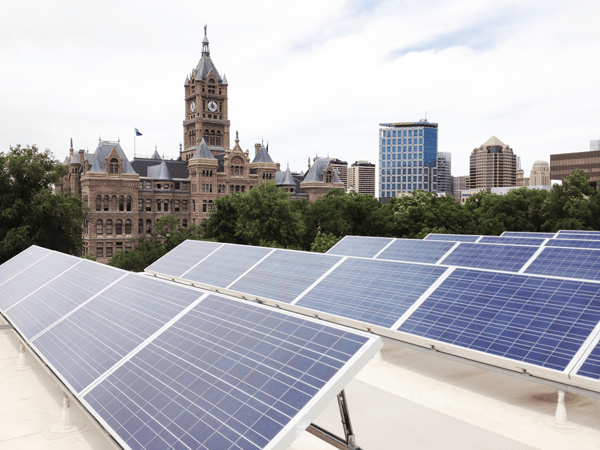
Solar panels and the Wasatch Mountains. Shot on the roof of Salt Lake City’s Public Safety Building.

This week we’re excited to share that the Deseret News published an op-ed that demonstrates this cooperation and commitment in Utah to #ActOnClimate.

Sixteen local governments from Salt Lake City to Provo, Moab to Park City, Cottonwood Heights to Heber, and more joined us in calling for increased cooperation to mitigate climate disruption. Continue reading

This is What the Future Looks Like

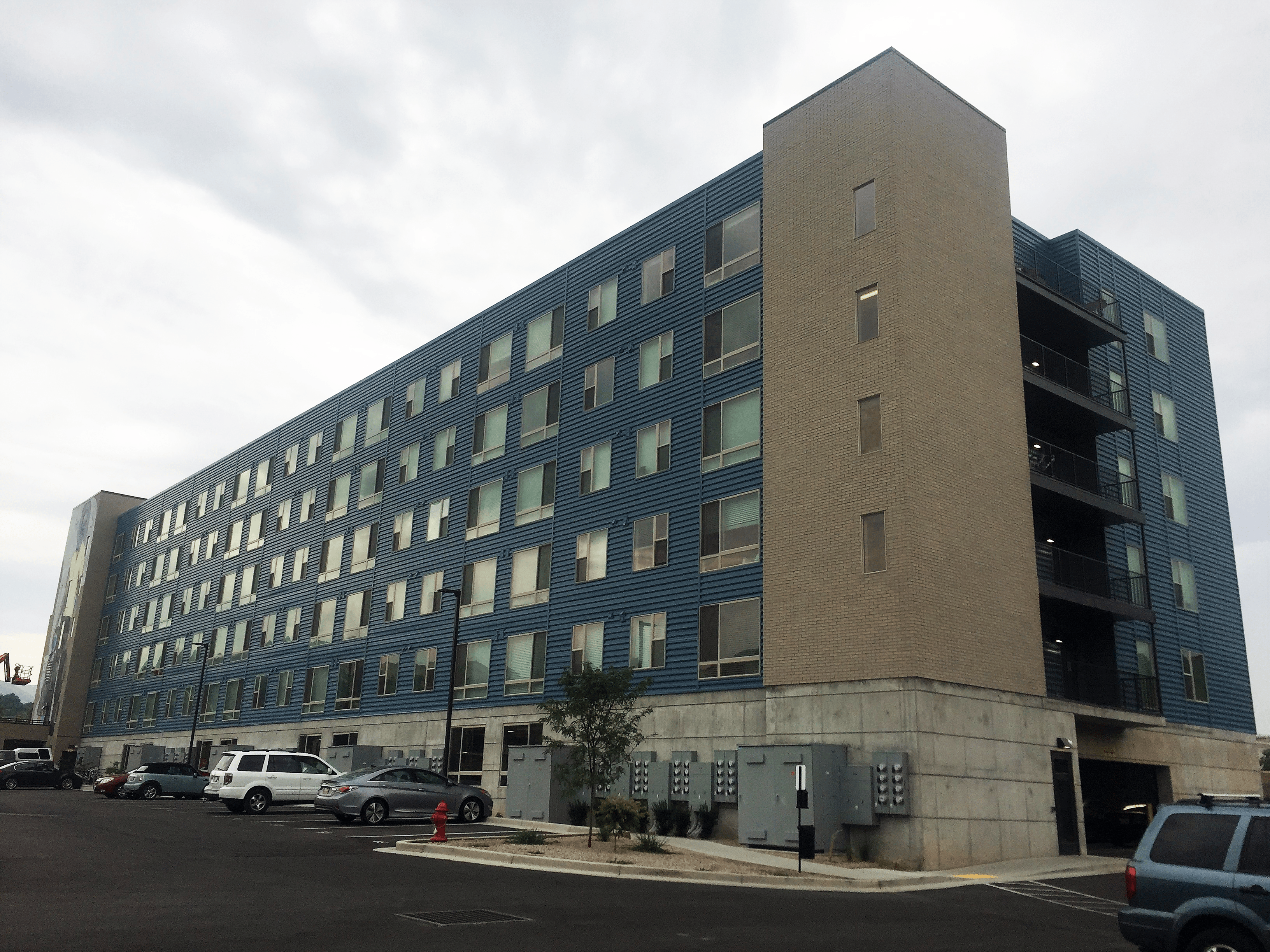
Project Open’s All-Electric Apartments Set the Stage for Eco-Friendly Affordable Living


Outside Project Open2

by Ryan Anderson, SLCgreen intern

If you’ve been to Salt Lake City in the winter, you know that our air quality leaves room for improvement. Our air pollution has already been found to have severe health impacts, and it’s crucial that we act now before the problem worsens.

Winters are plagued by inversions and in the summer we have a growing problem with ozone.

Both of these problems are directly tied to the emissions we put into the air. While transportation is the largest source, our homes and buildings are a close second and are projected to become the top polluter in the coming years.

With Utah’s population expected to double in the latter half of this century and a growth rate three times the national average, reducing emissions and improving our air quality has become even more pressing.

A key step in securing a healthier future for our community is to reduce our reliance on fossil fuels such as coal, oil, and natural gas in residential and commercial buildings, plus the transportation sector.

Luckily, there are solutions. If we design and build our structures smarter, we can reduce much of the pollution that comes from our buildings. And if these structures also incorporate green transportation features, we can significantly move the needle on both air pollution and our community carbon footprint.

That’s why we’re excited to feature a forward-thinking new housing complex that is innovating on all of these fronts.

Continue reading

Salt Lake City Debuts All-Electric Parking Enforcement Vehicles!

By Ryan Anderson, SLCgreen intern

(Originally published on the Utah Clean Cities blog. We thank them for helping support this initiative!)

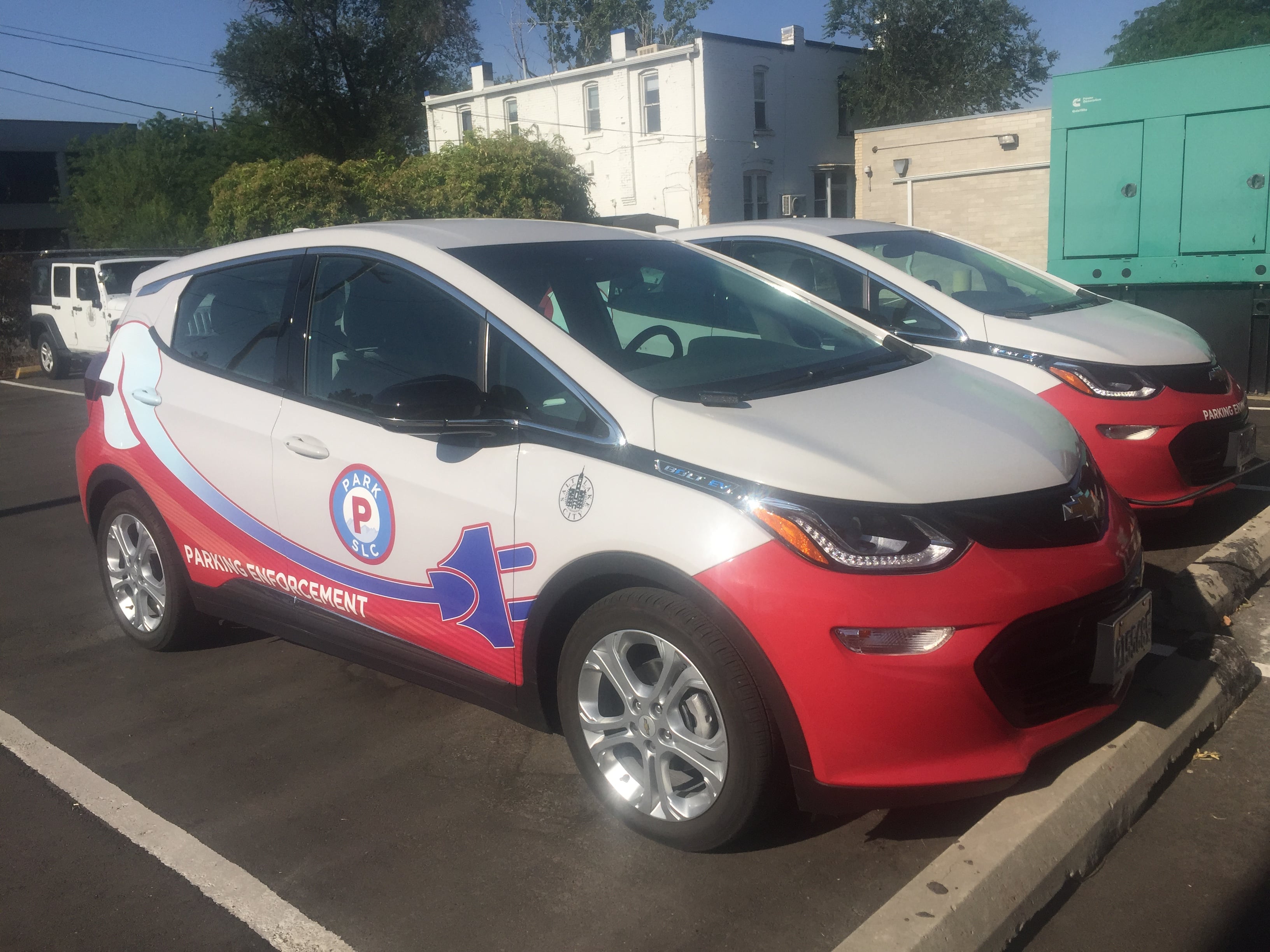
The Salt Lake City Compliance Division has a colorful, new addition to their Parking Enforcement fleet. Four all-electric Chevrolet Bolts have replaced old JEEP Wranglers to deliver financial savings and notable pollution reductions.

Chevy Bolt Compliance 1

Salt Lake City’s new all-electric Chevy Bolts help the City reduce carbon emissions, improve air quality, and meet our Climate Positive goals.

“It’s important that we lead by example and demonstrate how electric vehicles offer a reliable, safe and efficient alternative to gas-powered cars,” stated Greg Fieseler, Compliance Division Field Supervisor. “The electric cars are fun to drive too!”

Greg acknowledged there was initially some skepticism among staff that the new EVs would prove viable as fleet vehicles. That skepticism has been replaced by enthusiasm as the electric cars are now “the preferred choice” for most employees.

Compliance has been able to seamlessly integrate these vehicles without any modifications to routes or other significant operational changes.  Even with 90 degree-plus heat throughout July and the A/C running for most of the day, the 200-plus mile range of the Bolts has allowed officers to complete their daily routes with energy to spare. Continue reading

Things are getting HOT!

Urban Heat Islands Increase the Effects of Climate Change

by Emily Seang, SLCgreen intern
On a hot summer day, it feels like heat is coming from everywhere and anything.

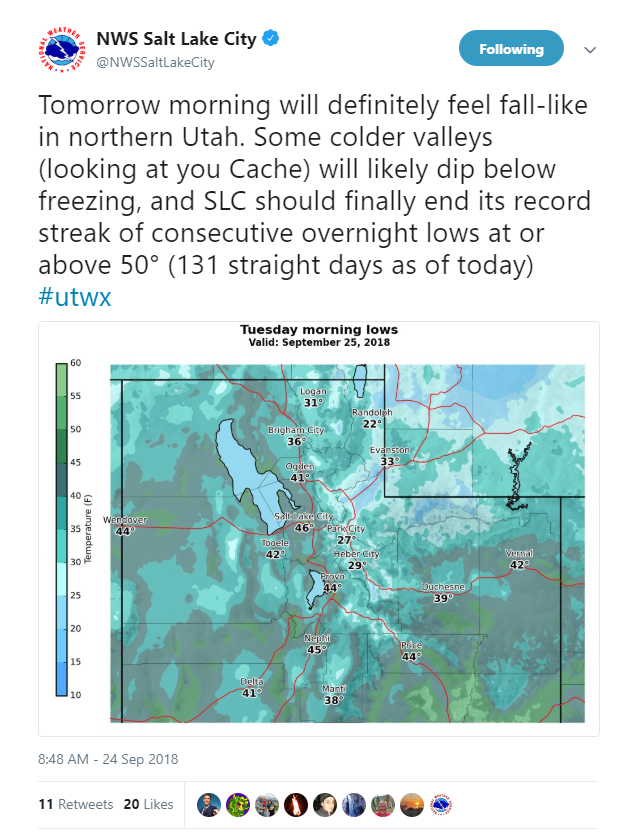
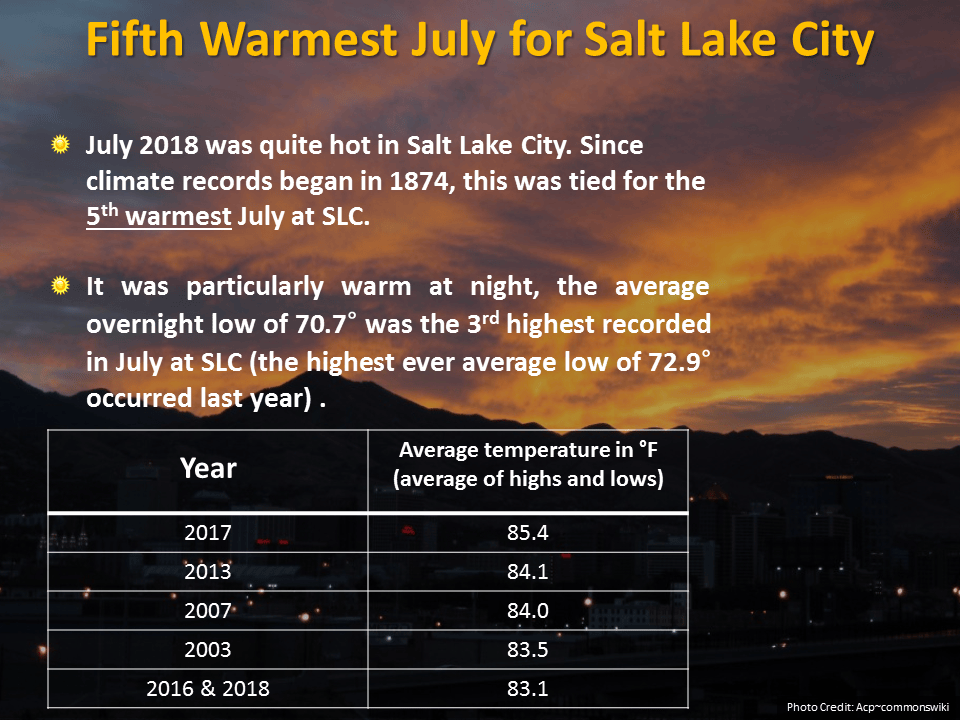
We’ve had a lot of those days lately.  In fact, July of 2018 was the fifth hottest on record (July 2017 was the hottest!)

Warm July 2018

The National Weather Service, Salt Lake City office, has calculated our July 2018 temperatures as being the fifth warmest on record.

There’s no question that temperatures are climbing as a result of climate change.

In cities, however, there’s also another factor at work. Continue reading

Summertime . . . and the Air is Nasty

By Jack Hurty, SLCgreen intern

We’re all used to winter smog here along the Wasatch Front, with brown haze moving in and obscuring the mountains. But there is another pollutant in the valley, invisible but no less dangerous — ozone.

What is Ozone?

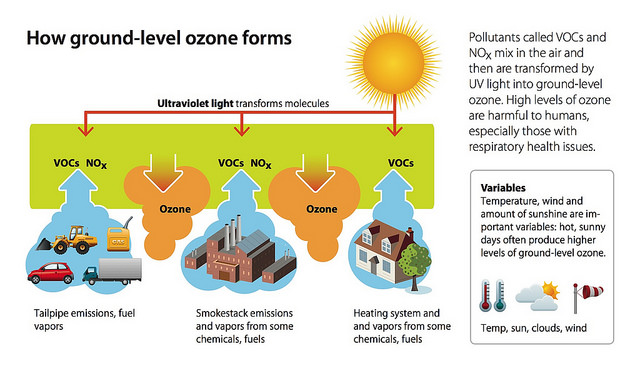
Ozone, a molecule consisting of three oxygen atoms, is created when nitrogen oxide (NOx) and volatile organic compounds (VOCs) mix and are heated by the sunlight.

NOx and VOCs are typically emitted by motor vehicles, but they can come from consumer products as well as industrial sources. (Read more about how ozone forms.)

Ozone is often found in the Earth’s stratosphere, where it plays a beneficial role by protecting us from damaging rays. But when ozone sits in the atmosphere where we can breathe it in, it can be very damaging to our health.

Continue reading

Salt Lake City joins Utah’s C-PACE financing program for building efficiency

Salt Lake City is pleased to join the State’s C-PACE program. Check out the press release from the Governor’s Office of Energy Development for more information . . . and stay tuned for workshop announcements and other highlights of businesses taking advantage of this cool financing tool.


LeoSolar600px

News Release
For Immediate Release

June 26, 2018


SALT LAKE CITY (June 26, 2018) — The Governor’s Office of Energy Development (OED) is pleased to announce that Salt Lake City, the state’s largest municipality, has joined Utah’s new financing tool to advance energy improvements in commercial, industrial and qualifying residential buildings.

Commercial Property Assessed Clean Energy (C-PACE) is a low-cost financing mechanism for energy efficiency, renewable energy, electric vehicle and water conservation projects. The program continues to grow in Utah due to its ability to finance 100 percent of improvements using long term loans with up to a 30 year payback period. Continue reading

How to Care for our Urban Trees and the Park Strip

pexels-photo-589802.jpeg

Trees in the park strip are City-owned trees. Please do not alter these trees, which comprise SLC’s 85,000 strong urban forest. Our Division of Urban Forestry will prune, remove, and plant trees in the park strip. Call (801) 972-7818 to request service.

by Sydney Boogaard, SLCgreen intern

It’s a beautiful summer’s day as you walk through the neighborhood with your favorite furry friend at your side. The shade from the trees helps cool the summer heat as you pad along… sound like a lovely afternoon?  We think so. And we have our vibrant urban forest to say thank you to.

Our urban forest comprises nearly 85,000 public trees, including 63,000 street trees and 22,000 trees that reside in our city’s parks and open spaces. These indispensable trees are cared for and maintained by Salt Lake City’s Urban Forestry Division.

Why are Urban Forests Important?

A 2010 census reported that nearly eighty-one percent of Americans now live in urban centers. This means urban forests are becoming more important than ever. They provide essential benefits to our populations and wildlife. Urban trees contribute to cleaning our air, filtering our water, controlling storm water, conserving energy, and providing shade for us and our local animal life. Not to mention, they are aesthetically pleasing, strengthen social structures, and add significant economic value to our communities.

The majority of these trees are located in park strips. So, you may ask, what is the park strip, why is it there, and what do you do with it?

Continue reading

It’s Farmers’ Market Season!

Two vegetable vendors at a market selling green beans, sweet carrots, beans and other vegetables.

Vendors for a local Salt Lake City Market. Photo courtesy of Utahs Against Hunger.

by Emily Seang, SLCgreen intern

There’s no better way to enjoy the summer than to visit a farmers’ market!

All throughout Salt Lake City there are many opportunities to join communities in celebrating locally grown foods. Supporting our farmers’ markets is a great way not only to purchase fresh, healthy fare, but also to support local farmers and the important role they play in our community.

We’ve got good news . . . the season has started and many markets begin this week!

Continue reading