Our food choices are important. In fact, in Utah, food choices contribute 25% of the household carbon footprint. This a result of the growing, harvesting, transportation, packaging, and cooking processes involved with getting our food to our tables.
While the restrictions as a result of COVID-19 have made shopping for groceries difficult, and food access remains an issue. However, the country’s farmers still have a large supply of food. Safely harvesting and selling the produce is what’s challenging.
Even though the farmers markets are temporarily closed, we can still support local growers and get healthy, sustainably grown food at the same time.
Our local farmers need support right now! With only 2-3% of the produce consumed in Utah grown in the state, local agriculture is already in a fragile state.
SLCgreen is working hard with our partners to find ways to support these farmers so they can continue operating– during this challenging time and into the future.
Plus, eating more produce and eating local is good for you!
Even though we are spending more time inside, we can all take direct actions to help protect the environment this spring.
8 Sustainable actions from the comfort of your own home:
Fix the thing on your Fix-it List: While Utah Recycling Alliance regularly hosts Fix-It Clinics for the more challenging appliances and tools, there are many ways to tackle the smaller tasks from home. Consider sewing that button back on your shirt or tinkering with your old record player. Any small action you take to make use out of the old rather than buying new will help the planet.
Lights Out for Birds: Although Salt Lake City’s Tracy Aviary is temporarily closed due to COVID-19 concerns, you can still show your love for birds. Two-thirds of migratory bird species migrate at night. Take the Lights Out Salt Lake pledge and turn off your lights between 11:00pm and 6:00am during March-May and August-September to help the birds find their way.
Recycle Right: Recycling is one of the most important ways individuals can reduce their impact on the environment. Because there is an expected increase in household waste while residents are practicing social distancing, it’s more important than ever to recycle right. Check out our curbside recycle guides for a refresher. You can also watch this video from Ashley on our Education Team explaining what goes into the blue and brown cans.
Turn Your Garbage into Art: Art projects are a great way to engage with difficult subjects. For example, the Washed Ashore nonprofit turns ocean plastic into beautiful sculptures to draw attention to plastic pollution. Check out Clever Octopus, the local Creative Reuse Center, for more inspiration on how to make use of old materials.
Don’t Waste Food: Food choices make up 25% of Utah’s household carbon footprint. Don’t let food go to waste. Find out more about Composting and Dining with Discretion here!
Plant Trees – With Your Phone! You can help reforestation projects through social media. Starting April 22, Cities4Forestsis hosting a global photo contest. They have pledged to plant 1 tree for every photo. Find the participation rules here. You can also try out Forest, an app that keeps you on task and helps plant trees. You even get to choose the species of trees you’re planting!
Go Pesticide Free! As you gear up for spring gardening, help protect the environment by going pesticide free. Take the pledge here! (we will be delayed in delivering a sign to you, but will do so as soon as possible!)
Take the 2020 Census! The U.S. Census helps determine federal funding and resources for our community. Help ensure that Salt Lake City counts! You will receive an invitation with a unique ID number in the mail. This number can be used to take the 2020 Census online. More information is available here.
Energy is key to our societies, communities, health, and more. It’s also an important concept when we consider the environment and climate change.
Our youngest community members play a key role in inspiring our climate action. Helping students engage with topics including energy conservation, renewable resources, and climate action helps us all build a more sustainable community.
That is why we were thrilled to team up with Salt Lake City’s YouthCity to explore energy for their fall after school program. This year, YouthCity has spent 4 months exploring energy and sustainability. And last week we heard from 22 student groups and several of our community partners at the 5th annual YouthCity Science Summit.
Each year, YouthCity’s after school courses help kids learn about physical health, financial awareness, the scientific method, and more. In the fall, YouthCity focuses on STEM subjects, and for the last 5 years the session has culminated in a Science Summit event where students share what they have learned with their families and peers.
This year, the Science Summit applied energy concepts to real world problems. The Summit featured projects on green power, climate and extreme weather, aquaponics and photosynthesis, renewable energy powered cars, solar power, light energy, and environmental justice. YouthCity instructors and students worked through questions with hands-on science and were able to relate energy topics to real-world issues including air quality, recycling, and public health and safety.
This graphic shows SLC’s residential recycling impact for one month (June 2019 at 585 tons). From Jan – Oct, we’ve collectively diverted 6,466 tons of recycling and 14,320 tons of green waste through our curbside programs.
There is always a lot to do during the holidays, but before we tuck into our plant-based Thanksgiving dinners or go find the second-hand treasures to complete our holiday look, we want to take a minute to count our blessings and thank you!
Without your engagement in sustainable actions and participation in SLCgreen’s programs, we could not have the positive impact we do.
Sometimes it’s all too easy to think “What I do doesn’t matter” or “What difference is one person going to make?” But when you take that individual impact and add it up on a community scale, those little sustainability actions really do make a difference!
Take recycling. We can vouch for the impact all of you have on the thousands of tons of waste diverted from our landfill each year to recycling and compost.
So today, please join us in celebrating these aspects of our community that help us be stronger and more sustainable.
We’re always thankful for recycling!
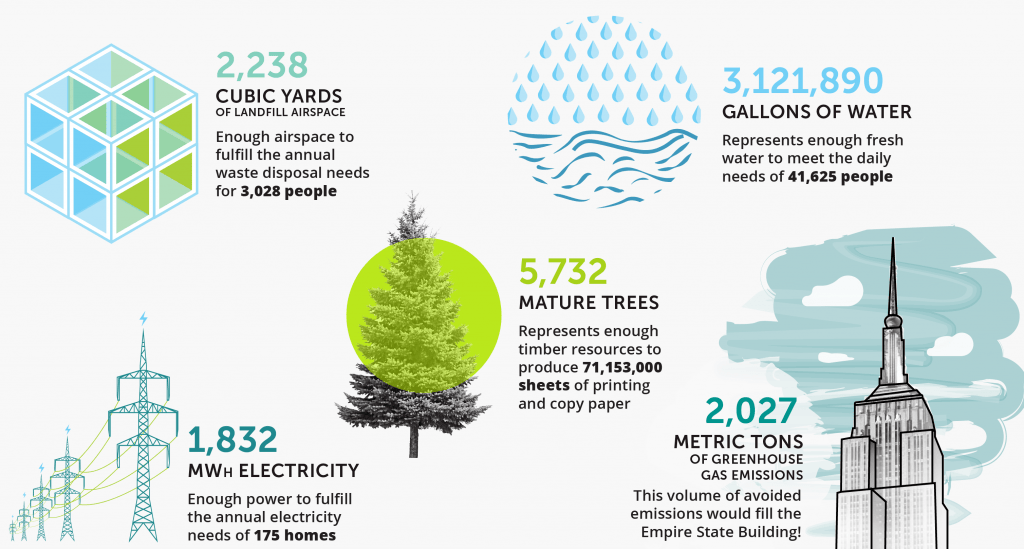
Salt Lake City is working towards our zero waste goals.In June, we recycled 585 tons of cans, bottles, paper, and cardboard. To put this in perspective, this saved the equivalent of 5,732 mature trees, 2,238 cubic yards of landfill airspace, enough water to meet the daily needs of 41,625 people, and enough electricity to fulfill the annual needs of 175 homes! All this recycling helped us avoid 2,018 metric tons of greenhouse gas emissions, which makes for cleaner air too!
Multiply those numbers by 12 and you have the average impact of Salt Lake City’s curbside recycling program over the year.
Your recycling is making a difference! Thank you!
We know that recycling has been in the news a lot lately. It’s gotten confusing. Some people are even wondering whether it’s “worth it” anymore. Numbers like the above remind us just how important it is. Thank you for continuing to recycle.
Here are some easy ways to keep up the good recycling habits this holiday season:
If you’re hosting a holiday party, consider using reusable dishes. We know that can be a challenge! Check out our small event recycling guide so that your guests know exactly what should go in the blue bin when it’s party time!
When you’re serving up the cranberry sauce or making pumpkin pie, make sure to clean your aluminum cans and put them in the recycling bin: Aluminum can be recycled over and over, and goes towards making everything from bikes to new cans!
If you have excess veggie scraps, eggshells, or coffee grounds, use the brown bins and compost them rather than throwing them in the garbage. You can even compost your tree.
The Saturday after Thanksgiving is #SmallBusinessSaturday. Buying locally-made goods supports our economy and is often a more sustainable way to shop. When you shop at a small local business, you support local artisans and business owners and reduce the environmental impacts associated with shipping and packaging!
Clever Octopus is ready for fun on #SmallBusinessSaturday!
The Hive Holiday Pop-Up Market at Trolley Square will feature 4 weekends of local artists starting this Friday, November 29th.
One of our favorite places to find the most delicious treats is the Downtown Farmers Market. Their Winter Farmers Market is in full swing. Be sure to check out the local vendors for your holiday cooking and gift giving needs!
Following Small Business Saturday, #GivingTuesday is around the corner. Giving Tuesday is an opportunity to give back to our community by donating money, goods, and volunteer time to worthy causes!
We’re thankful for sustainable holiday DIYs!
Unless you’re willing to keep your fake holiday tree for a very long time, real trees can actually be a more sustainable option. However, there is an even more sustainable – and entertaining – option: DIY Holiday Decor!
Fun holiday decorating can help us feel cozy and festive! We know it’s tempting to get your fireplace going. But before you do, please check the air quality and make sure there aren’t any restrictions. You can protect the air by eliminating vehicle idling and respecting burning restrictions. Moreover, you can make your holiday cozy with just a little creativity — no real fire necessary:
Our friends in Public Services enjoy their hand-made holiday fireplace!
We’re thankful for YOU!
We want to take a minute to thank our SLCgreen team! Our readers, residents of Salt Lake City and beyond, are helping us reach our goals when it comes to reducing waste and building more sustainable communities. We hope you have a wonderful and sustainable holiday season!
On this blog and in general sustainability circles, we often talk about the environmental and health impacts of plastics, vehicle emissions, buildings, air travel– even the food we eat.
But today we want to take a deep dive into something we haven’t discussed very much. It’s a sector which is lesser-known, but hugely impactful in terms of waste generation and greenhouse gas emissions. We’re talking about clothing and textiles.
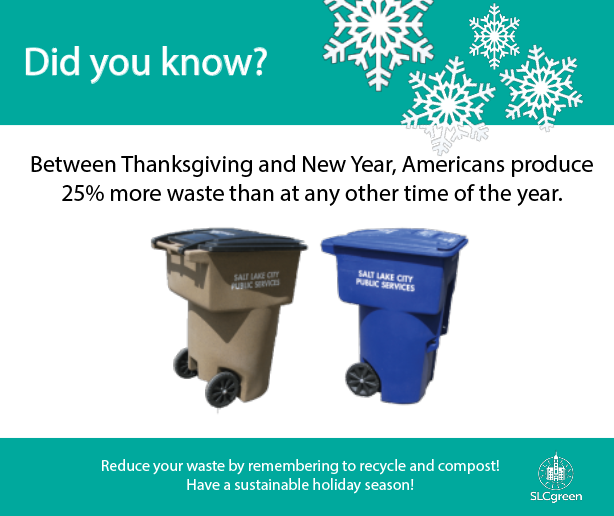
Did you know that between Thanksgiving and New Year’s, Americans throw away 25% more trash than during the rest of the year?!
As the Black Friday flurry and holiday gift-buying season approaches, it’s a good time to be mindful of this impact and how we can take charge of minimizing our environmental footprints.
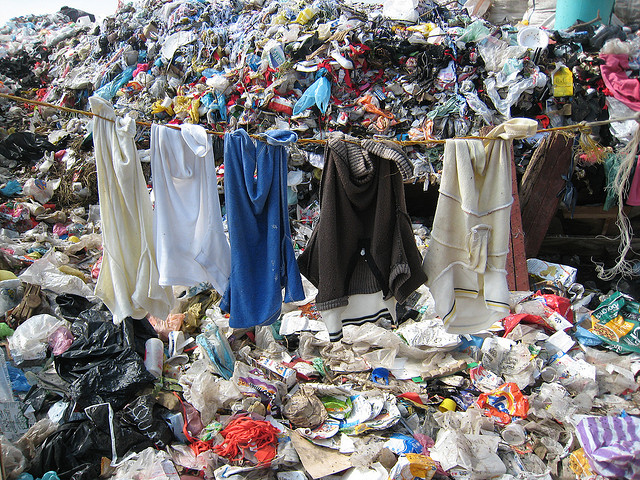
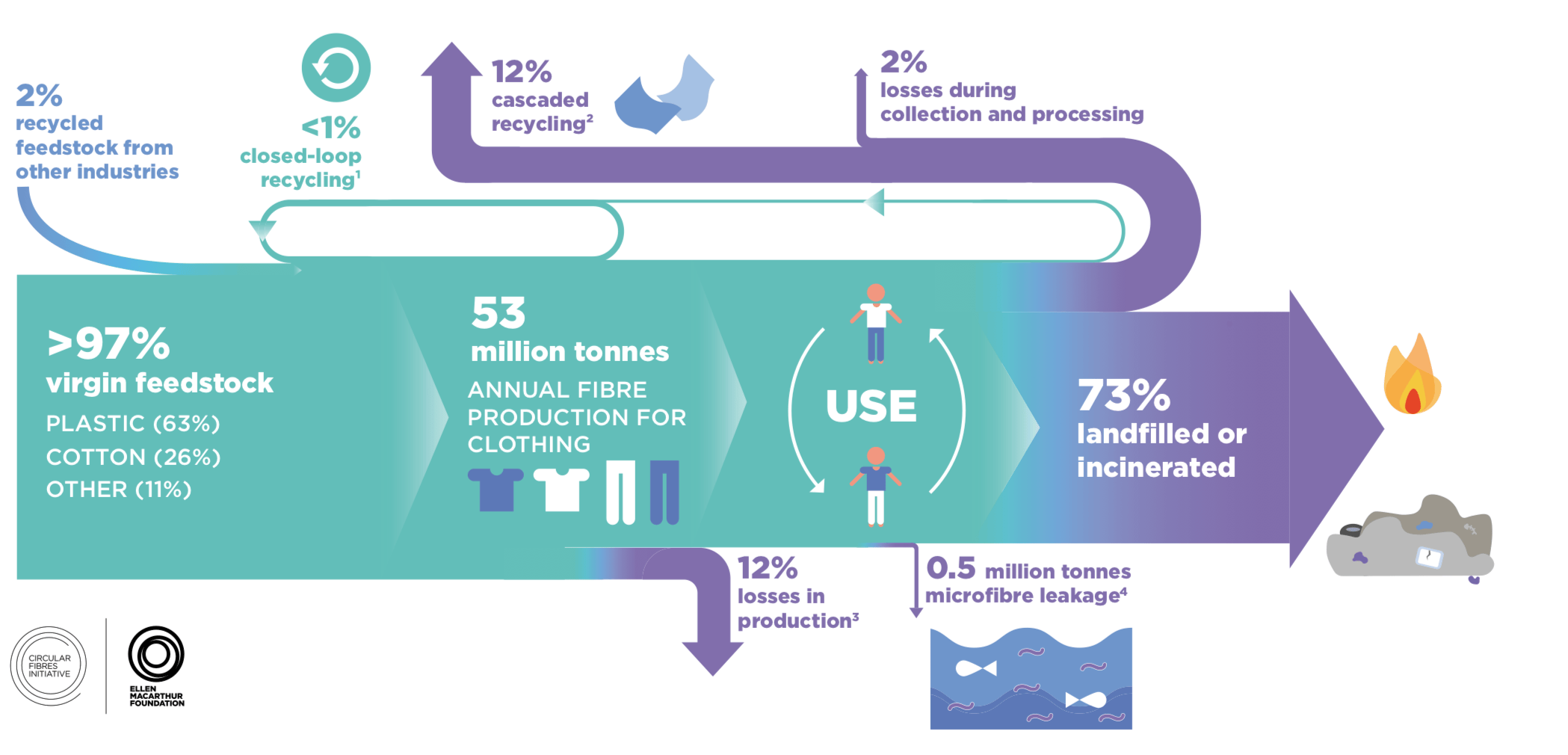
It may come as a surprise, but the fashion industry is a significant contributor to our landfills, as well as to 8% of global greenhouse gas emissions, almost as much as the entire European Union!! The clothes industry also creates plastic pollution, threatens public health and the environment through intense chemical pollution, and takes up an enormous amount of landfill space.
Clothes are definitely a necessity and are also a fun way to express one’s creativity. But today, we want to emphasize the impact of the textile industry and why we need to think more carefully about the clothing purchases we make.
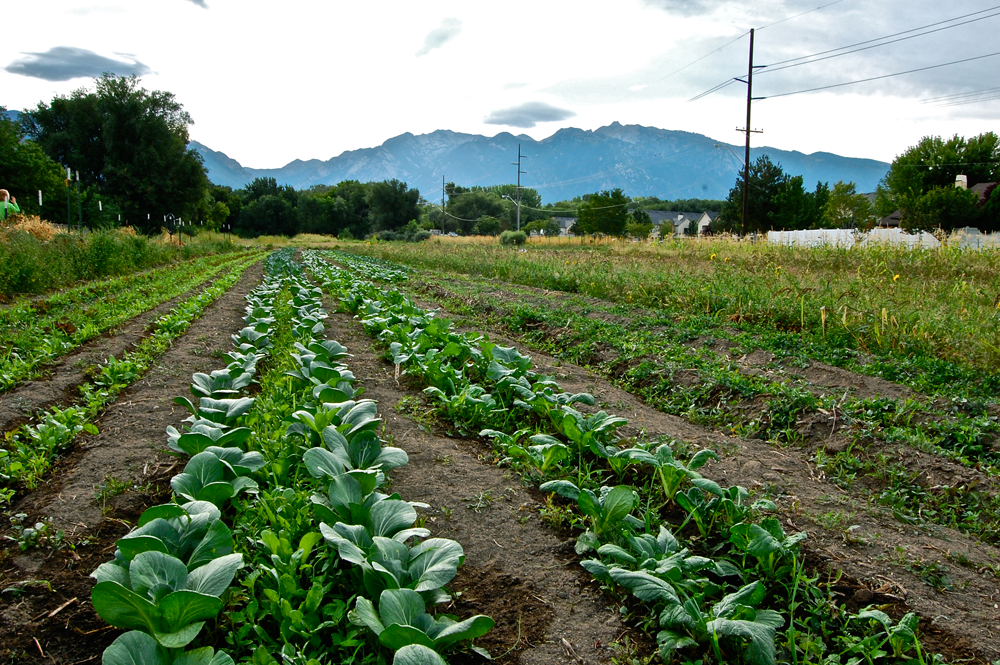
Our eating habits can contribute a lot to our carbon footprint. The process of growing, harvesting, transporting, processing, and packaging food all emits CO2. And the farther away from the farms we live, the bigger our environmental impact becomes. By eating more locally, we support the local economy and protect the environment by cutting down on the time and resources spent producing our food.
But what about in
winter?!
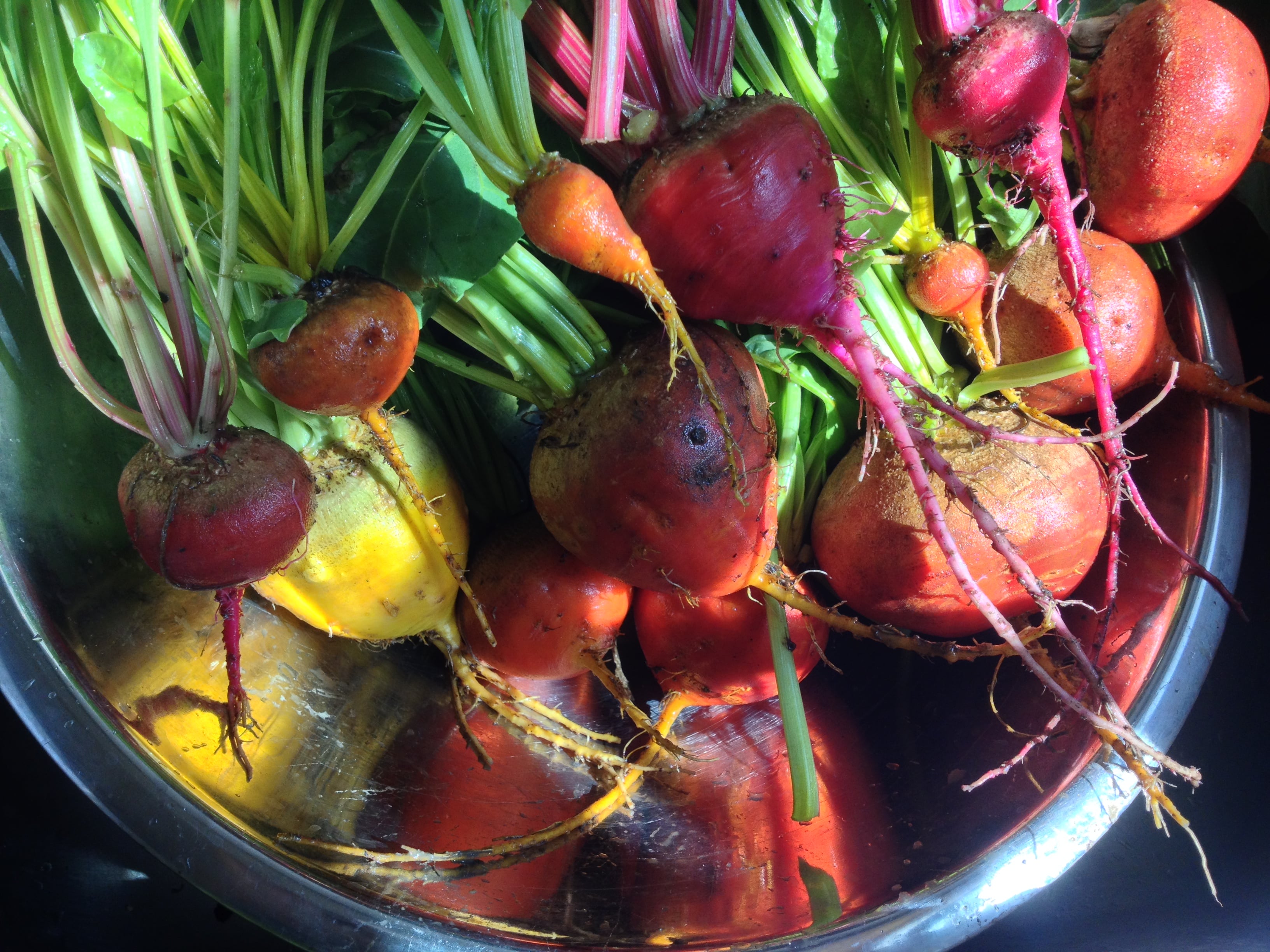
Eating fresh and local produce can be harder depending on the season. Indeed, if you look at this seasonal food guide, you can see how the produce availability changes from month to month even in Utah.
Luckily, there are many ways to extend the harvest season and enjoy local food all year round.
Preserving the Fall Harvest
It may feel a little old fashioned, but making your own jams, marmalades, and jellies is a great way to make your local fruit last and reduce your food waste. Preserved fruit can be done in several ways, but a simple jam just requires high pectin fruit and sugar.
Preserving fruits and veggies doesn’t have to be as simple as jams and pickles. Depending on your recipe, you can make soups and sauces and other delicious meals from your fresh fall harvest and freeze them until you need a taste of summer to lighten the midwinter mood.
Find Seasonal Treats at the Winter Farmers Market
Thanks to the local farmers with greenhouses, cold storage, and hydroponic systems, Utah’s harvest season is a lot longer. The Downtown Farmers Market is helping extend the season with theWinter Farmers Market!
With many of our favorite farmers from the summer Downtown Farmers Market, the Winter Farmers Market will run from November 9th to April 18th on Saturdays from 10am to 2pm at the Rio Grande Depot.
As we approach the winter, don’t give up on eating fresh,
locally grown food!
So now that Halloween is over, don’t give our waste management teams a fright! Here’s a quick guide to where your Halloween waste should go.
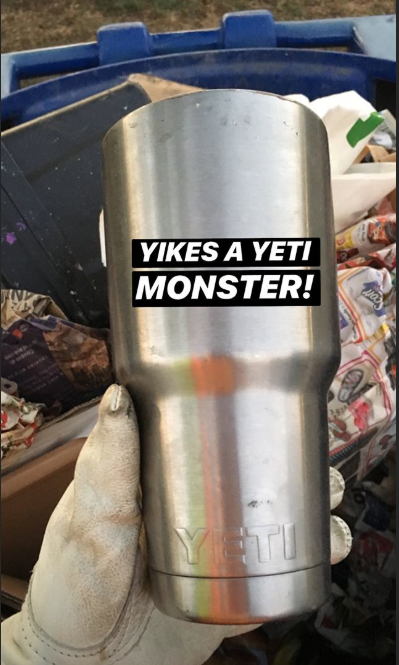
Help stop monstrous non-recyclable things from ending up in your recycling bin!
Compost: Your Jack-O’-Lantern’s Final Resting Place
If you’re an extra resourceful pumpkin carver, you may have decided to roast up your pumpkin seeds for a delicious Halloween snack! In fact, there are many fun ways to put your pumpkin’s guts to use.
But once you’ve used up your pumpkin and the jack-o’-lantern’s smile is fading, you have an important choice to make: where does the pumpkin go?
So instead of letting the great pumpkin take up space in the landfill (where it releases methane, a potent greenhouse gas), put your pumpkin into the compost bin!
(Remember to only put pumpkins without paint, wax, glitter or other non-organic decorations in the brown bin).
Unless a helpful witch or wizard was able to transform all those candy wrappers into clean cardboard or aluminum, or if you send materials to a recycling program like TerraCycle, candy wrappers should always be put into the garbage can.
. . . Fall is an important time of year for employing organic and sustainable gardening methods.
Preparing for next year– Be Pesticide Free!
The fall is a key part of the gardening cycle because it allows us to prepare our garden for the winter and sets us up for a productive spring and summer.
Most pesticides and fertilizers used today are produced with harmful chemicals that even when applied correctly can have adverse effects on the environment, pollinators, and human health.
But don’t worry– there are plenty of ways to have a healthy garden and lawn without using noxious chemicals.
Leave the Leaves
Not all leaves need to be raked up and disposed of immediately:
Consider that your leaves are a free fertilizer and weed suppressant! This makes them perfect for organic gardening.
Leaves also provide important winter habitat for butterflies, bees, and other beneficial bugs.
Finally, “leaving your leaves” reduces emissions associated with polluting leaf blowers. Keeping leaves out of the landfill also prevents the generation of potent methane emissions.
So how can you use leaves?
Use whole leaves around perennials, trees and bushes, or lightly layered on lawn (they may need to be shredded first). You can also create a leaf pile that will decompose into “leaf mold“– a rich, valuable compost amendment to be used in warmer months. Or– if you’re like me– simply pile your leaves on your vegetable garden bed and turn them into the soil in the spring before planting.
And if you still have too many leaves, use your curbside compost can to dispose of them (please keep them out of the gutters and storm drains). If you have a lot of leaves, give us a shout and we’ll help you get an extra container or two.
Use organic amendments to improve the health of your soil
Materials like the aforementioned leaves, as well as other compost, manure, bone meal, etc. can be used to balance the pH of your soil and will release nutrients into the soil to create a vibrant ecosystem and help your garden grow. Mulches can also be great for keeping weeds down, retaining moisture, and feeding the soil. Other organic soil enhancers, like coffee grounds, tea bags, and even newspaper can be an important tool in keeping your garden thriving. Learn more about amending your soil. Continue reading →
Welcome to SLCgreen Connections, an occasional series highlighting SLCgreen’s fantastic local partners—the people and organizations with whom we work closely to make Salt Lake City a greener, more vibrant, and sustainable city!
It has been a busy summer for the Clever Octopus Creative Reuse Center. The creative reuse center is one of Salt Lake City’s e2 Businesses, a program dedicated to helping Salt Lake’s business community be more economically- and environmentally-sustainable. And Clever Octopus is passionate about sustainability. With multiple summer camps, including Sculpting the Future: Art to Save Utah with Goldman Sachs, and even more classes throughout the summer, the creative reuse center helps divert waste, support the community, and foster creativity and environmental awareness through art.
Indeed, Clever Octopus has expanded its programming from a thrift store for art supplies to a fully-fledged creative reuse center providing educational opportunities for students of all ages and skill levels across Salt Lake Valley.
SLCgreen recently met with members of Clever Octopus’ team, Lin Huang, Kacy Huston, Jen Lopez and David Sadler, to talk about their work making art sustainable and accessible.
Whether you are a hardcore “locavore” or you just want to try eating a little more sustainably, taking the Eat Local Week Challenge will help you support the local economy, reduce your carbon footprint, and eat some delicious and nutritious food.
What is Eat Local Week?
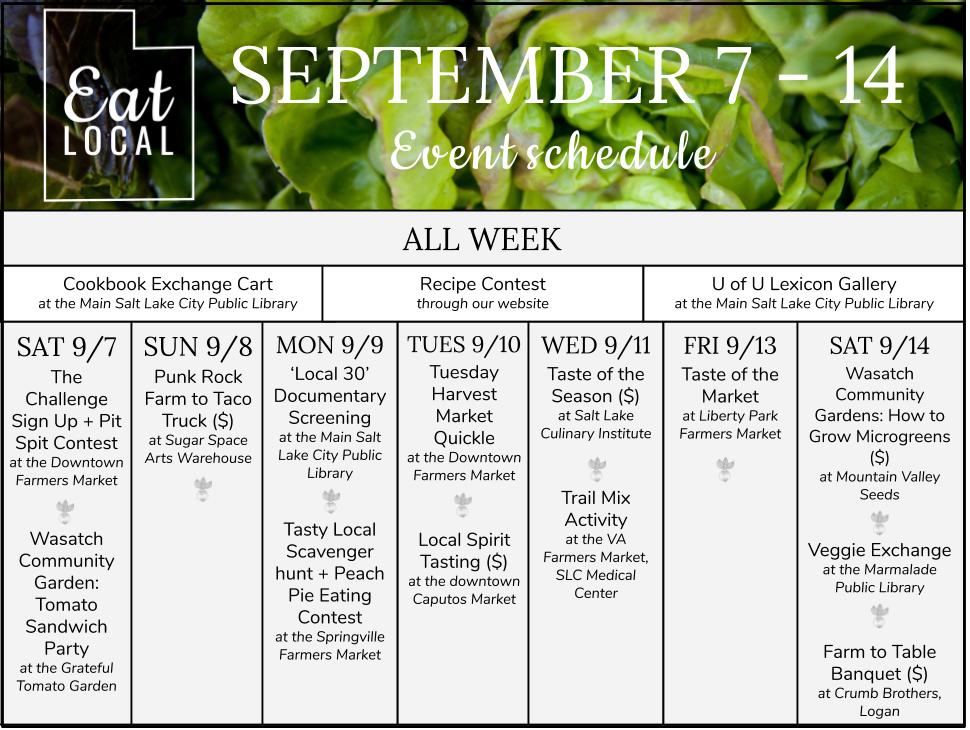
Eat Local Week Utah challenges you to eat as locally as possible from September 7th to 14th. “Local” typically qualifies as food grown and produced within a 250 mile radius.While it may seem daunting to go without coffee for a week, thanks to the local farmers markets and the events throughout Eat Local Week, there are many ways to participate!
The week’s events include a roster of fun for the whole family starting with Wasatch Community Garden’s Tomato Sandwich Party in the Grateful Tomato Garden. The event serves up free and absolutely fresh pesto and tomato sandwiches. This week you can also support Wasatch Community Gardens and eat fresh, locally grown tomatoes at local restaurants participating in the 2019 Tomato Days.
Other festivities include the Punk Rock Farm to Taco Truck, a Local Spirit Tasting at the Downtown Caputos, and a week-long recipe contest.