When it comes to addressing the climate crisis, the best time to act is now. That’s why it’s so exciting that SLCgreen and partners across Salt Lake County and Tooele County just finished creating a Priority Climate Action Plan (PCAP) for the region through what we’ve called the Greater Salt Lake Area Clean Energy & Air Roadmap (SL-CLEAR).
🌍 Tackling Climate Change: A Race We Can Win Together! 🏃♀️🏃♂️
Mitigating climate change is both a sprint and a marathon. The challenge? We need to cut our emissions and local air pollution drastically in the near term while investing in projects that can have sustained impact over time. The good news? The Biden Administration’s Inflation Reduction Act has provided billions of dollars in federal funding to support climate action. If we make a compelling emissions reduction plan, we can apply for implementation funds to execute.
It’s also an important time and opportunity for us to take stock, learn from the experiences we had the previous year, and to continue to improve our programs, services, and operations.
While we engage with Salt Lakers mostly through recycling questions and efforts, we do so much more! Here are some highlights from 2023 and keep a lookout for more details in our Year-in-Review booklet coming soon. (In the meantime, you can take a look at previous annual reports for 2022 and 2021.) Some notable achievements include:
It’s that time of year again! The temperatures are starting to drop, leaves are showing hints of change, and that crisp scent of incoming autumn is the air. The changing seasons also mean it’s time to think about fall and winter air quality season.
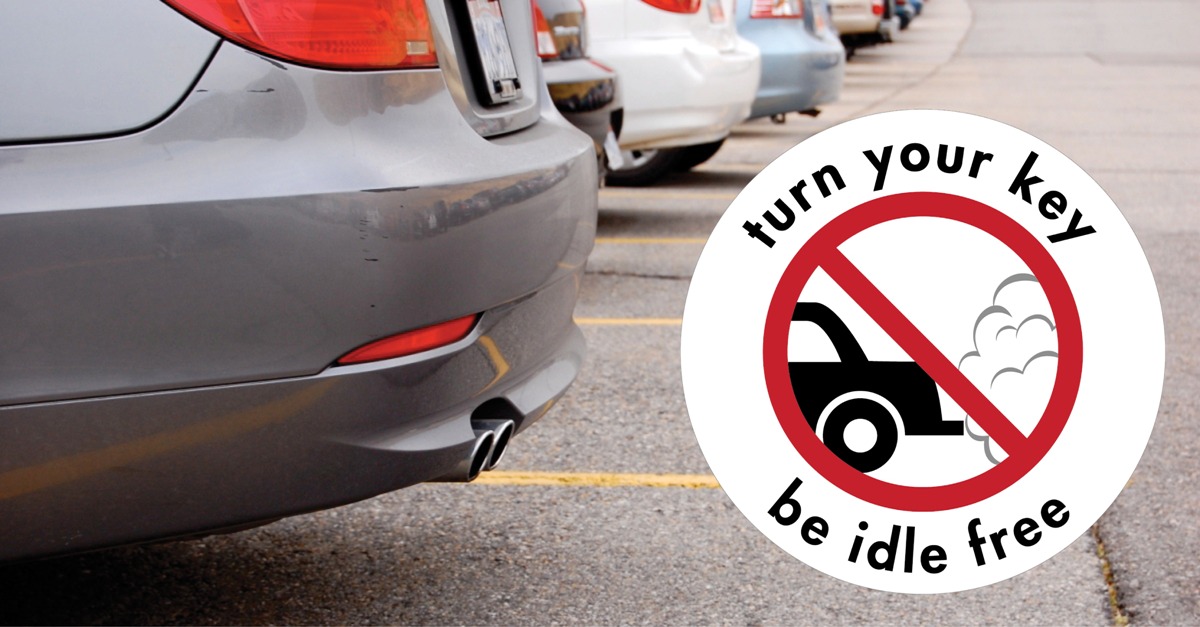
September also marks Idle-free Awareness Month and the annual Governor’s Idle-free Declaration for the month and for Utah’s upcoming winter season. The initiative began in 2006 by Utah Clean Cities and was a statewide effort by 2010 – spurring statewide idle-free policies and action at school districts, cities, towns, counties, and even within Zion National Park.
The Seventh Annual VegFest event is coming up this Saturday, September 9 at Library Square. This is one of Salt Lake City’s ACE-sponsored events and one our Department particularly loves attending every year.
We’ll be there tabling all day and encourage you to stop by and say hi if you’re out and about on Saturday.
The event is focused on celebrating veganism and raising awareness of the many plant-based foods and products available to us here in SLC.
In honor of VegFest, we wanted to highlight some of the environmental reasons to choose more plants, rather than animal products, in your weekly meal planning. Even swapping one meal per week can make a difference.
By SLCgreen Interns Frances Benfell, Emma Johnson, and staff Jude Westwood
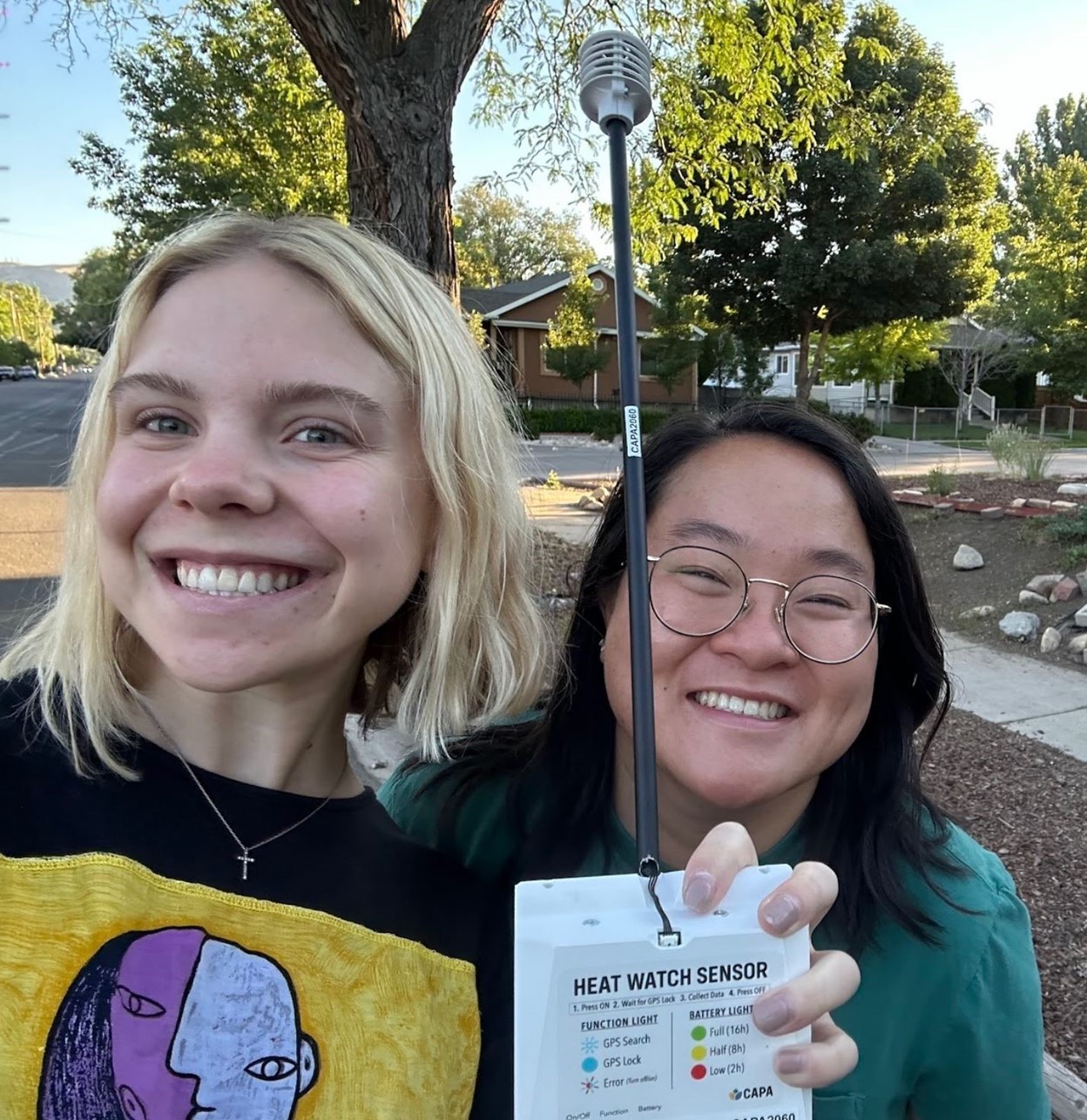
When my friend Tia made plans to spend the weekend in Salt Lake City, she didn’t know what she was in for. A few days before her visit, I texted her and asked, “How do you feel about waking up at 5:30 am to go heat mapping with me on Saturday?” She responded, “I don’t know what that is, but as long as you buy me coffee!”
As we drove to pick up our heat sensor on a Friday afternoon in mid-July, I explained the project to Tia. We were volunteering to drive one of ten routes across Salt Lake City with a sensor attached to our car that would measure temperature, humidity, and location along the way. Our role (along with over 40 other volunteers) was to gather data for a citizen science research project funded by the National Oceanic and Atmospheric Administration (NOAA). Salt Lake City was one of 18 communities chosen to participate in this year’s mapping project. Over 60 communities have participated since the program started in 2017.
Most of us do a lot of driving in our lives. We drive to school, work, to run errands, and to meet up with friends. Not only is all this driving time bad for our air quality, but so much time in our cars can also be bad for us. Studies have shown that long commute times can produce stress and fatigue, and hurt mental health.
So why drive alone when you can carpool?
Carpooling saves money, reduces pollution, and can transform a routine commute into valuable social time. Consider carpooling to work with a coworker who lives nearby or coordinating a carpool for your kids to get to school. Carpooling can also be a great way to get to events or out into nature with friends and family.
Brijette Williams, Sustainability Outreach Coordinator, lives in the suburbs but works and goes to school in Salt Lake City. She commutes by public transit as much as possible because it makes her travel time feel “valuable and productive.”
Instead of getting stuck in traffic on I-15, she can check emails, make lists for the day, or unwind without the stress of being behind the wheel.
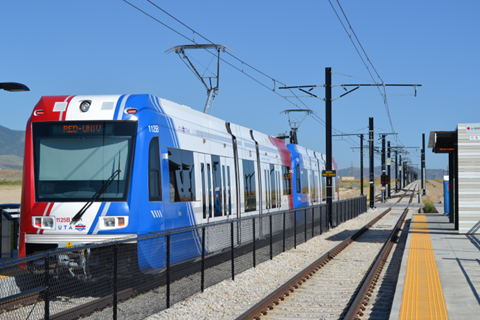
Choosing to swap your car trip for a transit trip can help improve air quality and mitigate summer ozone. It’s also a great way to participate in this month’s Clear the Air Challenge, which encourages us all to take fewer single-occupancy car trips.
Here are some reasons to consider taking transit more often and tips to get started.
We live in a world that loves plastic. From grocery stores to coffee shops to our bathroom sinks, we see plastic pretty much everywhere. It makes sense. Plastic is lightweight, cheap, durable, and malleable, and in many cases, it serves an instrumental purpose. It keeps our food clean and safe from contamination, is ubiquitous in hospitals and clinics, enables home insulation and energy efficiency, and reduces the weight of cars, which saves gas.
The problem is not these long-lasting or health safety-related uses of plastic. The problem is that we make and use a remarkable amount of unnecessary single-use plastic. Single-use plastics are items like bottled water, plastic grocery bags, and coffee cups that we throw out after only one use.
It’s almost time for The Clear The Air Challenge—an annual event encouraging Utahns to reduce their vehicle emissions and help keep Utah’s air clean! The competition starts on July 1st and runs throughout the month, with a goal this year of eliminating 100,000 single-car trips and keeping 375 tons of CO2 out of the atmosphere.