Category Archives: Air Quality

Mayor Becker Issues Executive Order to Increase Energy Efficiency at City Facilities

cc3

Today Salt Lake City Mayor Ralph Becker issued an Executive Order designed to maximize superior energy management at all Salt Lake City facilities.

“We must lead by example,” said Mayor Becker. “By taking steps to actively monitor our energy use and improve the efficiency of city facilities, we will cut energy waste, improve air quality, protect our natural resources and ultimately save taxpayer dollars.”

The order, which establishes Salt Lake City among leading cities nationwide, creates a multi-department Energy Management Steering Committee and requires City facilities to develop annual Energy Management Plans and track results.

“Through this Executive Order, Mayor Becker again demonstrates his commitment to air quality and smart energy use,” said Sarah Wright, Executive Director of Utah Clean Energy. “Improving the efficiency of Salt Lake City municipal facilities is a fantastic way to showcase how local governments can save taxpayer dollars while simultaneously reducing pollution.”

Energy Management Plans will report on facilities’ progress utilizing best practices in energy management, including energy benchmarking, identification of energy-saving opportunities, requiring building energy efficiency training for facilities managers and operators, empowering employees to play an active role in cutting energy waste and improved transparency of facility energy performance.

The new Executive Order is a cornerstone of Project Skyline, an initiative designed to dramatically cut energy waste in Salt Lake City’s commercial buildings by accelerating investment in energy efficiency and raising public awareness of building performance. In 2014, Project Skyline kicked off with the Mayor’s Skyline Challenge, enlisting 20 businesses in a proactive effort to reduce building energy use. Learn more at SLCgov.com/ProjectSkyline.

A previous Executive Order issued by Mayor Becker in 2013 required all new City facilities achieve net-zero energy status (i.e. producing as much energy as they consume).

Mayor Becker Addresses Blueprint for a Better Future

On Tuesday, Mayor Becker joined Governor Herbert and other community leaders for a special Sundance event at The Leonardo. Blueprint for a Better Future: Clean Air, Clean Water, Clean Energy was hosted by The Diplomatic Courier Magazine and Hinckley Institute of Politics, and explored how climate change and climate action is impacting the future of our cities.

Mayor Ralph Becker took the stage to share how Salt Lake City is proactively addressing the city’s future by taking climate change and climate adaptation into account today.

“The effects of climate change are real and impose a serious threat globally, and to our own community,” said Mayor Becker. “Salt Lake City is aggressively preparing for future climate challenges, to be a resilient community with a high quality of life due to our climate preparedness activities. Our efforts will ensure future clean and sufficient water supplies, investment in renewable, clean energy systems, and alternative transportation systems.”

The Mayor highlighted how these investments will not only make Salt Lake City more resilient, but that they will also improve community health through better air quality and a more walkable community. He also said that while Salt Lake City has been fortunate to have access to clean and reliable water from the Wasatch Mountains, the most profound climate risk our community faces is the loss of and degradation of our water supplies. Reducing greenhouse gas emissions is the most important strategy to reduce climate impacts to our water supplies.

What Salt Lake City is Doing

Salt Lake City has been measuring our greenhouse gas emissions since 2002, and now can tell every department and division their emissions by source, so they can implement specific reduction strategies.

New buildings are reviewed to determine if they can be built to a “net-zero” standard. Our new Public Safety Building has met that goal.

Fleet vehicles are constantly being right-sized, eliminated or replaced with alternative fuel vehicles. Electric charging stations are being installed across the city.

The City is beginning a Climate Leadership Academy for employees to help enhance the City’s capacity for addressing climate change. Employees from all departments will attend monthly meetings for a year to learn about climate issues and opportunities, personally and professionally. This, and other training opportunities, will ensure that every city employee understands how they can make a difference.

The City has been fortunate to receive Federal support on our climate planning efforts, partnering with Western Water Assessment, part of the NOAA Regional Integrated Science Assessment Program, to conduct climate vulnerability work. This partnership has leveraged our access to actionable data and tools to support climate adaptation decision-making, especially within our water utility.

Due to these aggressive efforts, Salt Lake City has been designated by the White House as a Climate Action Champion.

Citywide & Regional Climate Action

Salt Lake City is launching a metro-regional climate planning group that will look at mitigation and adaptation efforts on a broader, regional basis in a collaborative way.

Other efforts include a Transit Master Plan, Complete Streets Ordinance, protected bike lanes, streetcars and the Mountain Accord planning process.

“Applying the true economic costs of future climate risks will be essential as we make future decisions. One example of this is our work with the State of Utah and regional energy providers to evaluate appropriate costs and account for benefits of renewable energy,” Mayor Becker said. “We need to consider long-term economic, environmental and societal benefits of these investments, not simply short-term decisions that often undervalue climate resilient strategies.”

Moving Forward

Salt Lake City understands that addressing climate change impacts is essential as part of our efforts to achieves our goals to be a livable city. And when we address climate change, we also address air quality, facilitate mobility choices, ensure a safe and abundant water supply, create more walkable neighborhoods and establish a vibrant downtown.

Learn more about our efforts at SLCgreen.com.
3rd Annual Idle Free Fleets Conference

2015 Idle Free Conference Save the Date FINAL

You’re invited!

The Third Annual Utah Idle Free Fleets Conference will take place on Tuesday, January 13, 2015 from 9 a.m. to 3 p.m. at Hale Center Theatre.

Register online.

Questions? Contact Sophia Jackson at (801) 535-7736 or sophia.jackson@utahcleancities.org.

Salt Lake City Receives UCAIR Grant to Educate about Idle Free Ordinance

partner_fullcolorSalt Lake City Green is excited to announce that we are a recipient of a Utah Clean Air Partnership (UCAIR) grant to refresh our outreach and engagement efforts for the City’s Idle Free Ordinance!
When Salt Lake City passed the Idle Free Ordinance in late 2011, a concerted effort to engage local businesses and the community to educate about the new ordinance and place idle free signs at key locations throughout the city was undertaken. Air quality is a top priority for Mayor Becker and the residents of Salt Lake City and the time is right to refresh our education and engagement efforts.

As we head into inversion season, Salt Lake City is thrilled to receive the generous grant from UCAIR, which will allow us to refresh our materials (website, handout, signs) and engage once again with the local business community and community at large to make sure everyone understands the benefits of being idle free, the limitations of the ordinance and how they can have a positive impact on our air quality by simply turning their key!

Look for more information soon at SLCgov.com/idlefree. In the meantime, please let us know if you have any questions about the ordinance.

If you would like to report an idling complaint in real time, please call (801) 535-6628. A Salt Lake City compliance officer will be dispatched to investigate.


Help Shape the Future of the Wasatch Mountains!

Photo Credit: Steve_W via Flickr.

Photo Credit: Steve_W via Flickr.

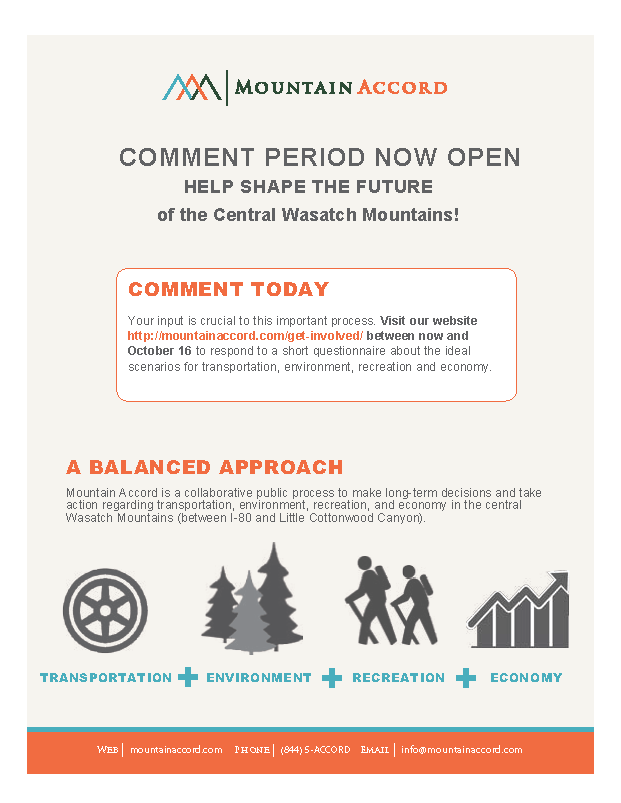
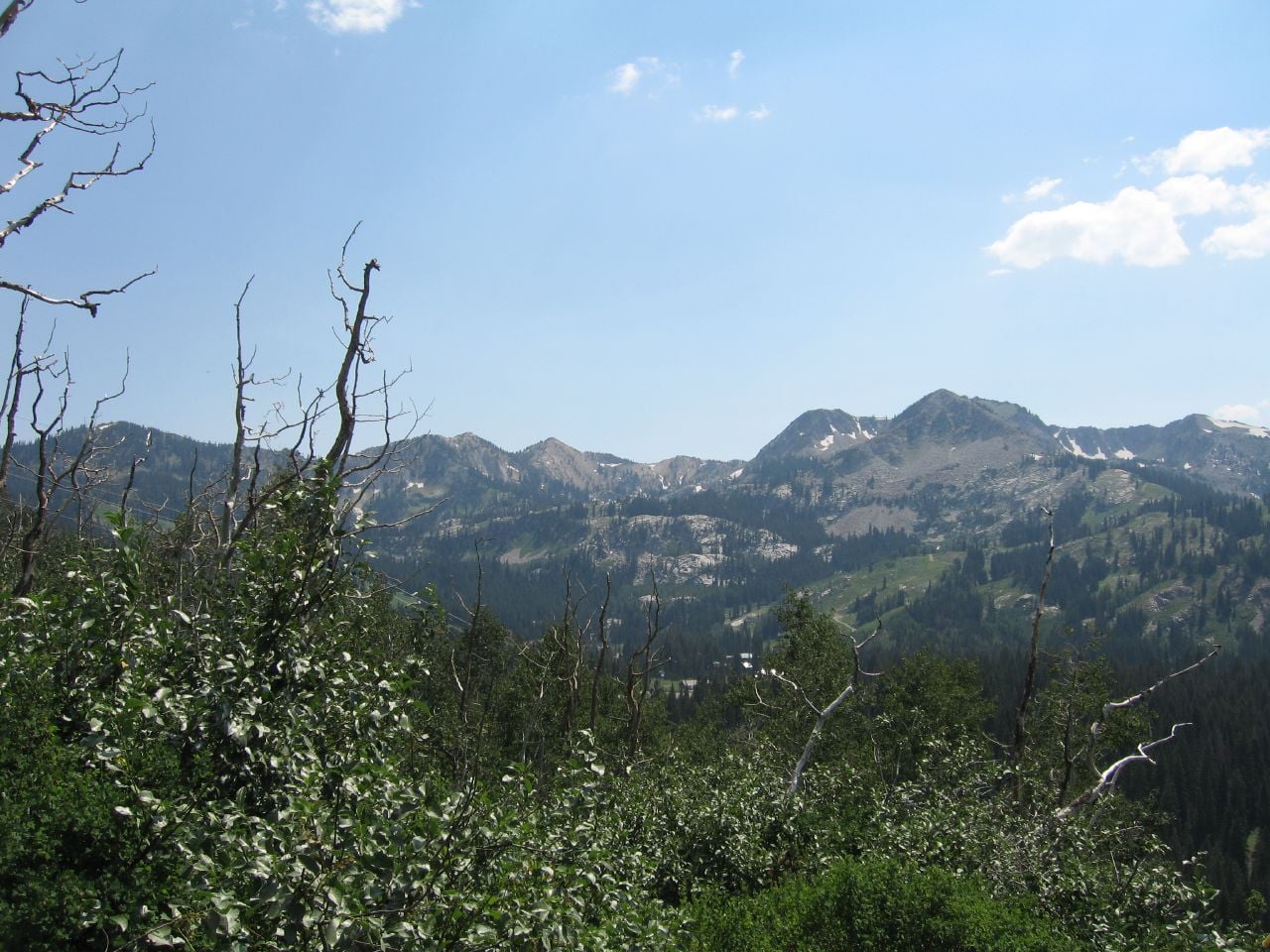
The Mountain Accord is a collaborative public process to make long-term decisions and take action regarding transportation, environment, recreation, and economy in the central Wasatch Mountains (between I-80 and Little Cottonwood Canyon).

Your input is crucial to this important process! Comments are currently begin accepted on MountainAccord.com until November 20. Respond to a short questionnaire about the ideal scenarios for transportation, environment, recreation and economy.

Mountain Accord Public Comment Period Opens!

This Evening: The Future of our Wasatch Canyons

LWV Mountain Accord Flier

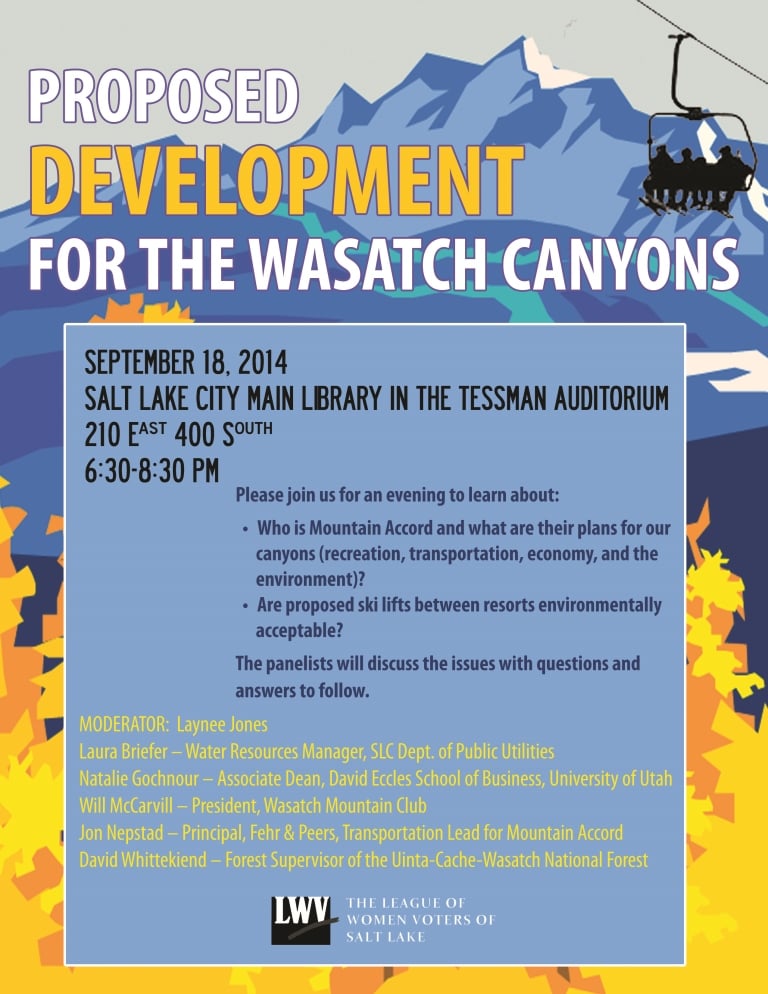
You’re invited to explore proposed development plans for the Wasatch Canyons at a special event this evening. Learn about the Mountain Accord and the future of our canyons for recreation, transportation, economy and environment.

Panelists include Laura Briefer, Water Resources Manager for Salt Lake City Department of Public Utilities, Natalie Gochnour, Associate Dean, David Eccles School of Business, University of Utah, Will McCarvill, President, Wasatch Mountain Club, Jon Nepstad, Principal, Fehr & Peers, Transportation Lead for Mountain Accord and David Whittekiend, Forest Supervisor for the Uinta-Cache-Wasatch National Forest.

Mountain Accord Discussion
Thursday, September 18
6:30-8:30 p.m.
Tessman Auditorium, Main Library (210 E 400 S)

The evening is hosted by The League of Women Voters of Salt Lake.

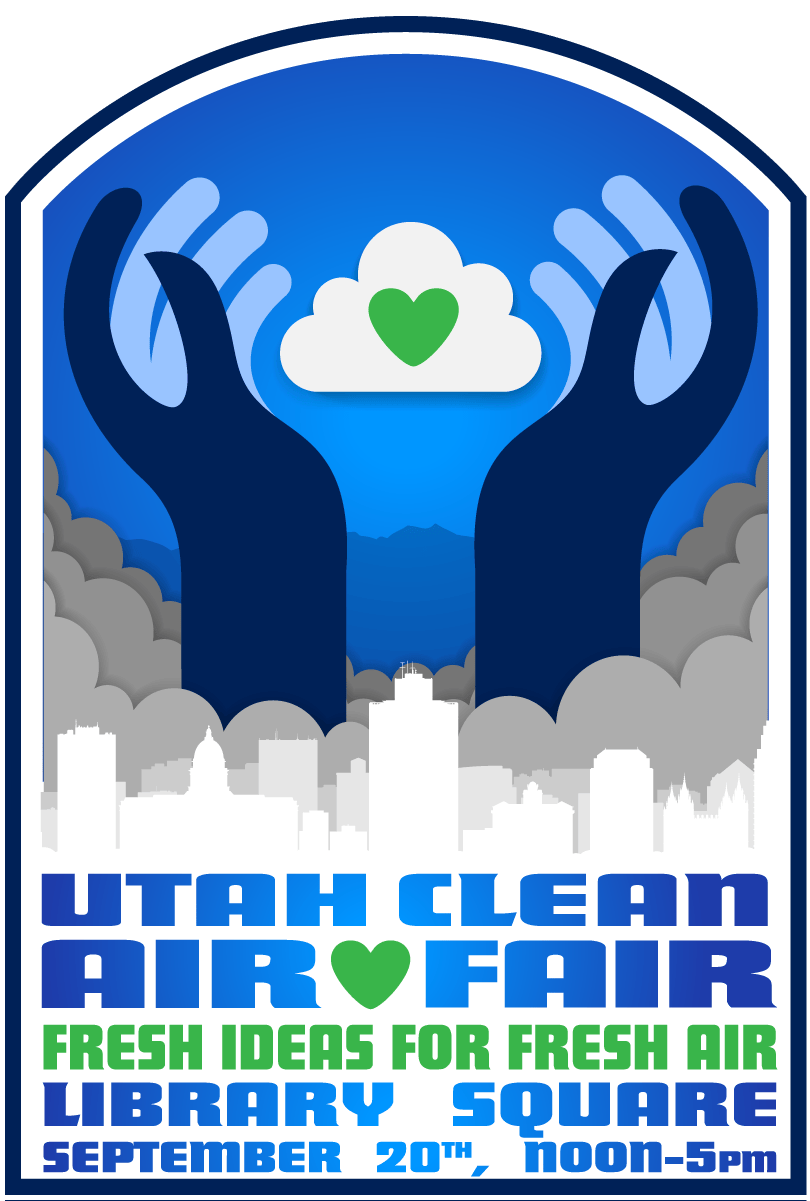
Utah Clean Air Fair this Saturday, Sept 20

cleanairfair

The Utah Clean Air Fair (UCAF) is an opportunity to amplify community engagement and empowerment on clean air issues in a fun and educational atmosphere for the whole family.

Last year’s Clean Air Fair brought out 1,000 enthusiastic Utahns. And with winter right around the corner, this is the perfect opportunity to discover what you can do to improve our local air quality.

There will be local vendors, information booths, and live music. SLCgreen will be there, so stop by to say “hello!” and explore what we’re doing to reduce our impact.

Bring your family and friends, take part in your community, leave inspired and ready for a breath of fresh air!

Where:
Library Square
200 E. 400 S.

When: 
Saturday, September 20
Noon – 5 p.m.

Cost:
Free!

Data Competition Tackles Air Quality in Utah

BigData

Utah Geek Events, the Big Data User groups and many other groups have joined forces to learn more about the air quality in Utah. For the past two months, technologists, scientists, air quality experts, and experts from related fields have been gathering information and data with correlations to Utah’s air.

Air quality is a complex problem that influences many aspects of our lives, including our health, economy and quality of life. Part of that complexity is understanding the entire puzzle of our air — why is it bad and how does it really affect our lives?

Get involved!

Now that we have the information to start gaining answers, we need the questions. Teams will be breaking off to compete to create amazing results with the latest technologies in Big Data, but we need your help.

We are looking for ideas of what to look for from the public. We are open to all ideas and suggestions regardless of how far-fetched or mundane they may seem. Feel free to share this survey with others.

Take the survey.

The more questions we have, the more we can start to understand our air and help create a brighter future for Utah.

Learn more at BigDataUtah.org.


Summer Ozone: Get the Facts

UCAIR_SummerOzoneGraphic

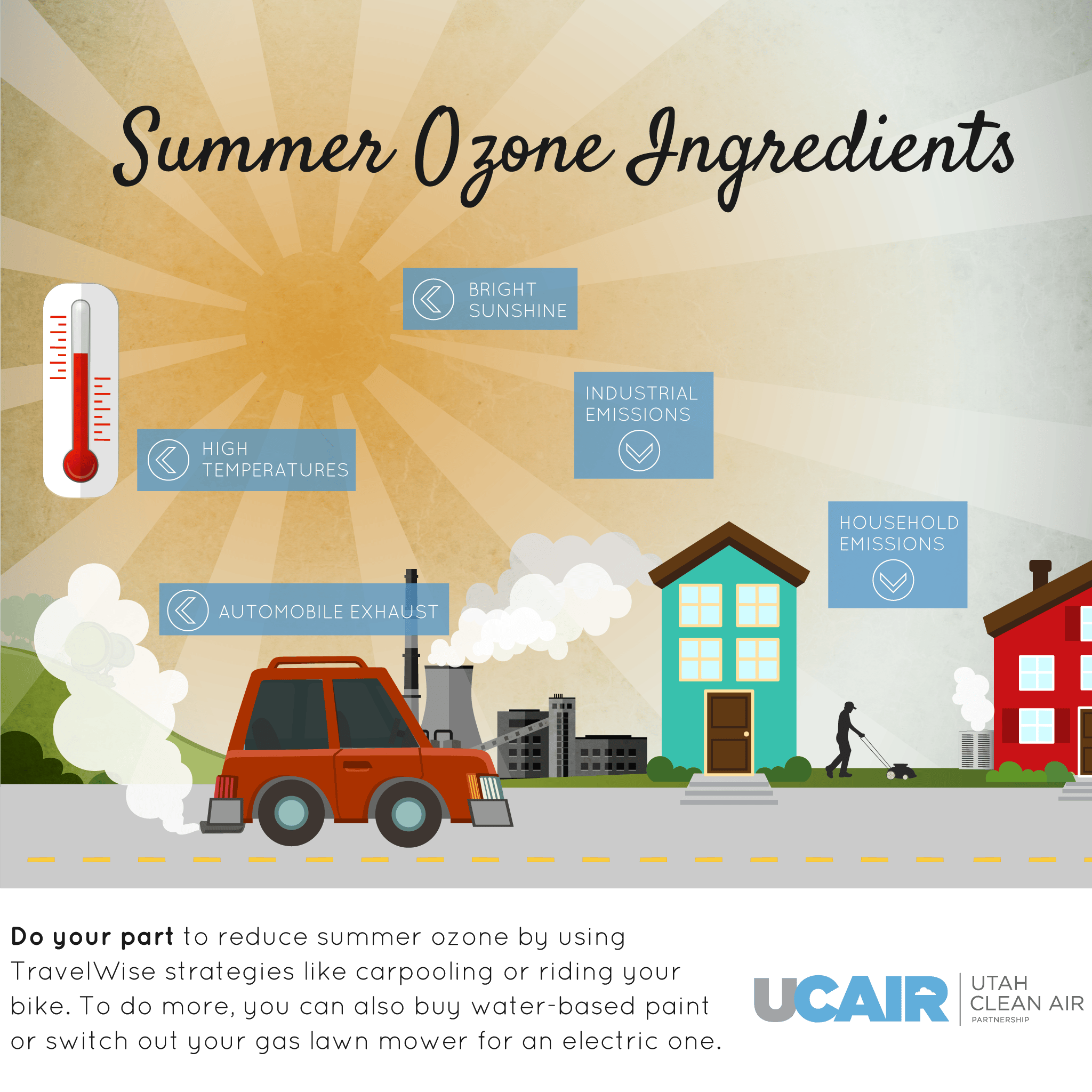
During the warmest summer months, Salt Lake City experiences poor air quality due to ozone pollution.

This helpful graphic from the Utah Clean Air Partnership – UCAIR outlines how ozone is formed, and what we can do to reduce our impact.

Learn more at UCAIR.org.

(Don’t forget to drive less this July with the Clear the Air Challenge. Track your impact and win prizes – it’s fun!)

Be a part of the pilot — get your HIVE Pass today!

HivePeople

Be a part of the pilot!  Purchase your HIVE Pass today at one of three locations in Salt Lake City.  Ride transit with the convenience of a pass in your pocket – at a great value.

The HIVE Pass is an annual UTA pass available to Salt Lake City residents for $360 a year, which can be paid as $30 a month. The pilot program is the result of a partnership between Salt Lake City and the Utah Transit Authority to encourage Salt Lake City residents to take more trips using transit.

Purchase your HIVE Pass at the following locations Monday – Friday:

Salt Lake City & County Building
451 South State Street
8:30 a.m. to 4:30 p.m.

Salt Lake Public Utilities Office
1530 S. West Temple Street
8 a.m. to 5 p.m.

Sorenson Unity Center
1383 S. 900 West
9 a.m. to 8 p.m.

Feeling generous? We are excited to introduce the HIVE Voucher Program. Individuals, organizations and businesses can give the gift of transit to a Salt Lake City resident in need.

For further questions and information about the HIVE Pass, and the HIVE Voucher Program, please email us at ridewithhive@slcgov.com or visit www.ridewithhive.com.