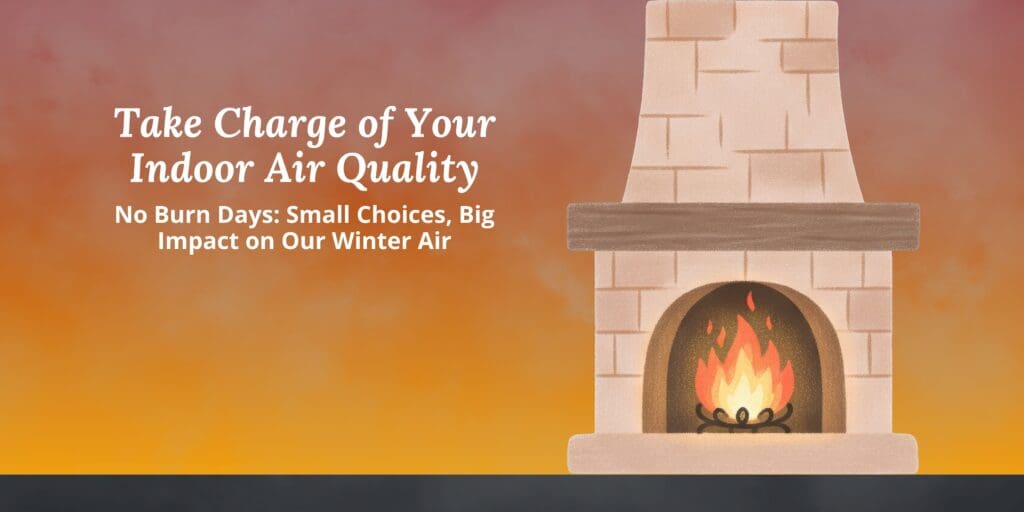
🔥 Winter Air Quality Alert: Know the Rules, Protect the Air
Winter brings one of Utah’s biggest air quality challenges — inversions. But what exactly is an inversion? This natural phenomenon occurs when a high-pressure system is setting up, trapping cold air on the valley floors with warmer air above it. This warm air also traps all our pollution with the cold air, keeping it contained in the valley until the inversion breaks.
To help keep our air healthy when it matters most, the Utah Division of Air Quality (UDAQ) created the Mandatory No Burn Program.
🚫 What Is the Mandatory No Burn Program?
UDAQ may declare “No Burn Days” when particulate pollution levels are forecasted to rise. These no-burn days are typically issued during the inversion season (November 1 through March 1), but they can happen throughout the year.
On No-Burn days, residential wood burning is prohibited, including:
- Fireplaces and wood stoves (unless you’re using a certified pellet stove and have no other heat source).
- Outdoor fire pits and chimneys.
The goal: Prevent extra smoke from worsening winter smog during inversions.
👉 Report Illegal wood burning here.
👉 Check the daily burn status here or call 1-800-228-5434.
🌫️ Why It Matters
Residential wood burning is no longer a major source of winter emissions in Salt Lake City, thanks to long-standing restrictions and strong compliance. However, wood smoke still contains pollutants that can impact sensitive groups when burning does occur. Learn more here.
The PM₂.₅ emissions from one old dirty, inefficient wood stove are equivalent to the PM₂.₅ emission of 8 old diesel school buses.
That smoke doesn’t just disappear — it seeps into homes and neighborhoods, raising PM₂.₅ levels that can trigger:
- Asthma and lung irritation
- Heart stress
- Increased hospital visits during inversion days
According to the EPA, wood smoke contains fine particles and air toxics that can affect the lungs and heart, especially for children, older adults, and individuals with respiratory conditions.
Choosing not to burn on No Burn Days helps your whole community breathe easier.
Learn more:
🔗 EPA – Wood Smoke and Your Health
✅ How You Can Help This Winter
- Stay Informed:
Sign up for air quality alerts from air.utah.gov or download the UtahAir app to get real-time burn status notifications.
- Upgrade Your Heating:
If you rely on a wood stove, consider switching to cleaner heat options like electric, gas, or certified pellet systems.
- Make Your Home Cozy — Smoke-Free:
Seal drafts, use thick curtains, and layer up to stay warm without burning wood.
- Educate and Encourage:
Remind neighbors and friends that burning restrictions are about community health, not just compliance.
🌬️ Together for Clearer Winter Skies
Your choices make a real difference. Every household that skips the fire on a No Burn Day helps prevent pollution buildup, protects vulnerable residents, and keeps our valley’s air clean for everyone.
Learn More & Explore Resources:
❓ Questions About Improving Your Indoor Air?
If you have questions about using your air purifier or improving your indoor air, don’t hesitate to reach out. 📬 Contact us at cleanairslc@slc.gov.
Missed the previous Indoor Air Quality newsletters? Read them on our blog here!
-The Clean Air SLC Team